

Top 7 Content Marketing Agencies UK 2026
Navigating the vibrant landscape of content marketing agencies in the UK can feel overwhelming. With countless firms promising transformative results, how do you identify the one that truly aligns with your business goals? The right agency does more than just produce blog posts or manage social media; it becomes a strategic partner, deeply invested in understanding your brand, audience and industry to deliver measurable growth. A great content partnership can unlock new revenue streams, build lasting customer loyalty and establish your brand as an authority in its field.
This article cuts through the noise. We have analysed and compiled a definitive list of the UK's leading content marketing platforms for 2025. Whether you are a startup in a niche sector like motorsport needing rapid growth or an established brand looking to refine your digital strategy, this guide will provide the clarity you need. Before diving in, it is helpful to familiarise yourself with general content marketing best practices to better evaluate potential partners.
We will explore each option's unique strengths, specialisms and client feedback. This guide empowers you to make an informed and confident choice, with direct links and platform insights to simplify your search.
1. Superhub
Superhub presents itself as a dynamic, full-service digital agency that blends creative production with technology-first marketing, establishing it as a formidable partner for businesses aiming for rapid and measurable growth. Based in Devon, this award-winning team provides an end-to-end service that covers the entire digital ecosystem, from web and app development to cinematic film production. This integrated approach makes it one of the most versatile content marketing agencies UK businesses can partner with, especially those looking for a single, accountable team to manage their entire digital presence.
What truly distinguishes Superhub is its potent combination of niche sector expertise and advanced technological solutions. The agency has cultivated deep specialisms in industries like motorsport, automotive, energy and tourism, allowing them to deliver campaigns with genuine authority and insight. This expertise is amplified by their use of bespoke, AI-driven, fully automated lead-generation systems, designed to build scalable and predictable revenue streams for clients.
Key Features and Strengths
Superhub's offering is built on three core pillars: comprehensive creative services, technology-led automation and proven growth strategies. Their hands-on approach is evident in their direct management of client YouTube channels and vlogs, ensuring content is not just created but also effectively distributed and optimised.
- Full-Service Production: The agency manages everything in-house, from cinematic drone filming and TV advertising (including Sky AdSmart) to social media content and app development. This removes the friction of coordinating multiple suppliers.
- AI-Powered Lead Generation: Superhub builds and implements bespoke automated systems that nurture leads and drive conversions, providing a clear return on investment. This moves beyond standard content marketing into a sophisticated business growth engine.
- Demonstrable Client Success: The agency showcases powerful testimonials, including generating £60k turnover in six weeks for a relaunched brand and helping a client secure a £300m contract. These results underline their impact-focused methodology.
- Rapid Launch Capability: A unique claim is their ability to launch a new business infrastructure in as little as two hours, making them an ideal partner for ambitious startups and fast-moving projects.
Pricing and Getting Started
Superhub does not publish set pricing packages on its website. Instead, they operate on a bespoke model, encouraging prospective clients to get in touch for a detailed consultation and a tailored quote based on specific project requirements. This approach ensures that the strategy and investment are perfectly aligned with your business goals.
For businesses seeking a holistic partner capable of delivering both high-impact creative and data-driven automation, Superhub is a compelling choice. Learn more about Superhub's content marketing services to grow your brand.
| Feature | Details |
|---|---|
| Best For | Startups and established brands in motorsport, automotive, energy and tourism sectors. |
| Key Differentiator | In-house creative production fused with bespoke AI-driven lead automation systems. |
| Pricing | Bespoke quotes available upon direct consultation. |
| Website | www.superhub.biz |
2. Clutch
Clutch is not an agency itself but a powerful B2B marketplace and review platform, making it an essential first stop for any business performing due diligence. It offers a structured and data-driven approach to finding and evaluating the best content marketing agencies UK businesses can partner with. The platform provides in-depth company profiles, comprehensive service lists and project portfolios, allowing you to see an agency's work firsthand.
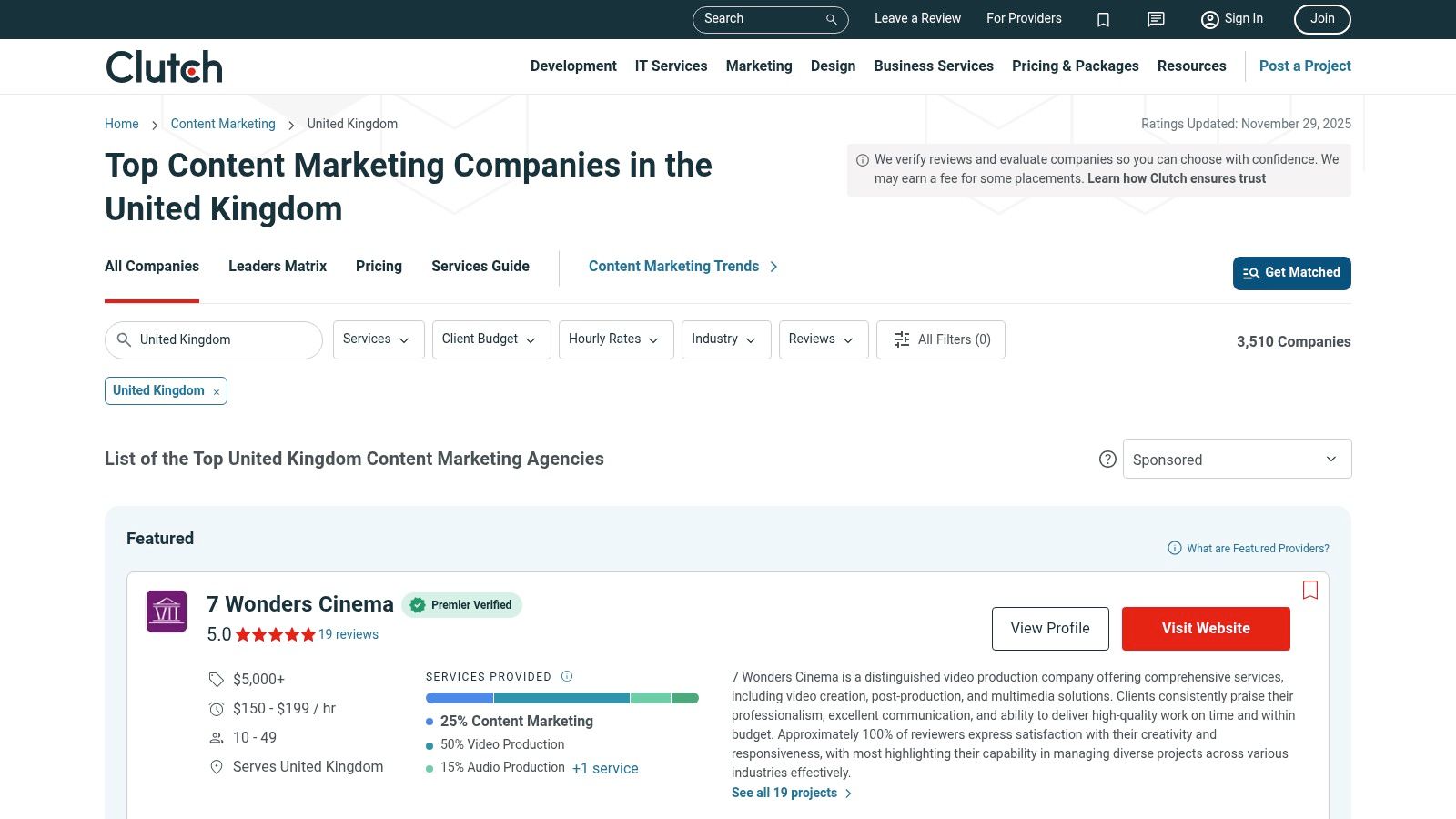
Its primary strength lies in its verified client reviews. These are not just simple star ratings; they are detailed, often based on direct interviews conducted by Clutch analysts, providing unfiltered insights into an agency's project management, communication and overall ability to deliver results. This system builds a high level of trust and transparency that is difficult to find elsewhere. If you are looking for guidance on using platforms like Clutch, you can find valuable insights for startups on choosing a digital marketing agency.
Key Features and How to Use Them
To get the most out of Clutch, use its powerful filtering tools effectively. You can narrow down your search by location to focus specifically on UK-based firms, set your project budget or desired hourly rate and specify the exact services you need.
- Verified Reviews: Focus on the detailed review narratives to understand the client's experience, not just the overall score.
- Leaders Matrix: This visual tool plots agencies based on their ability to deliver and market presence, helping you quickly identify top performers in the UK market.
- Portfolio Analysis: Go beyond the case study summaries. Scrutinise the quality and relevance of the work in an agency’s portfolio to see if it aligns with your brand’s standards and goals.
While some premium placements on the site are sponsored, the core review data remains impartial. By using the filters and diving deep into the verified feedback, Clutch offers a reliable and efficient way to create a shortlist of credible UK content marketing partners.
3. DesignRush
DesignRush is another high-value B2B marketplace that simplifies the process of finding and vetting the UK’s top creative and marketing talent. It functions as a curated agency directory, offering detailed profiles that go beyond a simple name and number. For businesses looking for content marketing agencies UK -wide, it provides a one-stop-shop to compare firms based on their expertise, client feedback and industry focus, helping to ensure a good fit from the outset.
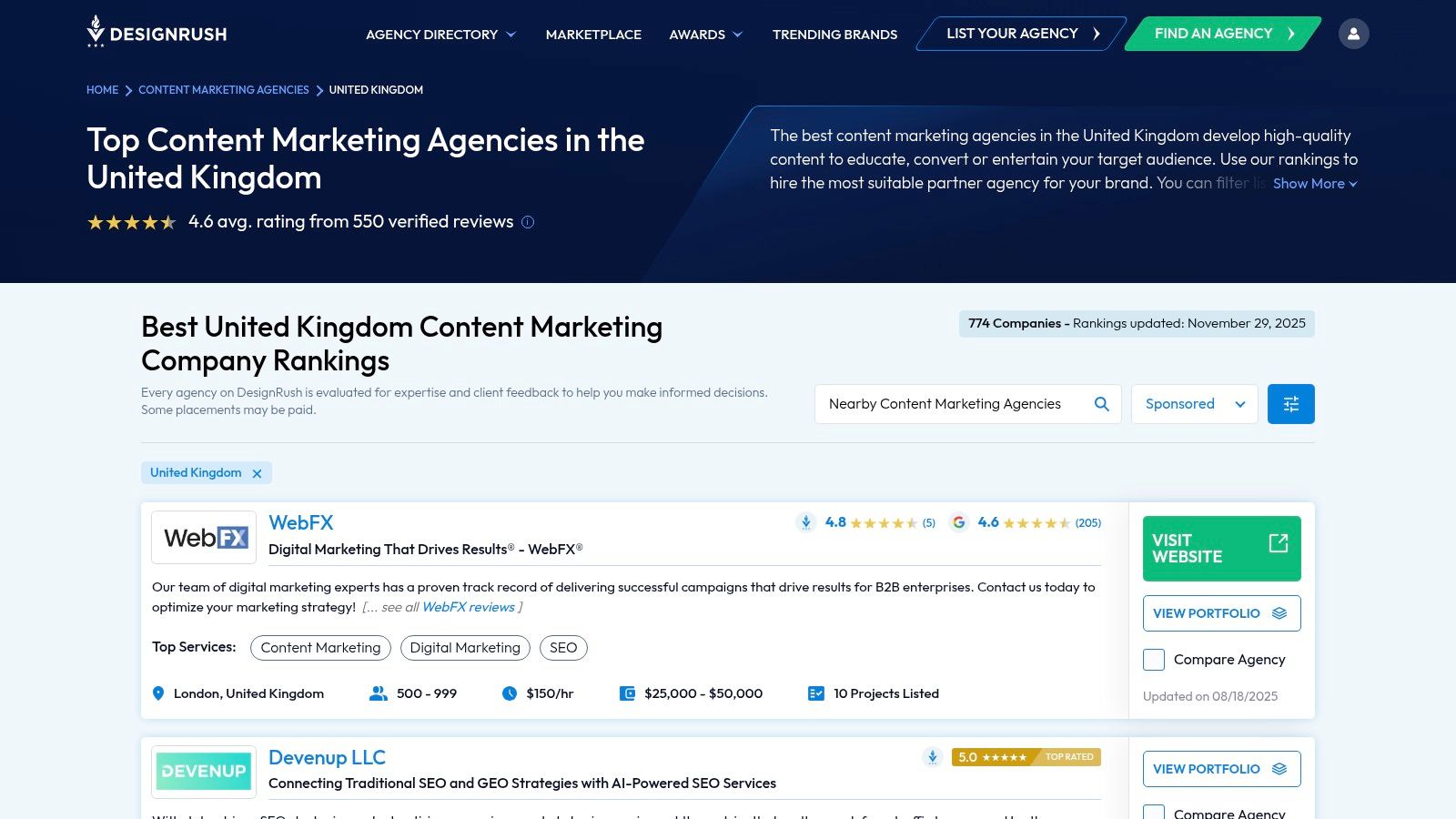
The platform’s key differentiator is its emphasis on granular data and cost transparency. Agency profiles often include typical hourly rates and minimum project budgets, giving you immediate insight into financial feasibility. Furthermore, its verified reviews are timestamped, providing a clear picture of an agency's recent performance. For those wanting a deeper understanding of the agency selection process, you can get more information on finding a UK content marketing agency with this growth guide.
Key Features and How to Use Them
To maximise DesignRush, leverage its robust filtering capabilities to create a highly relevant shortlist. You can sort potential partners by service line, client budget, team size and even specific industry expertise, which is invaluable for niche sectors.
- Cost and Budget Filters: Use the hourly rate and minimum project size filters to instantly disqualify agencies that are outside your budget, saving significant time.
- Industry Focus: Pay close attention to the "Top Clients & Industries" section on an agency's profile. This helps you find a partner with proven experience in your market.
- Verified Profiles: Look for the "Verified" badge on agency listings. This indicates that DesignRush has independently confirmed the agency's details, adding an extra layer of trust.
While some agencies may feature in sponsored positions, the platform’s detailed profiles and verified reviews offer a solid foundation for your research. Always double-check an agency's listed location, as some international firms with a UK presence are included. By using the filters and carefully reviewing the detailed case studies, DesignRush provides an excellent resource for discovering qualified content marketing partners.
4. Sortlist
Sortlist offers a hybrid approach, combining a traditional browsable directory with a guided matchmaking service designed to simplify the agency selection process. For businesses that prefer a curated introduction rather than conducting mass outreach, Sortlist streamlines finding suitable content marketing agencies UK -wide. You can post a project brief and the platform will connect you with a handpicked shortlist of agencies that fit your requirements.
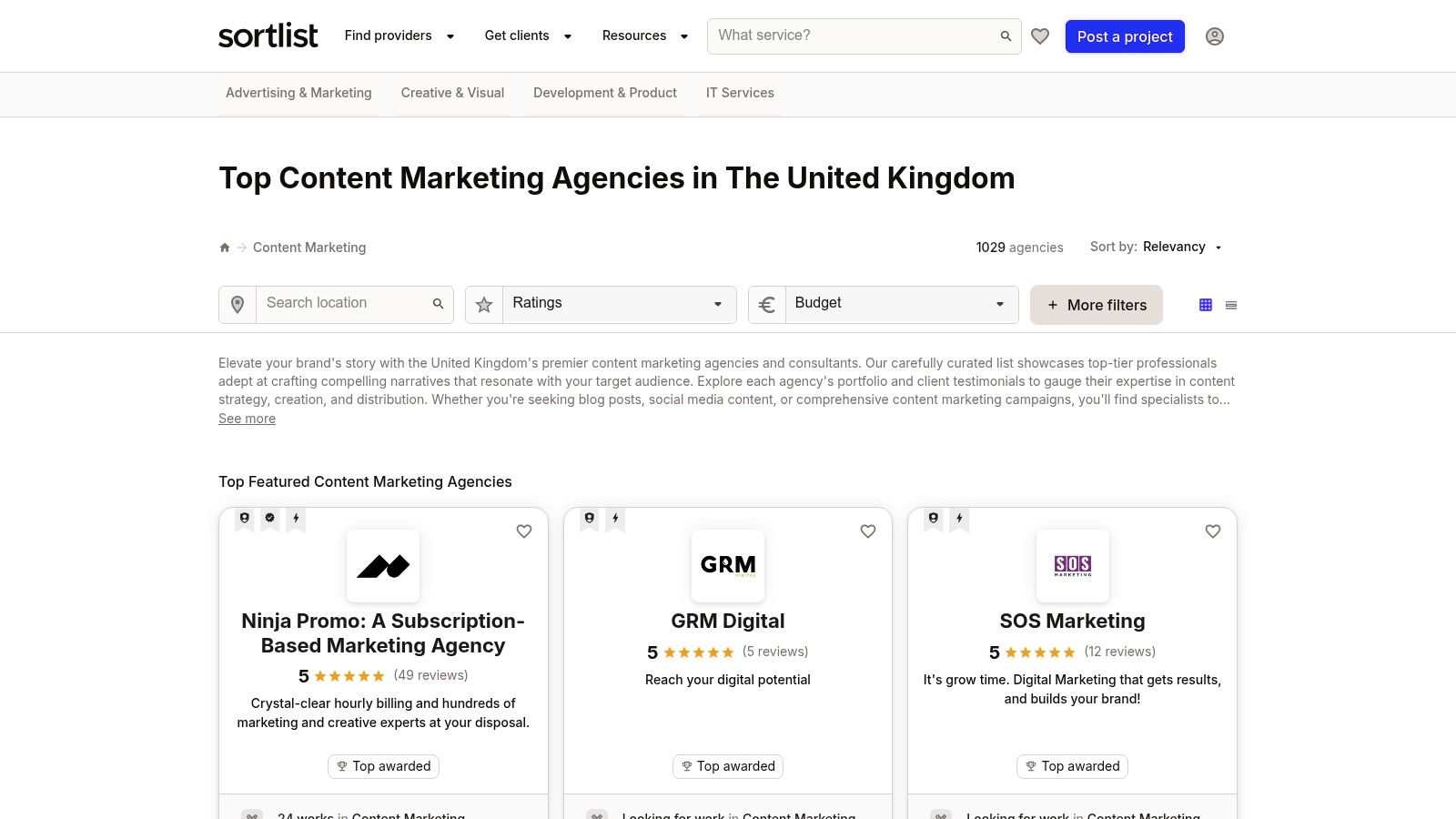
The platform's key differentiator is its RFP-style intake flow, which saves time and effort for buyers. Agency profiles are comprehensive, detailing typical project budgets, client reviews, languages spoken and industry specialisations. This allows for a more efficient comparison, ensuring you only engage with firms that have relevant experience, whether in B2B technology, education or other niche sectors across London, Cardiff or West Yorkshire.
Key Features and How to Use Them
To maximise Sortlist’s value, leverage both its matchmaking and directory features. Start by submitting a detailed brief through their guided process to receive initial recommendations, then use the public directory to cross-reference and explore other potential partners.
- Guided Brief Submission: Be as specific as possible when filling out the project brief. Clearly define your goals, target audience, budget and timeline to get the most accurate agency matches.
- Industry and Budget Filters: Use the browsable directory to filter agencies by industry focus. This is crucial for finding a partner that already understands your market's nuances and language. Pay attention to the typical budget ranges listed on profiles.
- Portfolio and Review Analysis: Scrutinise the "past work" section on each profile to assess the quality and style of their content. Verified reviews provide valuable insights into an agency’s communication and project management capabilities.
While the guided process is efficient, bear in mind that some listed prices are in euros, so it is wise to confirm GBP rates directly. Not all profiles have full pricing details, so expect to request a formal quote. Overall, Sortlist is an excellent tool for businesses wanting a more managed and focused approach to creating a shortlist of credible UK content marketing agencies.
5. The Drum Recommends
Originating in the UK, The Drum Recommends (formerly the Recommended Agency Register or RAR) is a well-respected platform built on a simple yet powerful premise: highlighting agencies based on direct client feedback. It serves as a verification system, allowing businesses to find partners that have already proven their value. For companies searching for the best content marketing agencies UK clients trust, this platform offers a reputation-driven approach backed by one of the industry's most recognised media brands.

Its core strength is the direct link between client ratings and agency visibility. Agencies cannot simply buy their way to a good reputation; they must earn it through exceptional service, which is then validated by their clients. This process gives users confidence that the recommended agencies have a track record of delivering on their promises. The platform's connection to The Drum’s wider editorial content and industry events also means that high-performing agencies are frequently surfaced, providing additional social proof.
Key Features and How to Use Them
To leverage The Drum Recommends effectively, focus on the ratings and how they correspond to specific services. An agency might be highly rated for PPC but have less feedback on content marketing, so it is crucial to analyse the details.
- Service-Specific Ratings: Do not just look at an agency's overall score. Dive into the ratings for "Content Strategy/Creation" to see how they perform in the exact discipline you need.
- UK-Centric Search: The platform has a strong UK footprint, making it easy to filter for agencies based in specific cities like London, Manchester or Bristol, or to search for firms with deep experience in the British market.
- Review Client Feedback: Read the testimonials and look for patterns. Consistent praise for strategic thinking, creativity or communication provides a clear signal of an agency's strengths.
While the site does promote its membership and some content may require registration, the core database of recommended agencies is an invaluable resource. By focusing on the client-verified data and cross-referencing with The Drum’s editorial features, you can build a highly credible shortlist of UK content marketing specialists.
Website: https://recommends.thedrum.com/
6. IPA (Institute of Practitioners in Advertising)
For businesses prioritising professional standards, governance and long-term partnerships, the IPA (Institute of Practitioners in Advertising) is an invaluable resource. As the UK’s leading trade body for advertising and media agencies, its directory provides access to a pre-vetted pool of credible members. While not exclusively a content marketing platform, it is a powerful tool for finding established content marketing agencies UK businesses can trust, particularly for integrated campaigns where compliance and brand safety are paramount.
The primary strength of using the IPA directory lies in the assurance of quality and professionalism. Member agencies are required to adhere to strict codes of conduct and demonstrate a commitment to continuous professional development (CPD), ensuring they are up-to-date with industry best practices. This makes it an ideal starting point for organisations in regulated sectors or those seeking a strategic partner for complex, multi-channel content strategies that extend into branded content and advertising.
Key Features and How to Use Them
The IPA's Agency Finder is the main tool for discovery. It allows you to search and filter member agencies based on their specific capabilities, helping you cut through the broader advertising landscape to find firms with proven content expertise.
- Filter by Discipline: Use the search filters to narrow your search to relevant areas like "Branded Content" or "Digital Strategy" to pinpoint agencies with the right skills.
- Review Member Profiles: Each agency profile details their areas of specialisation, key clients and company ethos. Look for evidence of content-led projects and results that align with your business goals.
- Focus on Accreditation: The IPA accreditation itself is a mark of quality. Prioritising these agencies guarantees a certain level of professional conduct, financial stability and operational excellence.
While the platform does not offer the same pricing transparency as commercial marketplaces, its value is in the credibility and reliability of its members. The IPA is less a tool for quick project hires and more a gateway to finding a vetted, long-term strategic partner for your UK content marketing efforts.
Website: https://ipa.co.uk/
7. Upwork
For businesses seeking flexibility or needing to supplement an in-house team, Upwork offers a different approach to sourcing talent. It is a global freelancing platform where you can directly hire individual UK-based content strategists, writers and editors or even find smaller, specialised boutique agencies. This model is particularly effective for businesses with specific, short-term project needs, smaller budgets or those wanting to test a new content direction without committing to a long-term retainer.
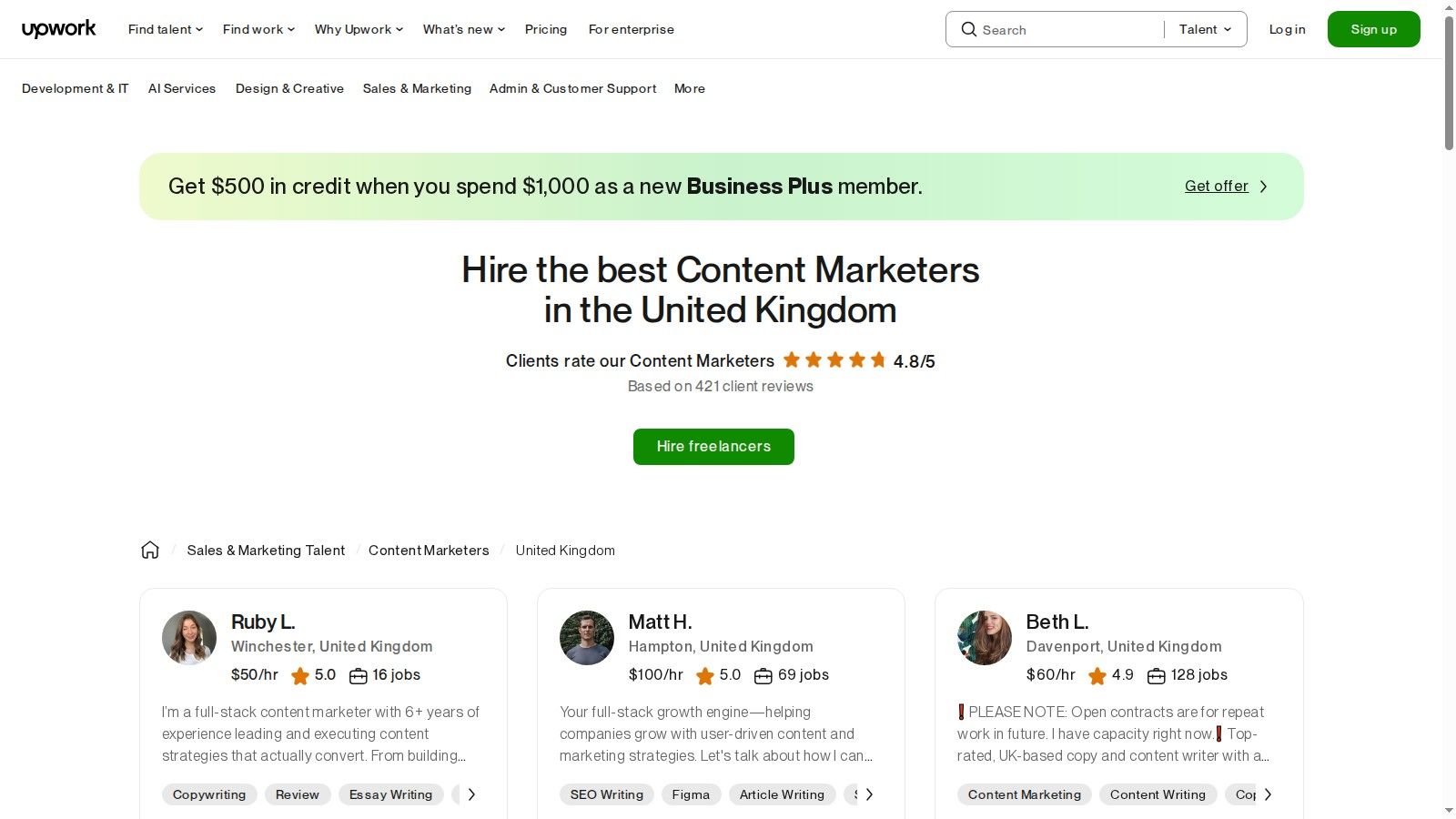
The platform’s main advantage is its direct access to a vast talent pool and the transparency it provides. You can view detailed profiles that include work history, client feedback, portfolios and stated hourly rates, allowing you to make an informed decision quickly. The entire hiring and payment process is managed through the platform, offering security through features like payment escrow. This makes it a lower-risk option for trialling freelancers or finding niche expertise for one-off projects.
Key Features and How to Use Them
Success on Upwork depends on your ability to vet candidates effectively. The sheer volume of talent means quality can vary, so a structured approach to hiring is crucial.
- Detailed Job Posts: Be extremely specific in your job description. Outline the project scope, deliverables, required skills (e.g. SEO, specific industry knowledge) and your budget to attract the most suitable proposals.
- Filter and Review: Use Upwork's filters to narrow candidates by location (UK), "Job Success Score" and earnings history. Scrutinise their portfolios and pay close attention to the relevance and quality of past client feedback.
- Trial Projects: For promising candidates, consider a small, paid trial task. This is the most reliable way to assess their writing quality, communication and ability to meet deadlines before committing to a larger project.
While Upwork places the project management responsibility squarely on your shoulders, its speed and cost-effectiveness are unmatched for certain needs. It is an excellent tool for companies that need agile support from some of the UK's best freelance content marketing professionals without the overheads of a traditional agency.
Top 7 UK Content Marketing Agency Platforms — Comparison
| Provider | 🔄 Implementation complexity | ⚡ Resource requirements | 📊 Expected outcomes | 💡 Ideal use cases | ⭐ Key advantages |
|---|---|---|---|---|---|
| Superhub | High — integrated, bespoke setups and automated systems | Medium–High — agency retainer or project budget; onboarding time | High — measurable growth, rapid launches, automated lead gen | Startups or brands in motorsport/automotive/energy needing end-to-end growth | Full-service + sector expertise + AI-driven lead generation |
| Clutch | Low — browse, filter and review supplier profiles | Low — free to use; time to research shortlisted firms | Medium–High — informed shortlists and vendor comparisons | Buyers doing due diligence and side-by-side comparisons of agencies | Verified client reviews, pricing bands, Leaders Matrix |
| DesignRush | Low — curated directory with granular filters | Low — free browsing; time to evaluate profiles and case studies | Medium — shortlisted agencies with cost cues and case studies | Buyers wanting budget signals and detailed agency profiles | Granular filters, clear cost cues and robust profiles |
| Sortlist | Moderate — guided RFP/matchmaking flow with curated intros | Low–Medium — submit brief; receive curated proposals | Medium — curated shortlist reduces outreach time | Buyers preferring a guided shortlist over mass outreach | Matchmaking service with industry/language filters |
| The Drum Recommends | Low — reputation-driven listings and client-verified ratings | Low–Medium — some content/memberships may be gated | Medium — reputation-backed shortlists surfaced via editorial | Marketers who value UK reputation and industry recognition | Client-verified recommendations backed by media brand |
| IPA | Moderate — directory of vetted member agencies, official standards | Medium — suitable for compliance-heavy projects; proposals likely | High (for governance) — vetted partners for long-term/complex work | Organisations prioritising governance, CPD and professional standards | Credibility from vetted member agencies and industry standards |
| Upwork | Low–Medium — post job and vet freelancers; buyer-managed process | Low — pay hourly/fixed; buyer handles project management | Variable — fast hires and scaling; quality depends on vetting | Small budgets, quick hires or to supplement in-house teams | Large talent pool, transparent rates, fast turnaround options |
Making Your Final Choice and Taking the Next Step
Selecting from the best content marketing agencies in the UK is a significant decision that will shape your brand's future visibility and growth. We have explored a diverse range of platforms and directories, each offering a unique pathway to finding your ideal partner. Your journey might lead you to a full-service creative and tech partner with deep sector expertise or towards a comprehensive directory like Clutch where data-driven comparisons are key.
The right choice depends entirely on your specific circumstances. An established business seeking digital transformation has very different needs from a motorsport team looking for sponsorship. Reflect on the options presented, from client-verified platforms like The Drum Recommends to flexible freelancer marketplaces like Upwork and consider which model aligns best with your goals.
A Framework for Your Decision
To move forward with clarity, you must first define what success looks like for your business. Before reaching out to any potential partners, take the time to document your objectives.
- Define Your Goals: Are you aiming for increased brand awareness, lead generation, improved SEO rankings or direct sales? Be specific and attach measurable KPIs to each goal.
- Understand Your Audience: Who are you trying to reach? A clear picture of your target customer will be invaluable when briefing an agency.
- Establish Your Budget: Determine a realistic budget. This will not only narrow your search but also ensure you are having productive conversations from the outset.
- Assess Your Internal Resources: What skills do you have in-house? Understanding your own capacity will help you identify the precise support you need from an external partner.
Taking Actionable Next Steps
With your internal criteria established, the path forward becomes much clearer. The next phase is about focused outreach and evaluation.
Begin by shortlisting two or three of the most promising content marketing agencies UK or platforms from this article. Prepare a concise brief outlining the goals, audience and budget you have just defined. This document will be the foundation of your initial conversations.
When you start discussions, pay close attention not just to their portfolios but to their process. The best partners are excellent listeners and ask insightful, strategic questions. They should be as interested in understanding your business challenges as they are in showcasing their past work. When multiple stakeholders are involved in selecting the ideal content partner, leveraging the right collaborative decision-making tools can streamline the evaluation process and ensure team alignment.
Ultimately, the strongest partnerships are built on more than just capability; they are founded on a shared vision and a collaborative spirit. By taking this structured and methodical approach, you can move beyond simply hiring a supplier and instead find a genuine partner. You will be well-equipped to choose an agency that will not only deliver exceptional content but will also become a vital engine for your long-term success.
Ready to partner with an agency that blends creative content with powerful technology to drive real results? Superhub specialises in creating bespoke content strategies and automated lead generation systems for ambitious brands, particularly in the automotive and motorsport sectors. Visit Superhub to learn how we can fuel your growth.
Want This Done For You?
SuperHub helps UK brands with video, content, SEO and marketing that actually drives revenue. No vanity metrics. No bullsh*t.