
Motorsport Video Production: A Practical Guide For UK Teams
Forget slow-motion replays and flashy edits for a moment. In professional motorsport, video isn't an art project—it's a hard-nosed commercial asset that generates a real return. It’s the engine that drives sponsor value, grows your fanbase and sells merchandise.
Properly executed, video turns your race team from a cost centre into a revenue-generating machine.
Why Video Is Your Ultimate Commercial Tool
In motorsport, perception is everything. A grainy phone clip from the pit wall just doesn’t cut it when you’re chasing serious sponsorship deals. High-quality, professional video is your most powerful storytelling tool. It lets you control the narrative and showcase your team's professionalism, determination and on-track action in a way static images never could.
It's the difference between telling a sponsor you offer brand exposure and showing them exactly what that looks like.
This isn’t just about looking good; it's a commercial necessity. A solid video strategy directly impacts your bottom line in several key ways:
- Sponsor Acquisition and Retention: Sponsors need to see a return on their investment. A professionally produced season highlights reel, a team documentary or sharp social media clips provide concrete assets they can use in their own marketing. It justifies their spend and makes them want to sign up for another season.
- Fanbase Growth and Engagement: Passionate fans are the lifeblood of any team. Consistent, high-quality video builds a loyal community, keeping them hooked between race weekends and turning casual viewers into dedicated supporters who buy the merch and the tickets.
- Monetisation Opportunities: From selling team gear to offering exclusive behind-the-scenes content on platforms like Patreon, video creates brand new revenue streams. It transforms your digital presence from a simple info board into an active commercial channel.
The Numbers Don't Lie
The commercial power of video in UK motorsport is undeniable. Just look at the British Touring Car Championship (BTCC), a series where video is absolutely central to its success.
In a single season, the BTCC can pull in a massive 17.4 million total UK TV audience , broadcasting for hundreds of hours to over 150 countries. That immense reach, driven entirely by video, translates directly into sales. It's estimated that around 40% of the 383,600 trackside fans buy team merchandise.
A sticker on a car is just a sticker. A brand woven into the story of a dramatic overtake, a last-minute pit stop, or a podium celebration becomes part of the legend. That’s the value video delivers.
Building a Professional Operation
Treating video as a core commercial function requires a professional mindset. It’s not about just pointing a camera and hoping for the best; it’s about strategy, planning and slick execution.
This is exactly how it’s done at the highest levels of the sport. Understanding how top-tier teams manage their output through dedicated multimedia management jobs in Formula 1 shows just how crucial this is.
For any UK team, whether you're in BTCC, British GT or club-level racing, adopting a structured approach is the first step towards unlocking the true commercial potential of your efforts. It’s how you build a brand that sponsors want to be a part of.
Planning Your Shoot Without The Headaches
Success on the track starts in the garage, and a great motorsport video starts with a rock-solid plan. Pre-production is where you get ahead of the chaos of a race day. Nail this part, and you'll save yourself time, money and a monumental amount of stress. Skip it, and you're just another person with a camera hoping to get lucky.
This isn’t about creating some ridiculously over-the-top production bible. It's about building a bulletproof plan that makes your shoot efficient, safe and delivers exactly what your team and sponsors are paying for.
Defining Your Objectives First
Before you even think about what camera to use, you need to ask one simple question: what is this video actually for? The answer to that question shapes every single decision you make from here on out. Are you trying to:
- Attract a new title sponsor? The video needs to look premium. It should scream professionalism and clearly show off every branding opportunity on the car and in the garage.
- Create a highlight reel for social media? This has to be short, punchy and packed with non-stop action to stop people scrolling.
- Produce a behind-the-scenes documentary? Here, the focus shifts to the human story – the drivers, the mechanics, the pressure, the highs and the lows.
- Provide a sponsor with assets for their own channels? You’ll need to work directly from their brief, hitting specific messages and sticking rigidly to their brand guidelines.
Without a clear objective, you’re just collecting random footage. With one, you’re creating a valuable commercial asset that actually does a job.
This flow chart shows how a properly planned video connects the dots between engagement and tangible returns, creating value for both the team and its partners.
The key takeaway is that strategic video doesn't just rack up views; it creates a cycle of value that fuels sponsor interest and drives real commercial activity.
Shot Lists and Storyboards
Once you know your goal, you can map out the shots you need to hit it. A shot list is your race-day checklist, making sure you don’t miss those crucial moments when the pressure is on. It doesn't need to be complicated.
Even a simple storyboard – we're talking rough sketches or just a few notes – helps you visualise the story. Plan your key sequences, from the early morning buzz in the garage to the tyre changes, the grid walk and that final shot of the chequered flag. This forces you to think like an editor before you've even pressed record, guaranteeing you have all the pieces you need to build a compelling story later.
A shot list isn't a creative straitjacket; it's your safety net. In the heat of a race weekend, it’s the one thing that keeps your shoot on track and focused on the commercial goals.
Securing Access and Permissions
This bit is completely non-negotiable. Turning up at a UK circuit like Silverstone or Brands Hatch without the right media accreditation is the fastest way to get yourself sent home. You need to be talking to the series organisers and circuit management weeks in advance.
You absolutely have to know:
- What areas can you film in? (e.g., pit lane, trackside, media centre)
- What are the rules on drones? (Almost always a 'no' unless you have special clearance)
- Are there mandatory safety briefings for your crew?
- Do you need specific high-vis clothing or special passes?
Get this sorted early. It prevents massive headaches and makes sure your team can work safely and look professional on the day.
Integrating Sponsor Requirements
Never, ever treat sponsor deliverables as an afterthought. Their logos and brand messages have to be woven into the video from the very start of the planning process.
Before the shoot, confirm exactly what they need. Do they want clean, isolated shots of their logo on the car, the race suit or the pit garage wall? Are there specific products they need you to feature? Add these to your shot list as mandatory items.
This proactive approach ensures sponsors get the visibility they’ve paid for. It makes them happy, and it makes them far more likely to sign that cheque for next season. It’s simple, it’s practical and it keeps the money flowing.
Capturing High-Impact Footage On Race Day
A race day is organised chaos. Your video production workflow shouldn't add to it. With a solid plan in hand, the focus shifts to execution – capturing stunning footage in a high-pressure, fast-moving environment. This is where the right kit and a clear head are non-negotiable.
You don't need a Hollywood budget, but you absolutely need reliable gear that can handle the rigours of a race weekend. It’s all about picking the right tools for the right job, from grabbing epic trackside action to those quieter, more intimate moments in the garage.
Choosing The Right Kit For The Job
The cameras you choose will define the entire look and feel of your final video. A single camera simply won't cut it. To do this properly, a multi-camera setup is standard practice in motorsport video production.
Think about a primary camera for your high-quality, cinematic stuff. This is typically a mirrorless or cinema camera shooting in a flat profile (like Log), giving you maximum flexibility to colour grade in the edit. For those sweeping, buttery-smooth panning shots of cars flying past, this is your workhorse.
But variety is key. You'll also need:
- Action Cameras: Small, tough cameras like GoPros are absolutely essential for on-board footage. When you place them correctly, they deliver that raw, first-person perspective that puts the viewer right in the driver’s seat.
- Gimbal Camera: For those smooth, flowing shots through the pit lane or on the grid walk, a camera on a motorised gimbal is invaluable. It adds a layer of professional polish that shaky handheld footage just can't match.
- Secondary "B-Cam": A second mirrorless or DSLR lets another operator capture different angles at the same time. Think crowd reactions, candid moments with the engineering team or a different perspective on a pit stop.
The Importance Of Solid Audio
Visuals only tell half the story. The audio tells the other half. The roar of a V8, the scream of tyres, the rattle of air guns in the pit lane—this is the soul of motorsport. Relying on your camera’s built-in mic is a rookie mistake that will instantly cheapen your production.
Your audio kit should include:
- Shotgun Microphones: These mount on your main cameras to capture directional sound, letting you isolate the engine note of one specific car as it blasts past.
- Lavalier (Lapel) Mics: Essential for driver interviews or any pieces-to-camera. They clip onto clothing and deliver clean, crisp dialogue without all the distracting background noise.
- Ambient Recorders: Place a separate audio recorder in the garage or near the track to purely capture the atmosphere. You can then layer this into your edit to build a rich, immersive soundscape.
Great motorsport video is as much about what you hear as what you see. Bad audio will ruin brilliant footage, every single time. Get it right at the source, because you can't easily fix it in the edit.
Safe And Effective Rigging
Mounting a camera to a race car requires more than a suction cup and a prayer. Safety is paramount. Any bit of kit that comes loose at 150 mph becomes a seriously dangerous projectile.
Always use professional-grade mounting solutions with multiple points of contact and safety tethers. Some teams even integrate devices like body worn cameras to capture unique POV shots from the crew while ensuring accountability. Always check the series regulations first – many have strict rules on where and how cameras can be mounted externally.
Advanced Capture Techniques
To really elevate your production, you need to think dynamically. Multi-camera setups are a given, allowing you to cut between a wide track shot, an on-board view and a tight shot of the driver's helmet, all from the same piece of action. This creates energy and keeps your viewers hooked.
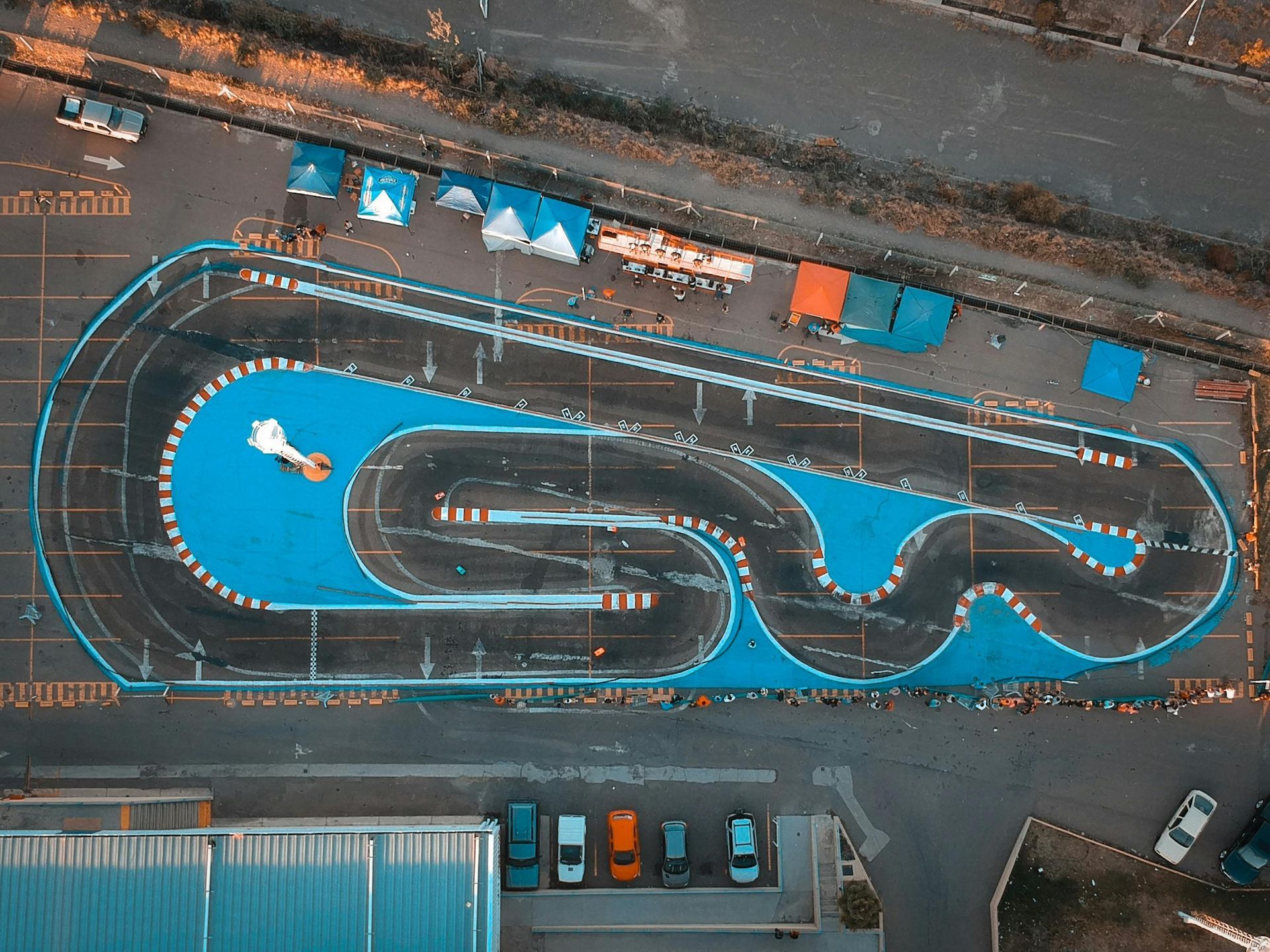
Aerial footage provides a sense of scale and drama that ground-level cameras just can't touch. Track regulations can be tight, but using drones for motorsport is a game-changer for establishing shots and tracking cars around the circuit. If you want to see what's possible, learn more about our dedicated cinematic drone footage and filming services and how they can be applied to your race weekend.
Ultimately, the key is managing your crew, your kit and your time effectively. Stick to your shot list, but be ready to adapt at a moment's notice. Motorsport is unpredictable, and the best teams are those prepared to capture the unscripted drama that makes the sport so compelling.
Bringing Your Motorsport Story To Life In The Edit
The footage is in the bag. Now, the real work begins. Post-production is where you take hours of raw clips from a chaotic race weekend and shape them into a polished, engaging story that actually delivers results.
This isn't just about dragging clips onto a timeline; it's where the story is won or lost. A great edit can rescue a difficult shoot, while a poor one can completely ruin perfect footage. It demands a different skillset to being trackside — patience, an obsessive eye for detail and a ruthless ability to cut anything that doesn't serve the narrative.
Crafting The Narrative
Your first job in the edit suite is to find the story. Go right back to the objective you set during the planning phase. Are you building a hero edit around your driver's incredible comeback? Or showcasing the slick teamwork of the pit crew for a sponsor video?
Watch absolutely everything you shot and start logging the gold. Pull out the best takes of every key moment — the overtakes, the garage reactions, the interviews. These are the raw ingredients you'll use to build your narrative arc. You need a clear beginning, middle and end that holds the viewer's attention from start to finish.
Your story doesn't have to be a feature film. A 60-second social media clip still needs a narrative. It might be as simple as: tension on the grid (beginning), a dramatic on-track battle (middle), and a triumphant podium shot (end).
This structure is what separates professional content from a random collection of clips. It gives the action meaning and makes the viewer care about the outcome.
The Technical Polish: Sound And Colour
Once you've locked the story in, it's time for the technical polish that lifts the final product from good to great. Two elements are absolutely crucial here: sound design and colour grading.
Sound design is about building an immersive audio world. This goes way beyond just the on-track engine noise. It’s about layering in other sounds to make the viewer feel like they are right there in the pit lane.
- The crackle of the team radio.
- The metallic clank of tools in the garage.
- The roar of the crowd.
This rich soundscape is an often-overlooked part of video production, but it has a massive impact on the final quality. Check out our guide on the key skills needed for successful content production for a deeper dive.
Colour grading is where you create the visual mood. This is the process of tweaking the colours and tones of your footage to create a consistent, cinematic look. You can make the greens of the grass pop, enhance the livery on the car and give your video a professional, high-end feel that matches your team's brand identity.
The UK's television production industry, which powers broadcasts for series like BTCC and British GT, is a huge market, estimated to hit £14.2 billion in 2025 . A key driver of this growth is the rise of independent studios, now numbering over 7,700 , which have taken market share from traditional broadcasters. This has opened the door for agile producers to create incredible motorsport content, from live streams to highlight reels. You can explore more data about the UK television production sector on ibisworld.com.
Ensuring Sponsor Compliance
Finally, and most importantly from a commercial point of view, is sponsor compliance. This is a non-negotiable step. Your sponsors have paid for visibility, and the final edit is where you prove you’ve delivered it.
Go through your video with a fine-tooth comb, checking every shot.
- Logo Visibility: Are sponsor logos clear and unobstructed in key moments?
- Brand Guidelines: Have you used the correct brand colours, fonts and messaging if required?
- Asset Delivery: Does the final video meet the technical specs they need for their own channels?
Delivering a video that nails the sponsor requirements is just as important as delivering one that looks and sounds incredible. It builds trust, proves ROI and is the key to securing that all-important funding for the next season. It turns your video from just a nice-to-have into an essential commercial asset.
Effective Distribution And Monetisation Strategies
Shooting incredible video is only half the battle. Your masterpiece of a race edit is completely useless if it’s just gathering digital dust on a hard drive.
Distribution isn't something you bolt on at the end; it has to be a core part of your strategy from the very beginning. It’s what turns views and likes into actual, tangible results for your team and, most importantly, your sponsors.
A smart distribution plan ensures every single piece of content, from the full race summary down to a 15-second social clip, is built for the right platform to hit a specific goal.
Optimising For Every Platform
You can't just spray the same video everywhere and hope for the best. It doesn’t work. Each social platform has its own audience, its own algorithm and its own unwritten rules. A winning strategy means shaping your content to fit the space.
-
YouTube: This is the home for your longer, more detailed content. Think in-depth race highlights, behind-the-scenes documentaries and proper technical explainers. People come to YouTube to be entertained and to learn something, so you have the space to go deeper.
-
Instagram & TikTok: These platforms are all about short, sharp, attention-grabbing clips. We're talking vertical video, fast cuts and high-impact moments. A slick overtake, a lightning-fast pit stop or a raw driver reaction is what stops the scroll here.
-
Website & Email: Your own channels are perfect for capturing leads. You can use video to create gated content, like an exclusive pre-season interview with the team. To watch it, viewers hand over their email address, building your marketing list directly.
Live streaming is also a massive opportunity in UK motorsport. Just look at British Speedway's lower-tier leagues. A UK company, ExStream, jumped in to provide multi-camera coverage from all sorts of different tracks, selling it on a subscription model.
This reflects a much wider trend. The UK motorsport industry's turnover rocketed to £16 billion in 2023 — that's a £7 billion jump since 2012. You can read more about how live streaming is transforming motorsport on liveu.tv.
Here’s a simple breakdown of where your content should live and why.
Video Distribution Channel Comparison
| Platform | Best For | Content Format | Key Metric |
|---|---|---|---|
| YouTube | Long-form storytelling, race highlights, documentaries, SEO. | Horizontal (16:9), 5-20 mins+. | Watch Time |
| Behind-the-scenes, high-impact moments, team personality. | Vertical (9:16) Reels, Stories. | Engagement Rate | |
| TikTok | Raw, authentic moments, trends, fast-paced action. | Vertical (9:16), 15-60 seconds. | Views & Shares |
| Community updates, live streams, sponsor shout-outs. | Square (1:1) or Vertical (4:5). | Reach & Comments | |
| Team Website | Lead capture, sponsor hub, exclusive content. | Embedded horizontal video. | Conversions |
| Email/Newsletter | Nurturing your core fanbase, driving ticket sales. | Embedded thumbnails linking to video. | Click-Through Rate |
Choosing the right channel is just as important as creating the right content. Focus your efforts where they'll make the biggest impact.
Packaging Assets For Sponsors
One of the smartest ways to make money from your video is to package it up as a direct deliverable for your sponsors. This instantly shifts your video production from being a team expense to a revenue driver.
Don't just send them a link to your YouTube channel. That’s lazy.
Instead, give them a professional package of assets they can use directly on their own marketing channels. This should include things like:
- Branded Social Clips: Short, punchy videos already edited with their logo and a call-to-action.
- Clean Edits: Versions of your main videos with your team's graphics removed, so they can add their own branding.
- Raw Footage: A curated selection of high-quality clips showing their branding in action on the car, on the race suit or in the garage.
By providing tangible video assets, you are no longer just selling them space on a car. You are selling them content — a far more valuable proposition that proves clear ROI and makes them eager to re-sign for another season.
Proving The ROI
Finally, you have to track everything. Use the built-in analytics on each platform to keep a close eye on key metrics like view duration, click-through rates and audience demographics.
Present this data in a clear, simple report to your sponsors every month.
When you can show a sponsor exactly how many thousands of people saw their brand, engaged with the content and clicked through to their website, you’re having a proper commercial conversation. This closes the loop, proves the financial value of your motorsport video production and turns it into a sustainable, profitable part of your race operation. To learn more about this, check out our guide on how to maximise the ROI of video content.
Common Questions About Motorsport Video Production
You've got questions, we've got answers. We get asked the same things by race teams and series organisers up and down the UK, so here’s a straight-talking guide to motorsport video. No fluff, just the stuff you actually need to know.
How Much Does Motorsport Video Production Actually Cost?
This is always the first question, and the honest answer is: it depends.
A single shooter for a club race day might set you back £500-£800 . It's a starting point, but let's be realistic. You'll get some footage, but it probably won't have the narrative or polish you need to impress serious commercial partners.
For proper multi-camera coverage at a national event like a BTCC or British GT weekend, you're in a different league. A small, professional crew with the right kit, delivering a high-quality highlights reel, is typically going to be in the £2,500 to £7,000+ range per weekend.
What drives that number?
- Crew Size: More cameras mean more angles and better storytelling, but also more people on the payroll.
- The Kit Bag: Proper cinema cameras, drones and professional audio gear all add to the cost. You get what you pay for.
- What You Actually Get: The more videos you need—social clips, sponsor edits, full highlights—the more time it takes in the edit suite, and that's reflected in the price.
Try to think of it as an investment. The right video package pays for itself over and over in sponsor retention and fan engagement.
What Is A Realistic Turnaround Time?
Motorsport is all about speed, and your media needs to keep up. Nobody cares about a race highlight video that lands two weeks after the chequered flag. Your fans want the action while the adrenaline is still pumping.
Here’s what a realistic timeline looks like:
- Race Weekend Clips: Simple, punchy clips—a great overtake, a frantic pit stop—should hit social media within 24 hours of the event finishing.
- Main Highlights Video: A polished 3-5 minute highlights package needs to be in your hands within 3-5 working days . This gives the editor enough breathing room to craft a story, sort the colour and get the sound right.
- Sponsor Assets: Any custom edits for your commercial partners should be delivered within 5-7 working days , maybe a little longer if their requirements are complex.
If it takes any longer than this, you're losing the momentum you worked so hard to build over the race weekend.
"A good race weekend, with lots learned and lots of progress made!" - Andre Lafond, Driver. Capturing that progress and sharing it quickly is what keeps your fans and sponsors bought into the journey.
Who Owns The Media Rights To The Footage?
This is a big one, and it catches a lot of people out.
For almost any organised motorsport event in the UK, it’s the series organiser or the circuit owner who holds the main broadcast and media rights. When you hire a video crew, you’re commissioning them to create work for you , but that doesn't mean you can do whatever you want with it.
Before a single camera starts rolling, you need to be crystal clear on the rights. As a team, you can almost always use the footage for your own channels—social media, your website, sponsor reports. But you probably won't have the right to sell it to a TV network or use it in a paid advert without getting further clearance and paying licensing fees.
Always, always get the terms of use in writing. A professional agency will sort this out with the organisers for you during pre-production. It protects you, your sponsors and your relationship with the series.
At SuperHub , we handle this entire process, from getting trackside access to delivering sponsor-ready assets that actually prove their worth. If you want a media partner who understands the commercial realities of UK motorsport, let's talk.
Find out more about our no-bullshit approach at https://www.superhub.biz.
Want This Done For You?
SuperHub helps UK brands with video, content, SEO and social media that actually drives revenue. No vanity metrics. No bullshit.