
Why Your Google Traffic Dropped But Your Brand Searches Increased
Something strange is happening in Google Search and most businesses haven't noticed yet.
We spotted it during a client meeting last month. Their organic traffic from Google had dropped noticeably for several key search terms. Pages that had been bringing in steady traffic were showing fewer clicks in Google Search Console. On paper, it looked like a ranking problem.
But it wasn't.
When we dug into the data, their rankings hadn't changed. Impressions were stable or even growing. The pages were still appearing in search results. People just weren't clicking through.
At the same time, something else was happening. Direct traffic to their website had increased. Brand name searches were up. People were finding them, just not through the traditional click-on-a-search-result route.
Once you see this pattern, you can't unsee it. And we're seeing it everywhere.
What's Actually Happening
Google has been gradually changing how it displays search results. AI Overviews, featured snippets, knowledge panels, People Also Ask boxes. The common thread is that Google is extracting content from your website and displaying it directly in the search results.
Your carefully written page content, the answer you crafted to a specific question, the pricing information you laid out clearly — Google pulls it out, displays it on their own page, and the searcher gets what they need without ever visiting your site.
Your content. Their page. Zero clicks for you.
This isn't new in principle. Featured snippets have been doing this for years. But the scale has changed dramatically. AI Overviews now appear for a significant percentage of search queries, and they're pulling much larger chunks of content than a simple featured snippet ever did.
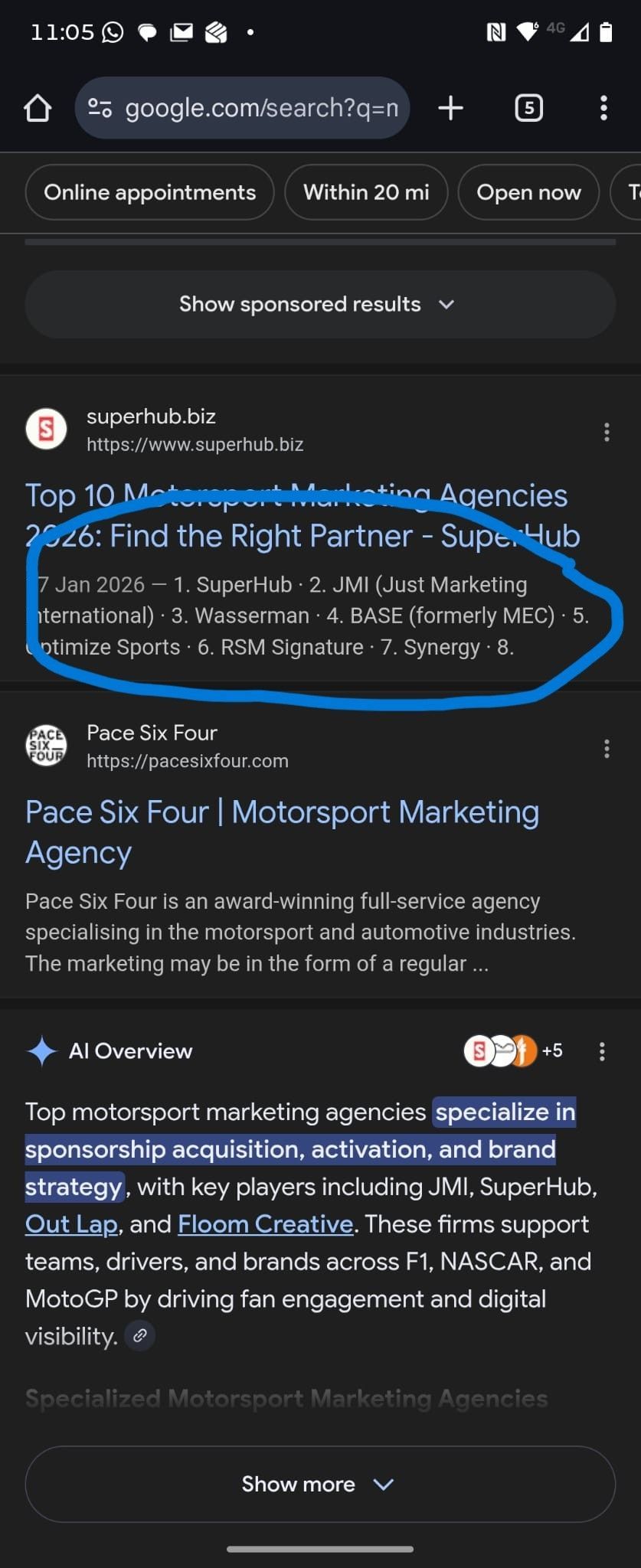
The result is a growing disconnect between impressions and clicks. Your page appears in search results, Google uses your content to answer the query, and the searcher moves on without clicking. Look at the image below where Google has replaced the meta description in SERPS with the content of the listicle!
The Brand Search Connection
Here's where it gets interesting.
When people research through AI-enhanced search, whether that's Google AI Overviews, ChatGPT, Perplexity or any other platform, they don't just read one answer and forget about it. They make a mental note of the sources. They see your brand name mentioned. They might not click through immediately, but they've registered that your business has expertise on this topic.
Later, when they're ready to take action, they don't go back to the search results page. They search for your brand directly. Or they type your URL. Or they go back to their AI chat history and find the conversation where you were mentioned.
This is the pattern: organic click-through drops, but brand search and direct traffic increases. Your content is doing its job. Google (and AI search engines) are just changing the route people take to reach you.
What This Means For Your Business
If you're measuring SEO success purely on organic clicks from Google Search Console, you're probably undervaluing your content's actual performance.
A page that generates 5,000 impressions and 50 clicks might look like it has a CTR problem. But if that same page is fuelling AI Overviews that drive brand recognition and later direct visits, the real value is much higher than 50 clicks suggests.
The problem is that this is genuinely difficult to measure. Google Search Console shows you the organic click data. Google Analytics shows you direct traffic. But there's no clean attribution that connects "someone saw your content in an AI Overview" to "they visited your site directly three days later."
We're working with imperfect data here. But the pattern is consistent enough across multiple clients and our own site that we're confident in the direction of travel.
How To Respond
There are two schools of thought and we think you need both.
First, optimise for the click you can still get. Not every search result triggers an AI Overview. Not every query gets a featured snippet. For those traditional organic results, your meta descriptions, title tags and content structure still matter enormously. Make them compelling enough that people want to click through even when Google's shown them a preview.
Second, optimise for the citation. If Google is going to pull your content into AI Overviews and AI search engines are going to cite your pages in their answers, make sure it's your content they're pulling. Not your competitor's.
This means:
Write content that answers questions with authority. AI engines cite sources they trust. Generic content from anonymous "admin" authors doesn't get cited. Content with named experts, specific experience and original insight does.
Structure your content for extraction. Clear headings that match query patterns. Concise answer paragraphs in the first few sentences of each section. Supporting detail that builds depth. If an AI engine needs to pull a 2-3 sentence answer to a specific question, make it easy to find on your page.
Get your schema right. This is the technical bit that most businesses overlook. Your structured data tells AI engines what your content is, who wrote it, and how it fits into broader topics. Thin or missing schema makes you harder to cite.
Build genuine authority signals. Named authors with real credentials. Original data and observations. Content that can't be found elsewhere. AI engines are increasingly sophisticated at distinguishing between original sources and content that simply repackages existing information.
Track the full picture. Don't just measure organic clicks. Track brand searches, direct traffic, AI citations, and the overall trajectory of how people find you across all channels. The click from a Google search result is no longer the only metric that matters.
The Bigger Shift
What we're describing isn't a Google bug or a temporary algorithm change. It's the fundamental direction of search.
Search engines are evolving from lists of links into answer engines. AI platforms are training users to get information conversationally rather than by clicking through to websites. The intermediary role that Google has played for 25 years, connecting searchers with websites, is being replaced by a model where the search engine (or AI) delivers the answer directly.
That doesn't mean your website stops mattering. It means your website's role is shifting. It's becoming the authoritative source that AI engines cite, rather than the destination that searchers click through to. Both functions are important. But if you're only optimising for clicks, you're optimising for a shrinking share of how people actually find and choose businesses.
The businesses that adapt to this will thrive. The ones that keep measuring success purely in organic clicks will wonder why their traffic is dropping while their competitors grow.
What We're Doing About It
At SuperHub, we've been tracking this pattern across our own website and our clients' since early 2025. It's directly informed how we approach AI search optimisation.
Our AEO/GEO methodology is built around this reality. We optimise content for both traditional search performance and AI citation. We track visibility across ChatGPT, Perplexity, Google AI Overviews and other platforms. We measure sentiment, citation frequency and the full journey from AI mention to website visit.
The results speak for themselves. We currently rank #1 for AI search visibility in our sector, appearing in over 35% of monitored AI conversations and cited more frequently than any competitor.
If you want to understand how this pattern is affecting your business and what to do about it, we offer a free AI Visibility Audit. No fluff, just data.
Want This Done For You?
SuperHub helps UK brands with video, content, SEO and marketing that actually drives revenue. No vanity metrics. No bullsh*t.