
The 12 Best CRM for Small Business UK: Our 2026 Guide
In today's competitive market, managing customer relationships effectively is no longer a luxury—it's essential for survival and growth. For a UK small or medium-sized enterprise (SME), the right Customer Relationship Management (CRM) system can revolutionise operations, streamline sales processes, and build lasting loyalty. Yet, with a bewildering array of options available, each promising to be the ultimate solution, how do you find the perfect fit for your business?
This comprehensive guide is designed to cut through the marketing noise. We're providing an in-depth, practical resource specifically for British businesses. We will explore the key considerations unique to operating in the UK, from GDPR compliance and data residency to seamless integrations with vital UK accounting software like Xero and Sage. To truly choose your next business superpower, it's essential to start with a solid understanding of customer relationship management basics.
Forget generic feature lists and surface-level reviews. We dive deep into a curated roundup of the top CRM platforms, offering a clear, honest assessment to help you select the best CRM for your small business in the UK . Each review includes:
- Honest pros and cons based on real-world usage.
- Clear GBP pricing guidance to match your budget.
- Specific notes on UK-centric features , including data handling.
- Ideal use cases for startups, established SMEs, and niche industries.
Our goal is to equip you with the insights needed to make a confident decision, whether you're a startup looking to organise your first contacts or an established firm aiming to revamp your sales and marketing engine. Let's find the system that will power your growth.
1. HubSpot CRM
HubSpot has earned its reputation as a powerhouse in the CRM space, offering a uniquely scalable solution that grows with your business. Its major draw for UK small businesses is the powerful, genuinely free CRM platform. This isn't just a limited trial; it provides essential tools like contact management, deal tracking, live chat, and basic reporting at no cost, making it an incredibly low-risk entry point for companies new to customer relationship management.
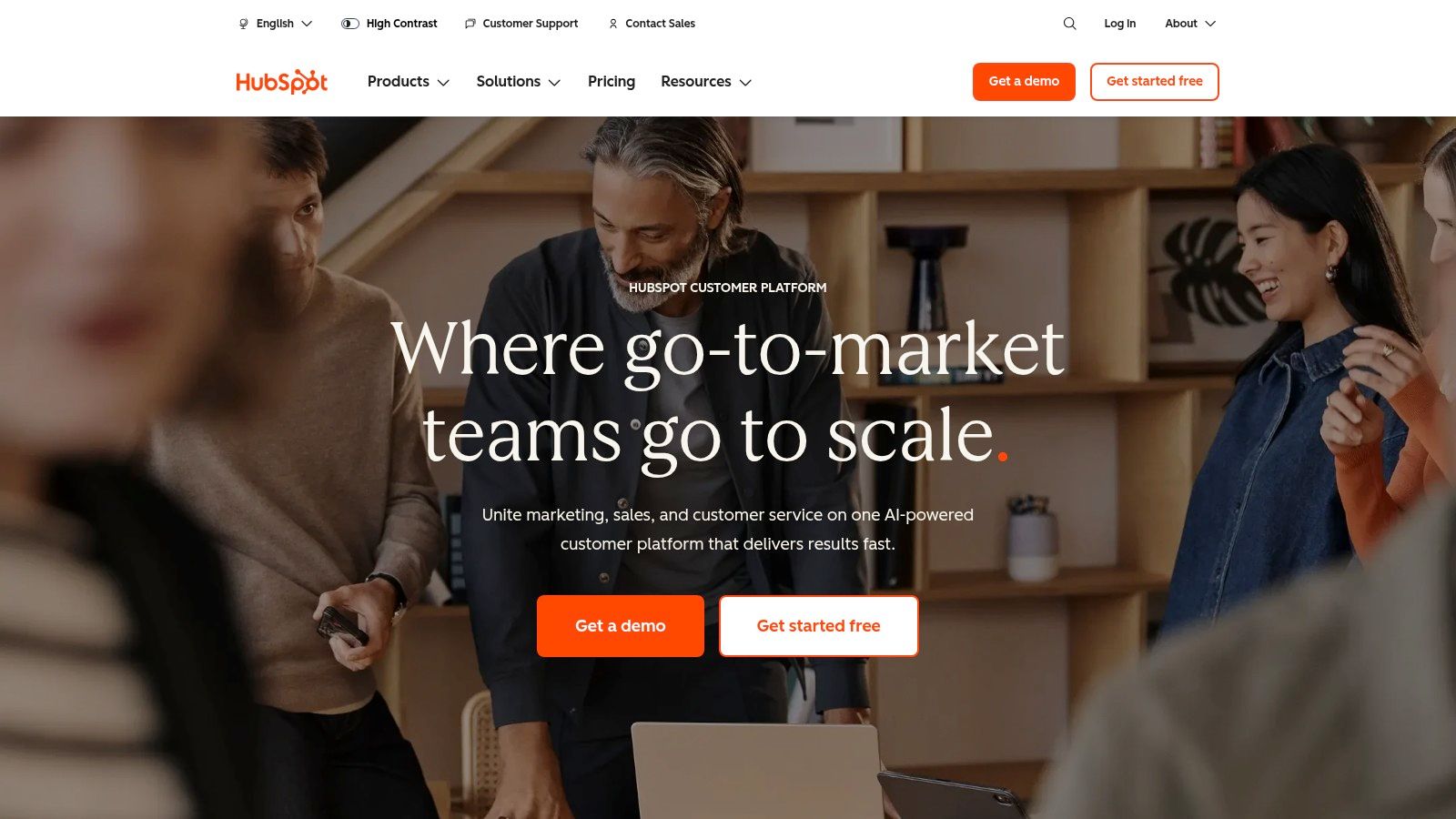
What makes HubSpot the best CRM for small business UK companies aiming for growth is its modular design. As your needs evolve, you can add paid "Hubs" for Marketing, Sales, Service, and Content Management. This allows you to build a customised, all-in-one system without paying for features you don't use. For instance, the Marketing Hub introduces sophisticated tools that can automate many of your outreach efforts, and you can learn more about marketing automation here to see how this could benefit your strategy.
Key Considerations for UK Businesses
- Best for: Startups and SMEs wanting an all-in-one platform that can scale from free to a full enterprise suite.
- GDPR & Data: HubSpot offers data hosting options in the EU, helping UK businesses comply with GDPR and data residency requirements.
- Pricing: The core CRM is free. Paid "Hubs" start from around £15/month (Starter tier) and can rise significantly for Professional and Enterprise tiers, which often include mandatory onboarding fees.
- Integrations: Features a vast marketplace with seamless integrations for UK-centric tools like Xero, Sage, and Stripe.
| Pros | Cons |
|---|---|
| Generous free plan is perfect for getting started. | Advanced tiers can become expensive quickly. |
| Scales from a simple CRM to a full business growth platform. | Onboarding fees are often required for Pro/Enterprise plans. |
| Excellent user experience and a clean, intuitive interface. | Per-transaction fees apply for UK payments via Commerce Hub. |
| Extensive app marketplace for easy third-party integrations. |
Find out more at hubspot.com
2. Salesforce Sales Cloud
Salesforce is a dominant force in the CRM world, and its Sales Cloud platform offers a powerful, highly customisable solution for ambitious UK small businesses. While often associated with large enterprises, its "Starter Suite" edition is specifically designed to give SMEs access to its core sales, service, and marketing tools in one simplified application. This makes it an excellent choice for businesses that anticipate significant growth and require a platform that can handle increasing complexity without needing to switch vendors later on.
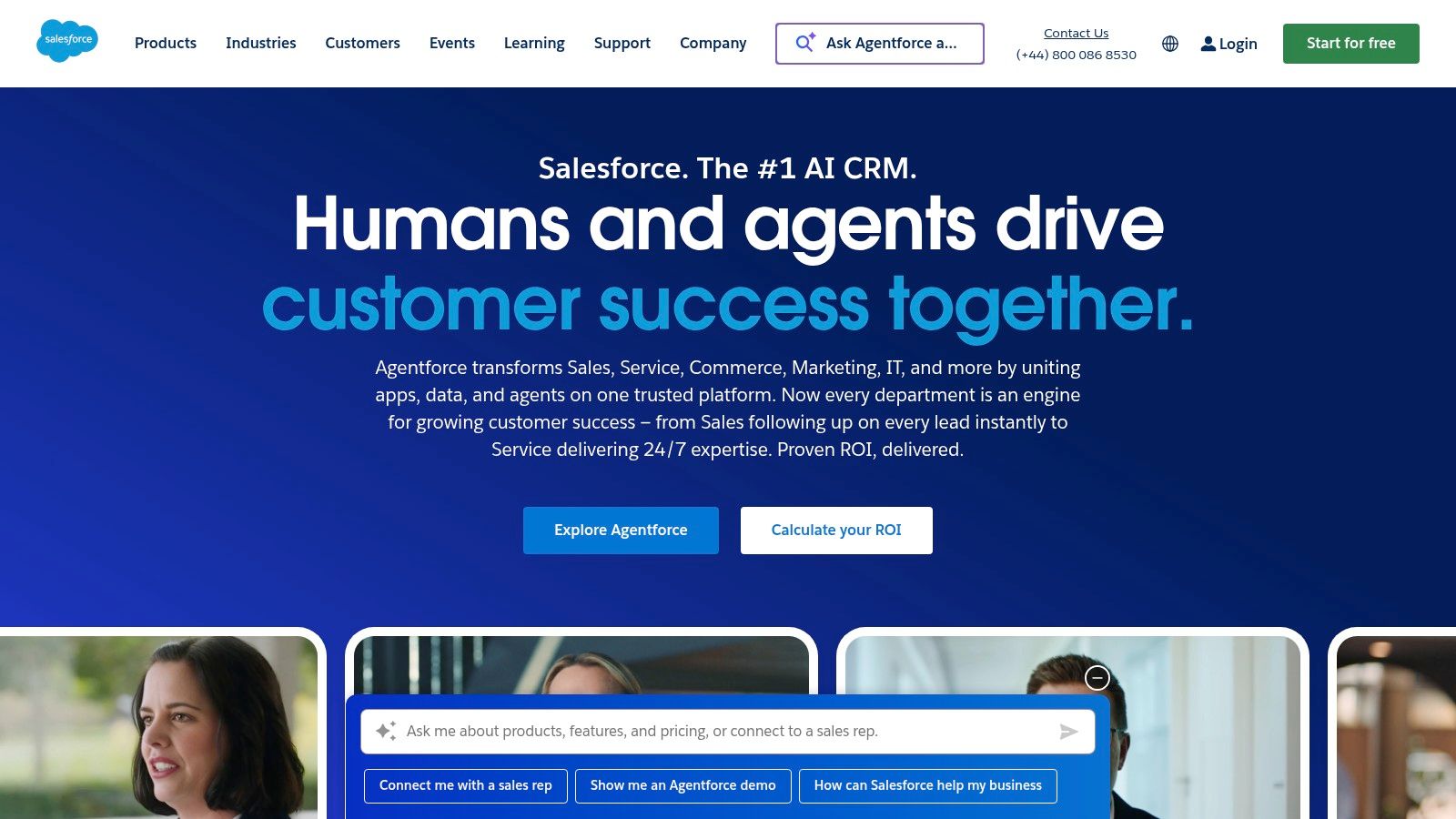
The key differentiator for Salesforce is its incredible depth and scalability. As a business grows, it can tap into advanced forecasting, powerful automation rules, and sophisticated AI-driven insights. The AppExchange, Salesforce's vast marketplace, allows for unparalleled customisation, enabling UK firms to integrate specialised tools for everything from accounting to industry-specific compliance. This ecosystem ensures the platform can be tailored to almost any business process, making it a strong contender for the best CRM for small business UK companies with unique operational needs.
Key Considerations for UK Businesses
- Best for: Growing SMEs that need a highly customisable and scalable platform with advanced sales and automation features.
- GDPR & Data: Salesforce is fully committed to GDPR compliance and offers UK and EU data residency options through its Hyperforce infrastructure.
- Pricing: The Starter Suite begins at £20 per user/month (billed annually). Professional and Enterprise editions offer more features at significantly higher price points. 30-day trials are available.
- Integrations: The AppExchange provides thousands of apps, including deep integrations with popular UK software like Sage, Xero, and various payment gateways.
| Pros | Cons |
|---|---|
| Outstanding customisation and scalability for growth. | Can be complex to set up and may require specialist knowledge. |
| Extensive AppExchange marketplace for endless integrations. | Costs can escalate quickly with additional users and add-ons. |
| Powerful automation and AI-driven analytics features. | Some essential features are locked behind more expensive tiers. |
| UK pricing in GBP and free 30-day trials are available. | The interface can feel overwhelming for complete beginners. |
Find out more at salesforce.com/uk
3. Pipedrive
Pipedrive is a CRM built by salespeople, for salespeople, and its streamlined design reflects this laser focus. It excels by simplifying the sales process into a clear, visual pipeline, allowing UK small businesses to track leads and deals with exceptional clarity. Its core strength lies in its user-friendly, drag-and-drop interface, which makes managing sales activities intuitive and helps ensure high adoption rates among team members who might be new to CRM software.
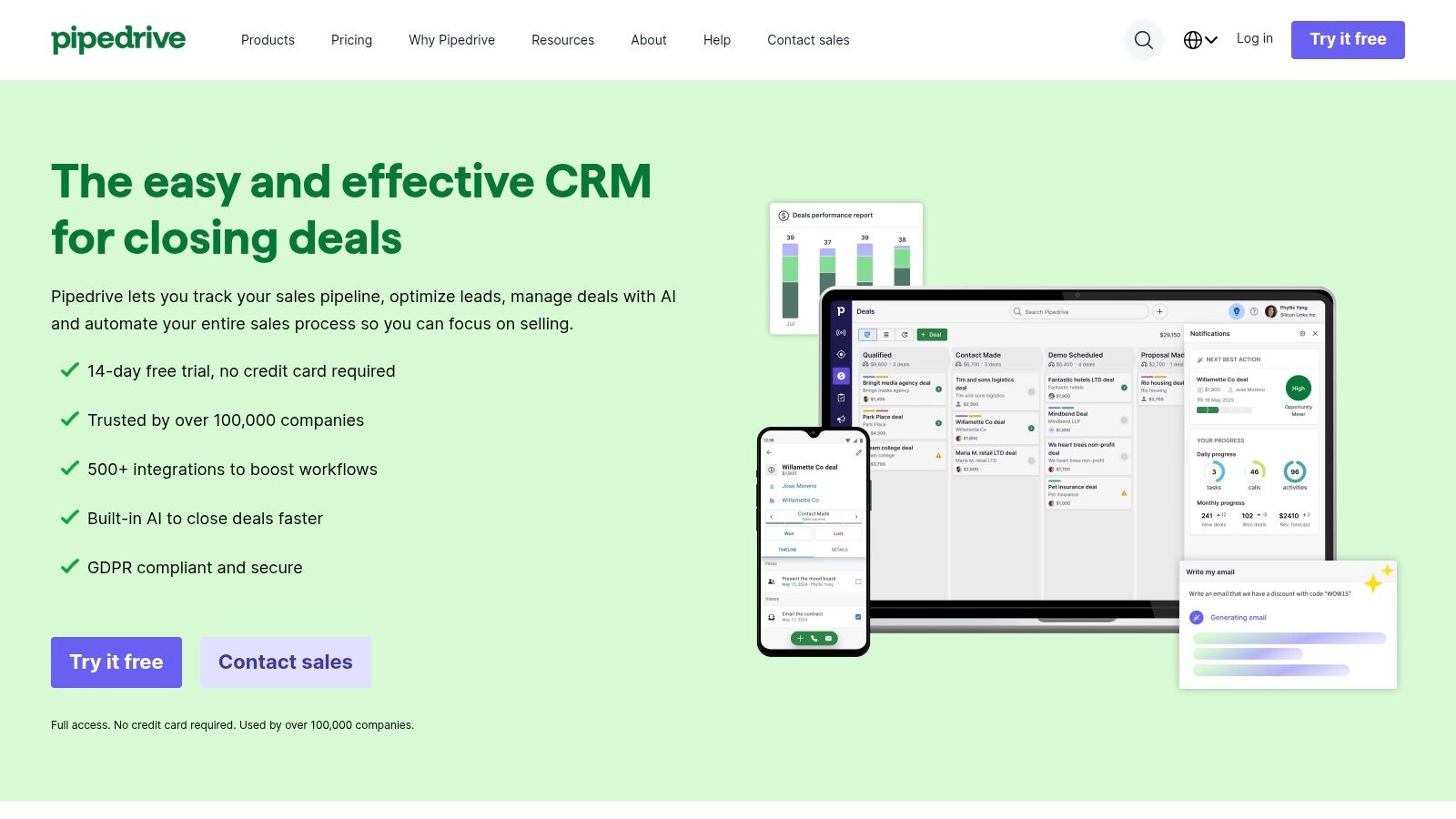
Unlike all-in-one platforms, Pipedrive is unapologetically sales-first. This specialisation means that features are geared towards moving deals forward, from email sync and activity reminders to powerful reporting on sales performance. For businesses prioritising revenue generation, this focused approach is a significant advantage. It helps teams concentrate on the activities that matter most and provides clear insights for refining their sales process, a key part of any successful B2B strategy. You can explore some effective B2B lead generation strategies here to complement Pipedrive's capabilities.
Key Considerations for UK Businesses
- Best for: Sales-focused SMEs and teams that need an intuitive, visual tool to manage their pipeline without unnecessary complexity.
- GDPR & Data: Pipedrive is fully GDPR-compliant and uses data centres in the EU (Germany), ensuring data residency for UK customers.
- Pricing: Starts from £14.90 per user/month for the Essential plan. Higher tiers add more advanced features like automation and integrations. A 14-day free trial is available.
- Integrations: Connects with over 500 apps, including key UK tools like Xero, QuickBooks, and popular marketing platforms such as Mailchimp.
| Pros | Cons |
|---|---|
| Quick setup and an incredibly intuitive user interface. | No free-forever plan, only a 14-day trial. |
| Transparent, per-user GBP pricing makes budgeting straightforward. | Advanced automation and reporting are on higher-priced tiers. |
| Excellent for sales-first businesses prioritising pipeline management. | Some useful functionality, like web forms, is a paid add-on. |
| Strong mobile app for managing deals on the go. |
Find out more at pipedrive.com
4. Zoho CRM
Zoho CRM is a compelling option for UK businesses searching for a powerful, feature-rich platform without the enterprise-level price tag. Its primary appeal lies in offering an extensive suite of tools at a highly competitive cost, making deep functionality accessible to SMEs. The platform is built around a vast ecosystem of over 40 integrated Zoho applications, allowing businesses to manage everything from sales and marketing to finance and HR within a single, unified environment.
What makes Zoho CRM a contender for the best CRM for small business UK is its sheer depth and customisability. Features like workflow automation, advanced analytics, and the AI-powered assistant, Zia, provide capabilities often reserved for more expensive systems. This allows small businesses to automate repetitive tasks, gain predictive insights, and improve overall efficiency. Implementing these features helps to build stronger relationships, and you can explore more on how this impacts repeat business in these customer retention strategies that work.
Key Considerations for UK Businesses
- Best for: Budget-conscious SMEs that need a powerful, highly customisable CRM and plan to use other integrated business apps.
- GDPR & Data: Zoho provides EU data centres (located in Dublin and Amsterdam), helping UK businesses meet data residency and GDPR obligations.
- Pricing: Offers a free-forever plan for up to 3 users. Paid plans are very competitive, starting from around £12/user/month (billed annually) for the Standard edition.
- Integrations: Integrates seamlessly with the entire Zoho suite (Books, Campaigns, etc.) and offers over 600 third-party extensions, including UK favourites like Sage and Mailchimp.
| Pros | Cons |
|---|---|
| Competitive pricing for an extensive set of features. | The user interface can feel complex and has a steeper learning curve. |
| Highly scalable within the wider Zoho ecosystem. | Some AI and advanced features are restricted to higher-tier plans. |
| Strong automation and AI capabilities streamline workflows. | Calculating final costs can be tricky with various add-ons. |
| Free edition available for up to three users. |
Find out more at zoho.com/crm
5. Freshsales by Freshworks
Freshsales, part of the Freshworks ecosystem, is a sales-first CRM designed for speed and efficiency. Its key differentiator for UK small businesses is the integration of core communication tools directly into the platform. With built-in phone, email, and chat capabilities, it eliminates the need for multiple subscriptions and allows sales teams to engage with prospects without ever leaving the CRM interface. This unified approach streamlines workflows and provides a complete, chronological view of every customer interaction.
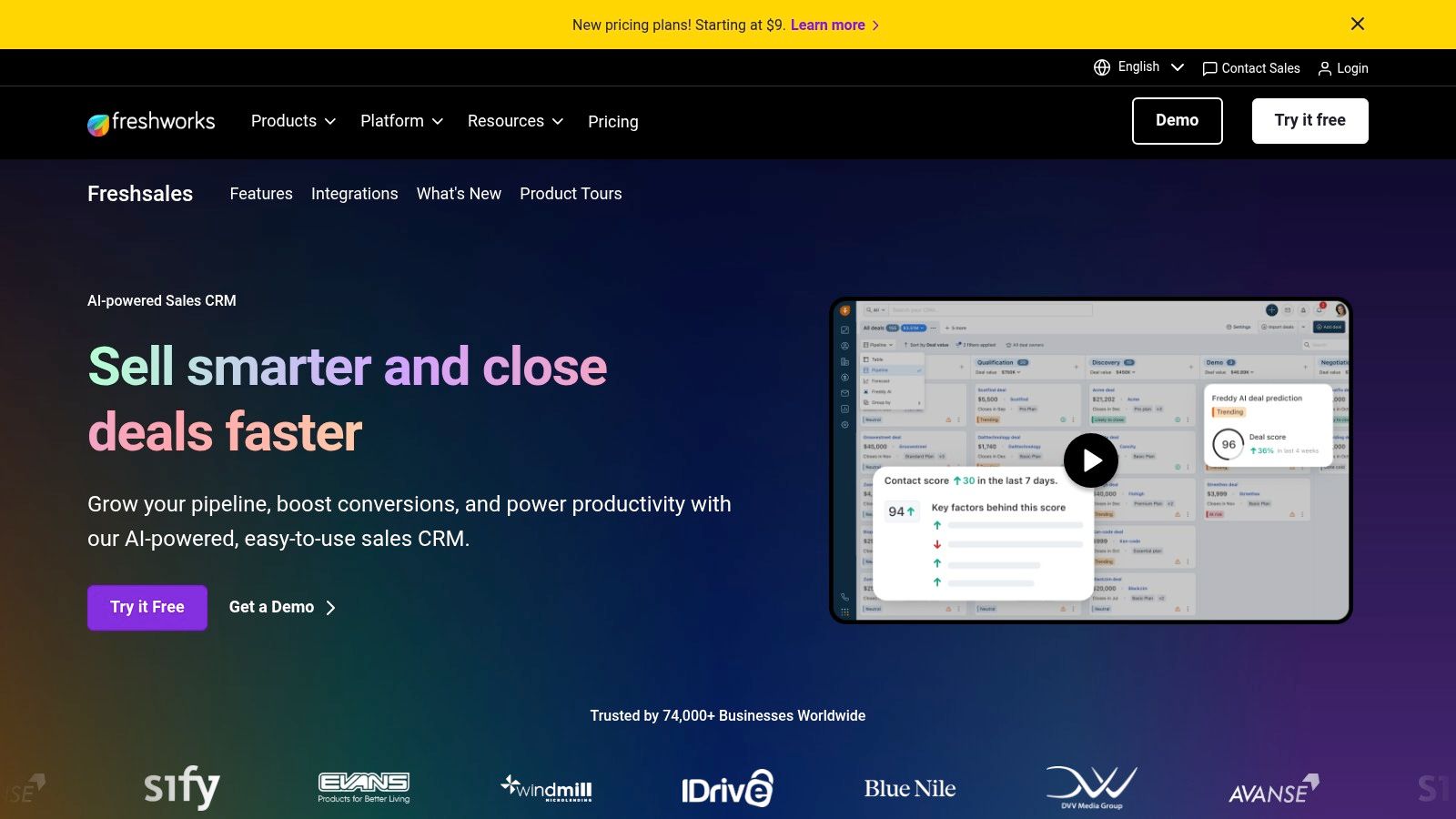
The platform is powered by an AI assistant named Freddy, which helps automate tasks, score leads based on their engagement, and deliver actionable insights into deals. For businesses looking for a straightforward, low-cost entry point, the generous free plan supports up to three users. As your company grows, Freshsales can expand into the full Freshworks suite, integrating marketing automation and customer service tools to create a more holistic business solution. This makes it an excellent choice for startups prioritising sales productivity from day one.
Key Considerations for UK Businesses
- Best for: Sales-focused startups and SMEs that need built-in communication tools and a fast time-to-value.
- GDPR & Data: Freshworks maintains data centres in the EU (Frankfurt), allowing UK businesses to store customer data in compliance with GDPR.
- Pricing: A free plan is available for up to 3 users. Paid plans start from £12 per user/month, but be aware the website often defaults to displaying USD pricing.
- Integrations: Connects well with key UK business software, including Xero for accounting and various marketing and e-commerce platforms.
| Pros | Cons |
|---|---|
| Low starting price and quick time-to-value. | Pricing page often defaults to USD, requiring manual switching. |
| Integrated communications reduce the need for external tools. | Advanced analytics and governance are reserved for Enterprise plans. |
| Suite options allow scaling into marketing and service. | Some key features may require higher-tier plans or add-ons. |
| AI-powered features help prioritise leads and deals. |
Find out more at freshworks.com/crm
6. monday sales CRM
Originally a work operating system, monday.com has evolved its powerful platform into a highly customisable sales CRM. Its strength lies in its visual, board-based approach to pipeline management, allowing UK businesses to build and automate workflows that precisely match their unique sales processes. This flexibility makes it an excellent choice for teams that need more than just contact management; it combines CRM, project management, and team collaboration into a single, intuitive hub.
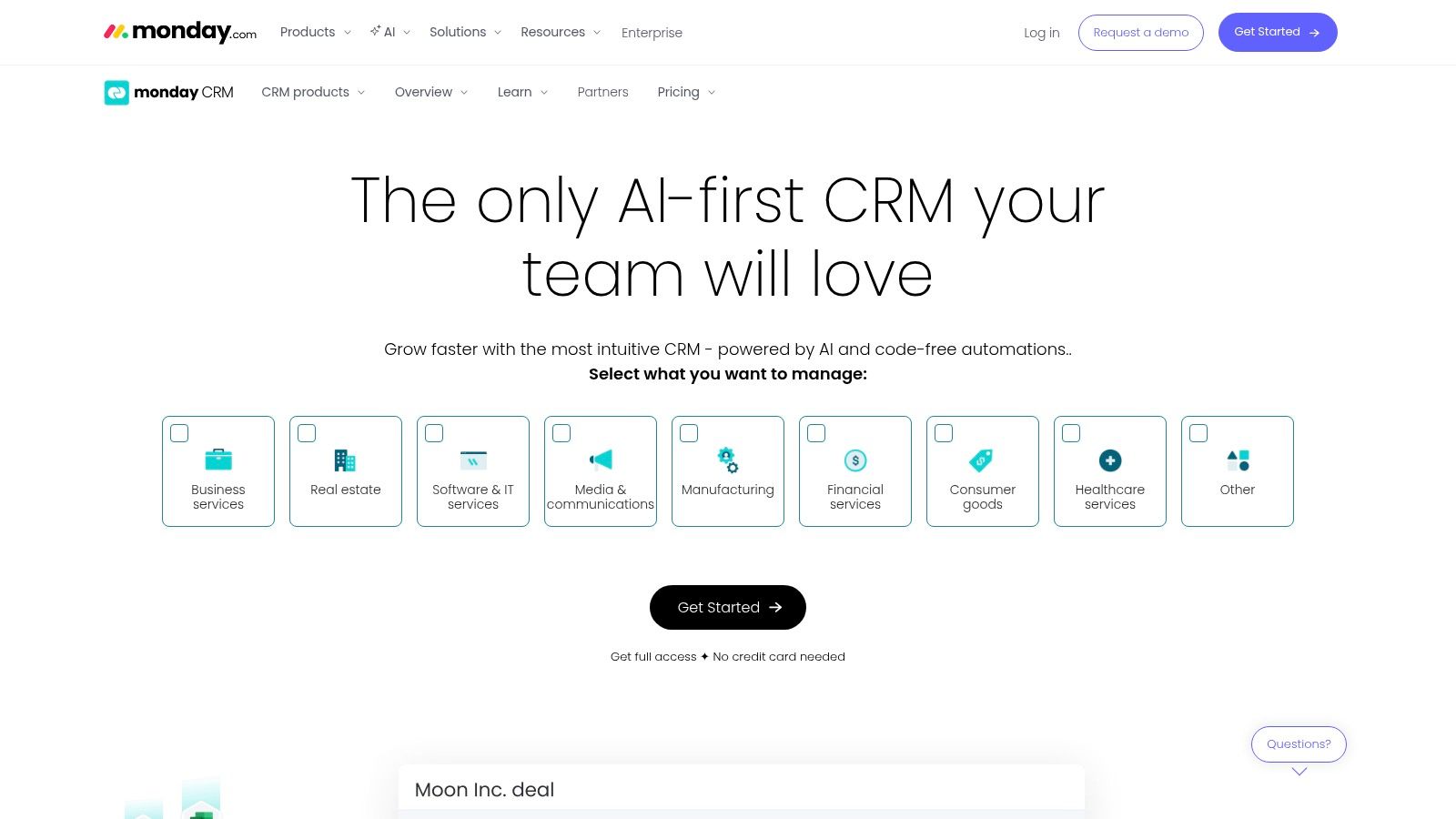
The platform is built around powerful automation recipes ("if this, then that") that can handle repetitive tasks like lead assignment, follow-up reminders, and status updates, freeing up your team to focus on selling. With a clean interface and extensive templates, monday sales CRM allows for rapid adoption across different departments, making it a strong contender for the best CRM for small business UK teams that value cross-functional transparency and efficiency.
Key Considerations for UK Businesses
- Best for: Teams needing a highly visual and customisable CRM that integrates project management and workflow automation.
- GDPR & Data: monday.com provides options for data residency in its EU (Frankfurt) data centre, assisting UK businesses with their GDPR compliance obligations.
- Pricing: A free plan is available for up to 2 users. Paid plans start from £9 per user/month (billed annually) but require a minimum of 3 users. Monthly plans are also available at a higher rate.
- Integrations: Connects seamlessly with a wide range of business tools, including UK favourites like Xero, Slack, Mailchimp, and Microsoft 365.
| Pros | Cons |
|---|---|
| Highly configurable to match specific business workflows. | Pricing is based on seat count, with a minimum of 3 users. |
| Fast adoption and intuitive interface for cross-functional teams. | Some essential CRM features (e.g., quotes) are on higher tiers. |
| Transparent feature-tiering on pricing pages. | Monthly plans are noticeably more expensive than annual. |
| Strong automation capabilities to reduce manual tasks. |
Find out more at monday.com/crm
7. Capsule CRM
For UK businesses that value simplicity, speed, and a system designed with their specific needs in mind, Capsule CRM is a standout choice. Headquartered in Manchester, this platform offers a refreshingly straightforward approach to customer relationship management. It strips away the complexity often found in larger systems, focusing instead on providing core CRM functionalities like contact management, sales pipeline tracking, and task organisation in a clean and highly intuitive interface.
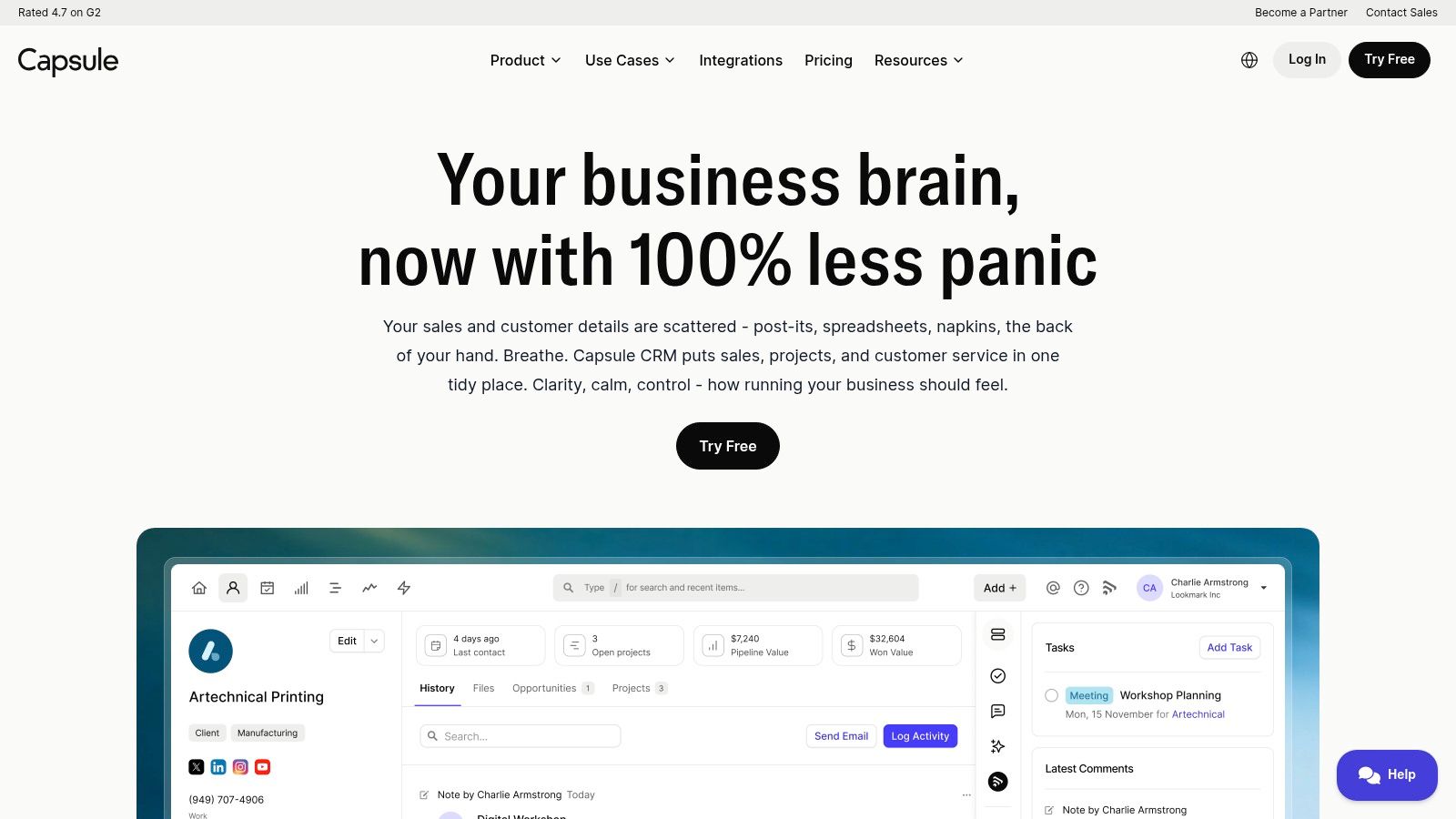
Capsule is particularly effective for small teams who need to get up and running quickly without a steep learning curve. Its free-forever plan provides a solid foundation for up to two users, while its paid tiers introduce valuable tools like sales automation, multiple pipelines, and advanced reporting. The optional integration with its sister marketing platform, Transpond, allows businesses to add email marketing capabilities as they grow, keeping the core CRM lean and focused. This makes it an ideal option for SMEs that need an efficient, no-nonsense system.
Key Considerations for UK Businesses
- Best for: Small UK-based teams and service businesses wanting a simple, fast, and locally supported CRM.
- GDPR & Data: As a UK-based company, Capsule is fully compliant with GDPR and all data is hosted within the UK, providing peace of mind for data-sensitive businesses.
- Pricing: A free plan is available for 2 users and 250 contacts. Paid plans are simple, starting at £12 per user/month, with no lengthy contracts.
- Integrations: Integrates well with essential UK business tools, including Xero, Sage Business Cloud Accounting, FreeAgent, and Mailchimp.
| Pros | Cons |
|---|---|
| UK-based company with local support and data hosting. | Free plan is limited to 250 contacts and a single sales pipeline. |
| Extremely user-friendly interface allows for quick implementation. | Lacks the extensive native modules of all-in-one platforms. |
| Simple and transparent pricing plans are easy to understand. | Advanced automation and reporting require higher-tier plans. |
| Useful free plan for micro-businesses and sole traders. |
Find out more at capsulecrm.com
8. Microsoft Dynamics 365 Sales
For UK small businesses already invested in the Microsoft ecosystem, Dynamics 365 Sales presents a powerful, enterprise-grade CRM solution. Its core strength lies in its seamless, native integration with tools like Microsoft 365 (formerly Office 365), Teams, and Power BI. This allows teams to manage customer relationships directly from their Outlook inbox, collaborate on deals within Teams, and build sophisticated sales dashboards, creating a unified and highly efficient workflow without leaving familiar applications.
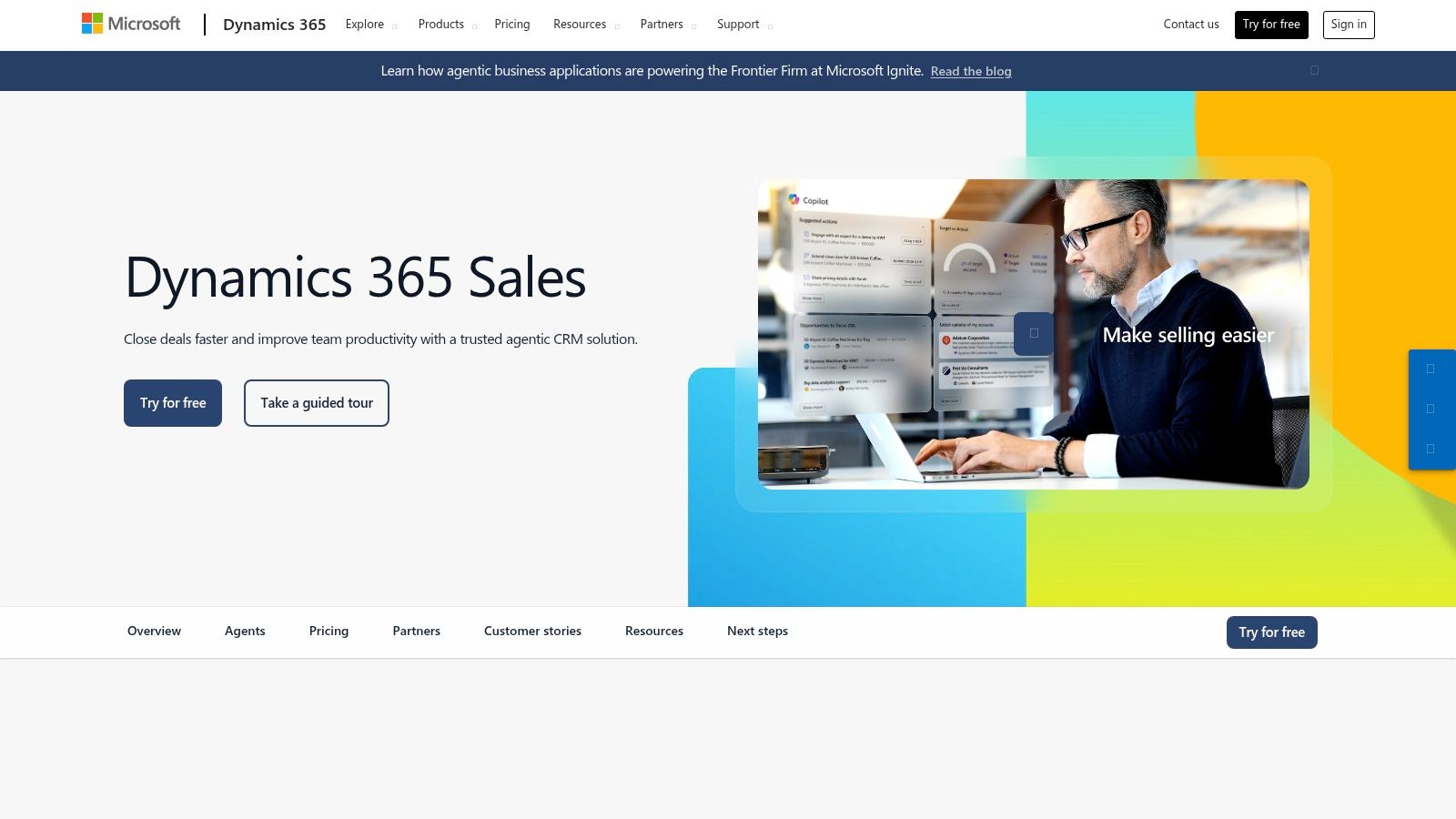
Unlike many lightweight CRMs, Dynamics 365 is built on a mature data model, offering robust automation, security, and customisation via the Power Platform. For businesses considering a Microsoft solution, a dedicated look at the capabilities of a specific tool like the Dynamics 365 Sales CRM is essential to understand its specific functionalities. While it can be more complex to set up initially, its scalability makes it one of the best CRM for small business UK companies with ambitions for significant growth and data-driven sales processes.
Key Considerations for UK Businesses
- Best for: SMEs deeply integrated with Microsoft 365 and Teams that need a scalable, data-centric sales platform.
- GDPR & Data: Microsoft maintains UK-based data centres, helping businesses meet stringent data residency and GDPR compliance obligations.
- Pricing: The Sales Professional edition starts at around £53.40 per user/month. Higher tiers like Enterprise and Premium add advanced features and AI capabilities at a significant extra cost.
- Integrations: Unbeatable native connectivity with the Microsoft stack (Outlook, Excel, Teams, Power BI, etc.) and a large AppSource marketplace for third-party tools.
| Pros | Cons |
|---|---|
| Smooth integration for Microsoft-centric environments. | Heavier implementation compared to lightweight CRMs. |
| Mature data model, permissions, and automation capabilities. | Features are spread across editions, which can increase total cost. |
| Enterprise-grade features and Power Platform extensibility. | Premium capabilities require higher-tier subscriptions. |
| Strong UK data residency and GDPR compliance features. |
Find out more at microsoft.com
9. Insightly
Insightly carves out a unique niche by unifying sales and project management within a single platform. This is a significant advantage for UK small businesses where the journey from a closed deal to project delivery is a critical, often disjointed, process. It allows teams to convert a won opportunity directly into a project, transferring all relevant data and maintaining momentum without switching systems.
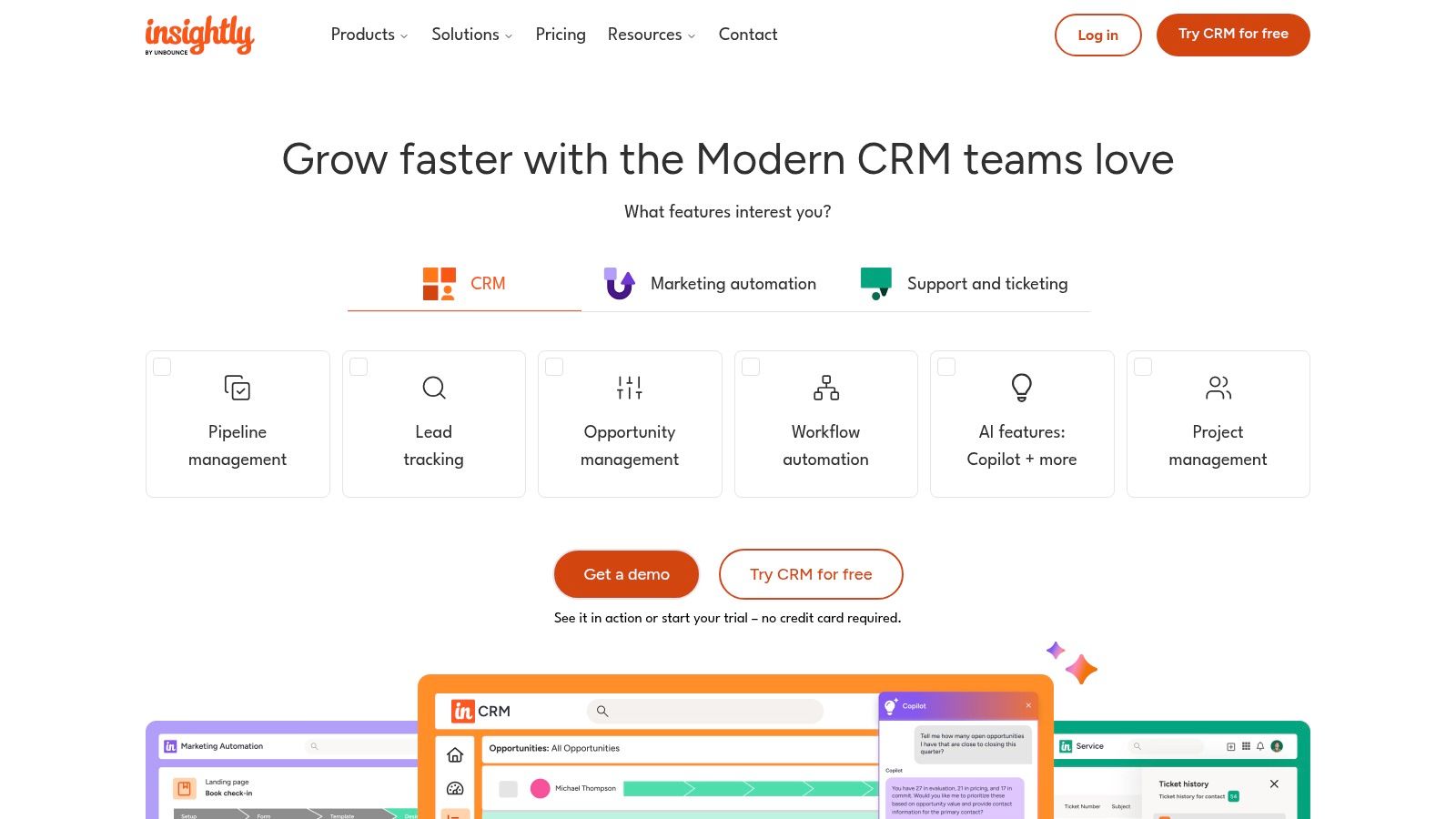
This integrated approach makes it one of the best CRM for small business UK service-based companies, such as consultancies, agencies, and professional services firms. The platform is designed as a "unified" system where you can start with the core CRM and later add modules for Marketing, Service, or App Integration. This scalability ensures businesses only pay for the functionality they need, with transparent pricing and clear feature tiers.
Key Considerations for UK Businesses
- Best for: Service-based SMEs that need to manage client projects post-sale.
- GDPR & Data: Insightly offers data centres in the EU, providing a compliant option for UK businesses concerned with data residency and GDPR.
- Pricing: CRM plans start from $29 per user/month (billed annually). All-in-one bundles that include Marketing and Service are also available for a consolidated price.
- Integrations: Connects with key UK tools like Xero and QuickBooks, alongside a powerful AppConnect feature for building custom integrations without extensive coding.
| Pros | Cons |
|---|---|
| Strong fit for teams managing projects after sales close. | Some advanced automation is reserved for higher tiers. |
| Lower entry pricing than many enterprise-level CRMs. | Sandboxes and advanced governance only on Enterprise plan. |
| Bundles available for combined CRM, marketing and service needs. | Certain enterprise features require upgrading. |
| Clear opportunity-to-project workflow streamlines delivery. |
Find out more at insightly.com
10. Keap
Keap is designed for service-based small businesses that want to consolidate their sales and marketing efforts into a single, powerful platform. It excels at automating follow-up, client onboarding, and lead nurturing, effectively acting as a central hub for managing the entire customer lifecycle. Its main appeal lies in combining CRM functionalities with robust marketing automation, appointment scheduling, and even payment processing, reducing the need for multiple disparate software subscriptions.
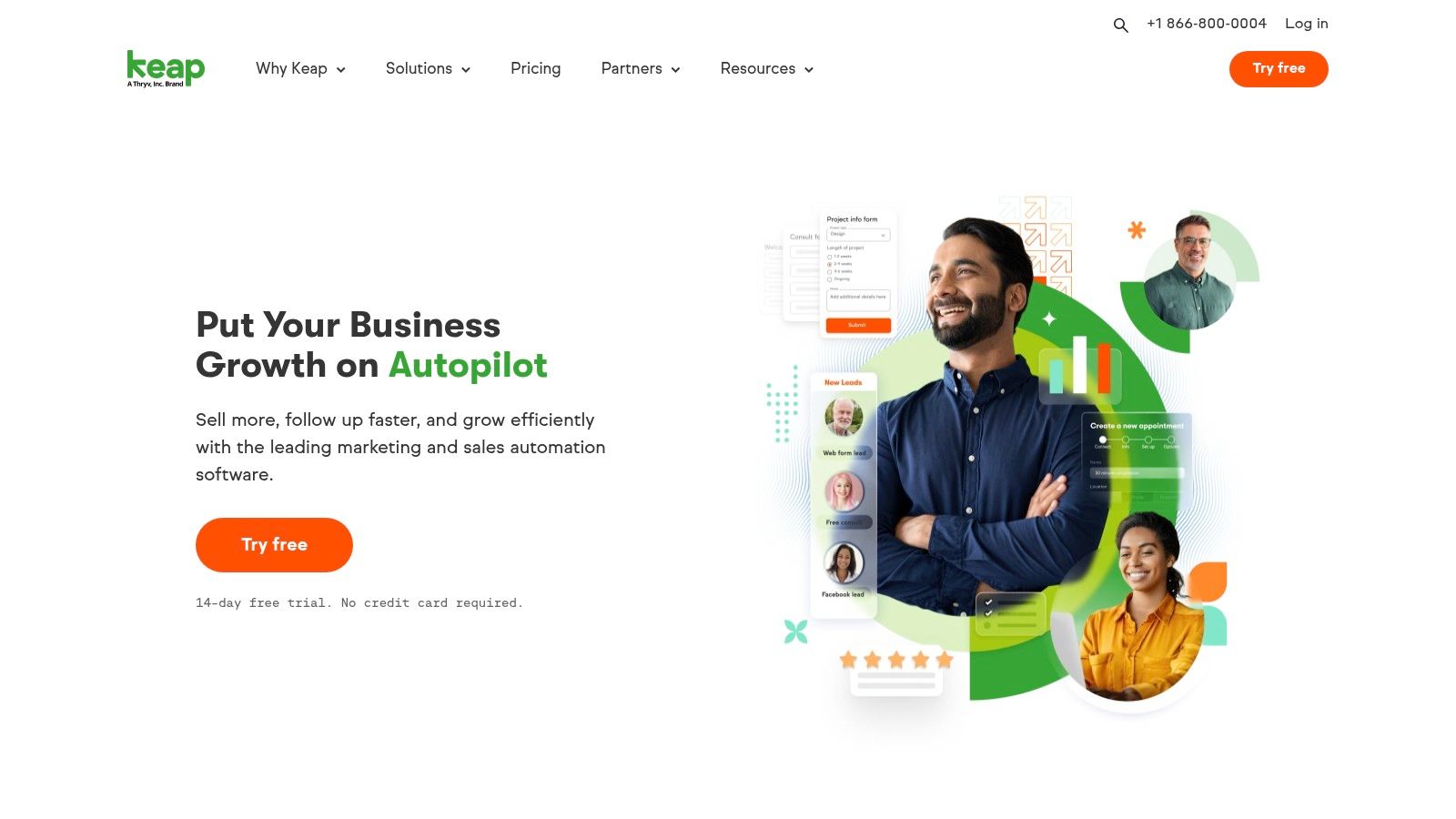
The platform is particularly known for its visual campaign builder, which allows users to map out complex automation sequences for emails, texts, and internal tasks. For UK businesses that might lack a dedicated marketing team, Keap's optional expert implementation services offer a valuable way to get set up quickly and correctly, ensuring you get a return on your investment sooner. This focus on automation makes it a strong contender for the best CRM for small business UK owners looking to save time.
Key Considerations for UK Businesses
- Best for: Solopreneurs and service-based businesses (e.g., coaches, consultants, agencies) who need strong sales and marketing automation.
- GDPR & Data: Keap is based in the US but is GDPR compliant. Businesses should ensure they have appropriate data processing agreements in place.
- Pricing: Plans start from around £119/month for 1,500 contacts and two users. Prices increase based on contact and user counts, and expert onboarding packages come at an additional one-off cost.
- Integrations: Connects well with popular UK tools like Xero for accounting and Stripe for payments, ensuring a smooth operational workflow.
| Pros | Cons |
|---|---|
| Powerful automation is ideal for solopreneurs and small teams. | Can become expensive as your contact list and user count grow. |
| Consolidates CRM, marketing, and payments into one tool. | A steeper learning curve for those not familiar with automation. |
| Expert implementation support is available for faster setup. | Onboarding fees and add-ons (like dedicated SMS numbers) add cost. |
| All-in-one approach simplifies the tech stack for business owners. |
Find out more at keap.com
11. Capterra UK
While not a CRM itself, Capterra UK is an indispensable research tool for any small business navigating the complex software market. It serves as a comprehensive online directory where you can discover, compare, and read verified user reviews for hundreds of CRM systems. Its value lies in bringing a vast and often confusing marketplace into one structured, filterable view, making it an excellent starting point for your shortlisting process.
For UK businesses, the platform is particularly useful. You can specifically search categories like "CRM for Small Businesses" and apply filters for features, user count, and industry focus. This allows you to quickly narrow down potential candidates that fit your unique operational needs and budget before committing to demos or trials, saving you significant time and effort in your search for the best CRM for small business UK operations.
Key Considerations for UK Businesses
- Best for: Businesses in the initial research phase wanting to compare a wide range of CRMs based on peer reviews and specific features.
- GDPR & Data: Capterra itself is a directory; you must verify the data and GDPR compliance of each individual CRM vendor you explore.
- Pricing: The platform is entirely free for users to browse and compare software. Vendors pay for listings and lead generation.
- Integrations: Integration details are often listed on each CRM's profile, but always require verification on the vendor's official website.
| Pros | Cons |
|---|---|
| UK-specific relevance and a huge breadth of CRM listings. | Sponsored placements can influence the visibility of some listings. |
| Helpful for quick shortlisting with genuine peer feedback. | Pricing snapshots and feature details may occasionally lag vendor updates. |
| Free to use and links directly to vendor trials and purchases. | Aggregated data means you must always verify on official sites. |
Find out more at capterra.co.uk
12. GetApp UK
While not a CRM system itself, GetApp UK is an indispensable resource for discovering and comparing software, making it a crucial first stop in your search. It functions as a comprehensive catalogue, allowing UK small businesses to filter through hundreds of CRM options based on features, pricing, and user ratings. This approach is perfect for businesses that are unsure where to begin or have niche requirements that mainstream providers might not meet.
GetApp UK provides a powerful side-by-side comparison tool, letting you evaluate up to four platforms simultaneously. The platform aggregates user reviews and provides clear links to vendor websites for free trials or demos, streamlining the research process significantly. For any UK business trying to navigate the crowded market, this tool helps quickly shortlist the most suitable candidates and find the best CRM for your specific operational needs.
Key Considerations for UK Businesses
- Best for: Small businesses at the very beginning of their CRM search, or those with niche industry needs looking to discover specialist software.
- GDPR & Data: As a directory, GetApp links to vendors but does not handle your data directly. It is vital to verify each vendor’s GDPR compliance and data storage policies independently.
- Pricing: The platform is free to use. It displays indicative starting prices in GBP for many listed CRMs, but you must confirm the final pricing on the vendor's site.
- Integrations: Integration details are listed on individual software profiles, providing a quick overview of compatibility with common UK business tools.
| Pros | Cons |
|---|---|
| Quickly discover and compare a wide range of CRMs. | Information can sometimes lag behind official vendor updates. |
| Excellent for finding niche and industry-specific solutions. | Sponsored listings may influence the placement of some CRMs. |
| Easy, direct access to vendor trials and product demos. | You must verify all details like pricing and features directly. |
| UK-specific domain provides localised currency and context. |
Find out more at getapp.co.uk
Top 12 CRMs for UK Small Businesses — Comparison
| Product | Key features ✨ | UX & Quality ★ | Pricing & Value 💰 | Target audience 👥 | USP / Notes 🏆 |
|---|---|---|---|---|---|
| HubSpot CRM | Free core CRM, modular Sales/Marketing/Service Hubs, large marketplace ✨ | ★★★★☆ — intuitive, scalable | 💰 Free tier; Pro/Enterprise can be costly | 👥 Small→Enterprise UK businesses | 🏆 All-in-one growth platform |
| Salesforce Sales Cloud | Advanced automation, forecasting, extensive AppExchange ✨ | ★★★★☆ — powerful but complex | 💰 Tiered pricing; add-ons increase cost | 👥 Growing SMBs & enterprises | 🏆 Highly customisable & scalable |
| Pipedrive | Drag-and-drop pipelines, email sync, 500+ integrations ✨ | ★★★★ — fast setup, sales-first UX | 💰 Transparent GBP pricing; no free plan (14-day trial) | 👥 Small sales teams, startups | 🏆 Simplicity + pipeline focus |
| Zoho CRM | Free for 3 users, Blueprints automation, Zia AI, large app ecosystem ✨ | ★★★★ — feature-rich, steeper learning | 💰 Very competitive tiers; high value | 👥 Budget-conscious SMEs | 🏆 Deep features at low cost |
| Freshsales (Freshworks) | Built-in phone/chat, Freddy AI, multi-pipelines ✨ | ★★★★ — integrated comms, quick time-to-value | 💰 Free for 3 users; affordable growth plans | 👥 UK startups & small teams | 🏆 Communications-first CRM |
| monday sales CRM | Custom boards, strong automations, templates & AI enhancements ✨ | ★★★★ — highly configurable, cross-team adoption | 💰 Per-seat pricing; minimum user counts | 👥 Teams needing CRM + workflow/PM | 🏆 CRM + workflow integration |
| Capsule CRM | Free forever (2 users), simple pipelines, email add-ins ✨ | ★★★☆ — lightweight, easy to use | 💰 Clear pricing; useful free tier | 👥 Very small UK teams & SMEs | 🏆 UK-focused, straightforward CRM |
| Microsoft Dynamics 365 Sales | Native Outlook/Teams/Power BI, Copilot at tiers, enterprise security ✨ | ★★★★☆ — enterprise-grade, heavier implementation | 💰 GBP pricing; can be costly at scale | 👥 Microsoft-centric SMBs & enterprises | 🏆 Best for Microsoft ecosystem integration |
| Insightly | Opportunity→project conversion, AppConnect, Copilot features ✨ | ★★★☆ — strong for delivery workflows | 💰 Competitive entry pricing; bundle options | 👥 Delivery-heavy SMEs | 🏆 CRM + post-sale project management |
| Keap | Visual automation builder, quotes/invoices, integrated payments ✨ | ★★★☆ — powerful automation, steeper learning | 💰 Pricing scales with contacts/users; add-ons | 👥 Solopreneurs & SMBs needing automation | 🏆 Consolidates CRM, marketing & payments |
| Capterra UK | UK category pages, filters, aggregated verified reviews ✨ | ★★★★ — fast shortlist & peer feedback | 💰 Free to use; links to vendor trials | 👥 Buyers shortlisting CRMs | 🏆 UK-specific software discovery |
| GetApp UK | Side-by-side comparisons, star ratings, starting price cues ✨ | ★★★★ — quick discovery & comparisons | 💰 Free to use; direct trial links | 👥 SMBs researching options | 🏆 Easy side-by-side comparison tool |
Making the Right Choice for Your Business's Future
Choosing the right Customer Relationship Management system is one of the most significant technology decisions a small business in the UK will make. It’s far more than a digital address book; it’s the central nervous system for your sales, marketing, and customer service operations. As we’ve explored, the market offers a diverse range of solutions, from all-in-one powerhouses like HubSpot and Salesforce to sales-focused specialists like Pipedrive and UK-based favourites like Capsule CRM.
The journey to finding the best CRM for your small business in the UK doesn't end with reading this list. It begins with a clear-eyed assessment of your own unique circumstances. The ideal platform isn't necessarily the one with the most features, but the one that aligns perfectly with your team's workflow, your budget constraints, and your ambitious growth plans.
Recapping Your Core Options
We've covered platforms that excel in different areas. For startups needing a powerful, free entry point, HubSpot CRM remains an unparalleled choice. For businesses focused intently on visualising and optimising their sales process, Pipedrive offers exceptional clarity. Meanwhile, companies already embedded in the Microsoft ecosystem will find a natural, powerful extension in Dynamics 365 Sales , and those seeking an all-encompassing business suite should look closely at the incredible value offered by Zoho CRM .
For UK-specific needs, particularly regarding simplicity and GDPR-conscious data handling, Capsule CRM stands out as a strong, locally-developed contender. Each tool, from Freshsales to monday.com, presents a unique philosophy on how to manage customer relationships. Your task is to find the philosophy that mirrors your own.
Your Action Plan for Selecting a CRM
Feeling overwhelmed by the options is normal. To move forward with confidence, break the decision-making process down into manageable, actionable steps. This framework will help you navigate the final selection and implementation stages effectively.
-
Define Your Primary Goal: Before looking at any more demos, write down the single biggest problem you need a CRM to solve. Is it lead leakage? Disorganised follow-ups? An inability to see your sales forecast? This core objective will be your North Star.
-
Map Your Key Processes: How do you currently handle a new lead? What are the steps from initial contact to a closed deal? Sketch this out. The best CRM will seamlessly map onto this existing workflow, or help you improve it, rather than forcing you into a completely alien process.
-
Utilise Free Trials Strategically: Don't just sign up and click around. Go into a free trial with a specific plan. Task your team with running a few real-world leads through the system. Can they log calls easily? Can they set follow-up tasks? Is the pipeline view intuitive? This hands-on experience is invaluable.
-
Consider Total Cost of Ownership (TCO): Look beyond the monthly subscription fee. Factor in potential costs for implementation support, data migration from old systems, essential integrations that may require a higher-tier plan, and any staff training required.
-
Plan for Scalability: The CRM you choose today must be able to support your business tomorrow. Ask yourself: Can this platform grow with us? Does it offer more advanced features we might need in two or three years? Switching CRMs is a disruptive process, so choosing one with a clear growth path is a wise, long-term investment.
Ultimately, selecting a CRM is a commitment to organising your business around your customers. It’s a foundational step towards building more sustainable, profitable, and meaningful relationships. The right system will empower your team, provide clarity to your leadership, and create a better experience for the people who matter most: your customers. Take your time, do your research, and choose a partner that will help you build the future you envision.
Navigating the complexities of CRM selection and implementation can be a significant challenge on its own. If you need expert guidance to ensure your chosen platform is perfectly aligned with your business goals and delivers a tangible return on investment, Superhub can help. As a digital growth agency, we specialise in helping UK businesses select, implement, and optimise the technology stacks that fuel success.
Want This Done For You?
SuperHub helps UK brands with video, content, SEO and marketing that actually drives revenue. No vanity metrics. No bullsh*t.