

Top 7 UK Ecommerce Marketing Companies to Watch in 2026
The UK ecommerce landscape is more competitive than ever. Standing out requires a sophisticated, multi-channel marketing strategy that captures attention and drives conversions. For many business owners managing SEO, PPC, social media and email automation in-house is a formidable challenge. This is where partnering with specialist ecommerce marketing companies becomes a strategic necessity, not just a cost.
These agencies bring deep expertise, advanced tools and proven frameworks, helping you navigate digital advertising complexities and accelerate your growth. However, with thousands of firms to choose from, how do you identify the one that truly aligns with your goals, budget and brand vision? This guide demystifies the selection process.
We will explore different types of marketing partners, from full-service agencies to specialised freelance marketplaces and provide a curated list of seven standout options for UK businesses. While our focus is on broad ecommerce, if your primary marketplace is Amazon, a different approach to finding the best full-service Amazon agency can streamline your search. Each company profile includes direct links, core services and ideal client fit, equipping you with a practical framework for evaluating potential partners. Whether you are a start-up or an established brand, this guide will help you find the perfect partner to realise your ecommerce ambitions.
1. Superhub: The Full-Service Growth Engine
Superhub distinguishes itself as a comprehensive growth partner rather than just a service provider, offering an integrated suite of creative, technical and strategic services. This award-winning agency is engineered to act as a complete outsourced marketing and development department for ambitious brands, making it a powerful choice among ecommerce marketing companies . Their full-spectrum capability means businesses can manage everything from initial brand strategy and website development to advanced TV advertising and AI-driven lead generation through a single, cohesive team.
This end-to-end model is particularly advantageous for ecommerce businesses looking to scale rapidly without the logistical friction of coordinating multiple specialist agencies. Superhub's in-house expertise covers the entire customer journey, ensuring a consistent and high-quality brand experience across all touchpoints.
Core Service Offerings
Superhub’s service portfolio is notably broad, designed to support every stage of business growth. Key offerings include:
- Digital Marketing & SEO: Data-led strategies to enhance online visibility, drive organic traffic and maximise conversions.
- Web & App Development: Bespoke creation of ecommerce websites and mobile apps for both iOS and Android, focusing on performance and user experience.
- Creative Content & Production: In-house cinematic film, drone videography, vlog production and professional photography to create compelling brand narratives.
- Social Media Management: Strategic management of social channels like TikTok and YouTube to build engaged communities and drive sales.
- Advanced Advertising: Campaign management for TV advertising, including targeted platforms like SKY Adsmart.
- AI & Automation: Development of proprietary, AI-driven lead generation and business automation systems to deliver scalable growth.
Standout Features & Differentiators
What truly sets Superhub apart is its fusion of creative production with technical innovation. Their claim of being able to launch a new business in as little as two hours highlights a profound capability for rapid go-to-market execution, a critical advantage for start-ups and agile brands. Furthermore, their bespoke AI automation systems provide a data-driven edge, moving beyond standard analytics to create fully automated, highly efficient lead funnels. This technical prowess combined with an in-house film production unit allows them to create and distribute high-impact, cinematic content that captures audience attention and drives measurable results.
Ideal Client & Pricing
Superhub is an ideal partner for businesses seeking an integrated, long-term growth engine. While they work with start-ups, their comprehensive service model is particularly suited to established SMEs and high-growth companies in sectors like automotive, motorsport, energy and tourism. Their proven track record including helping one client secure a reported £300m contract demonstrates their capacity to deliver on a significant scale.
Pricing is handled on a bespoke project basis, reflecting the tailored nature of their engagements. Prospective clients will need to schedule a consultation to discuss scope, objectives and budget, ensuring a customised strategy aligned with specific business needs.
Website: https://www.superhub.biz
2. Shopify Partner Directory
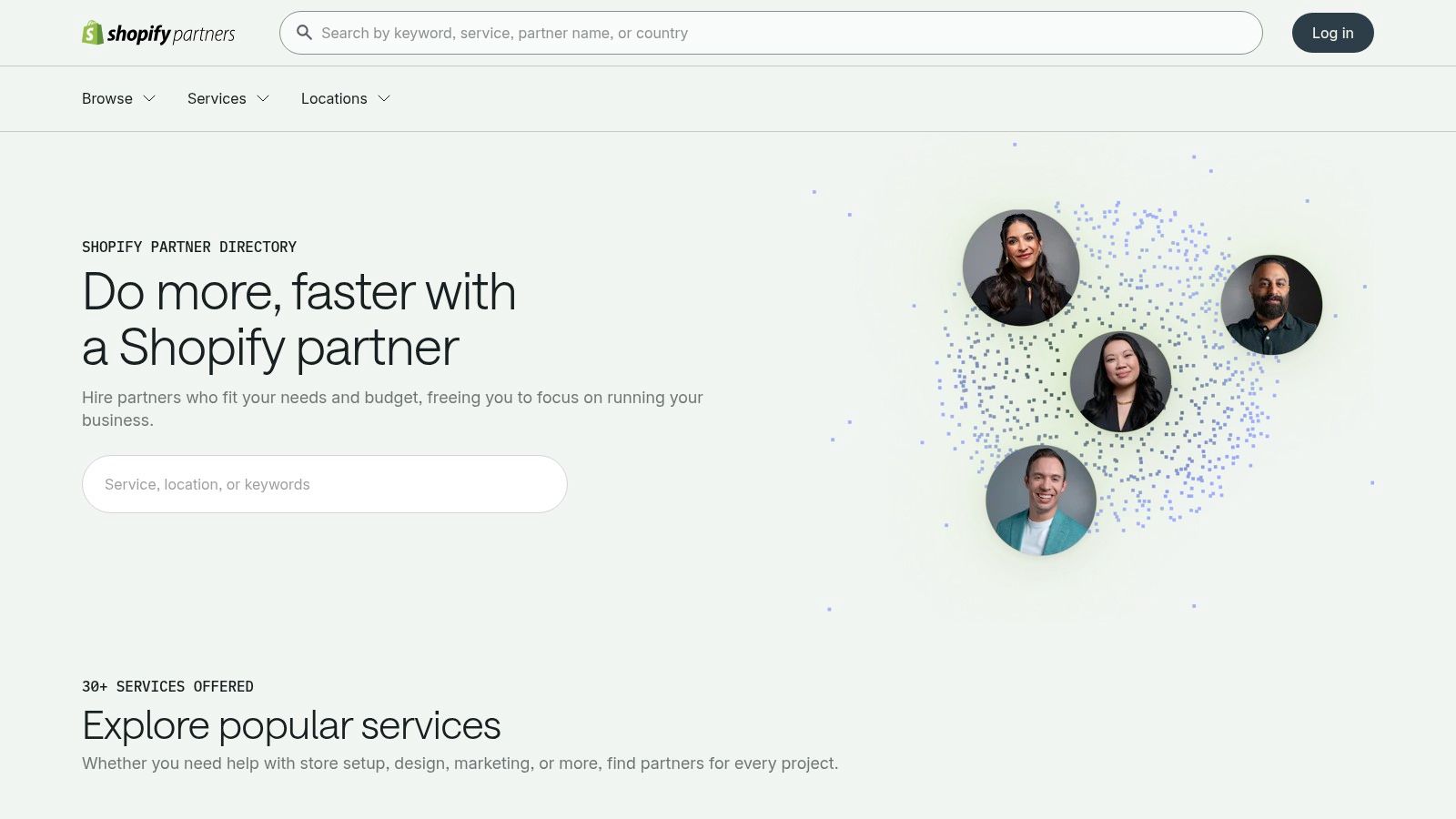
For businesses built on the Shopify platform, the official Shopify Partner Directory is often the most logical and efficient place to find expert help. It’s not a single agency but a curated marketplace of vetted freelancers and ecommerce marketing companies that live and breathe the Shopify ecosystem. This direct access to platform-native specialists ensures any partner you hire understands the specific nuances, apps and technical requirements of your store.
The directory’s powerful filtering system is its standout feature. You can narrow down potential partners by the specific services you need such as email marketing, paid advertising, conversion rate optimisation or SEO. Crucially for UK businesses, you can filter by location to find local experts familiar with the British market. You can also filter by budget, ensuring you only see providers whose pricing aligns with your financial plans.
Why It Stands Out
Shopify provides a clear hierarchy for its partners, with tiers like Select, Plus and Premier that signal an agency's experience and track record within the ecosystem. This helps you quickly gauge a provider's credibility and scale. Each profile is transparent, featuring client reviews, a portfolio of work and often a typical price range, which aids in shortlisting candidates.
Pros and Cons
| Pros | Cons |
|---|---|
| Direct access to specialists who are experts in the Shopify platform and its app ecosystem. | Platform-specific , making it unsuitable for stores on Magento, WooCommerce or BigCommerce. |
| Transparent profiles with reviews, portfolios and partner tiers help you evaluate credibility. | Pricing is not standardised ; you must contact each partner individually for a quote. |
| Powerful filters allow you to find UK-based experts who fit your specific budget and needs. | Quality can vary between partners, so due diligence is still essential. |
Practical Tip
Use the directory to find specialists for both one-off projects like an SEO audit and long-term retainers such as ongoing social media management. When contacting potential partners, be specific about your goals and current challenges to get the most accurate quotes and proposals. If you need help with a particular area like search optimisation, you can explore Shopify SEO services for UK merchants in this guide.
3. Clutch.co – UK Ecommerce Marketing Agencies
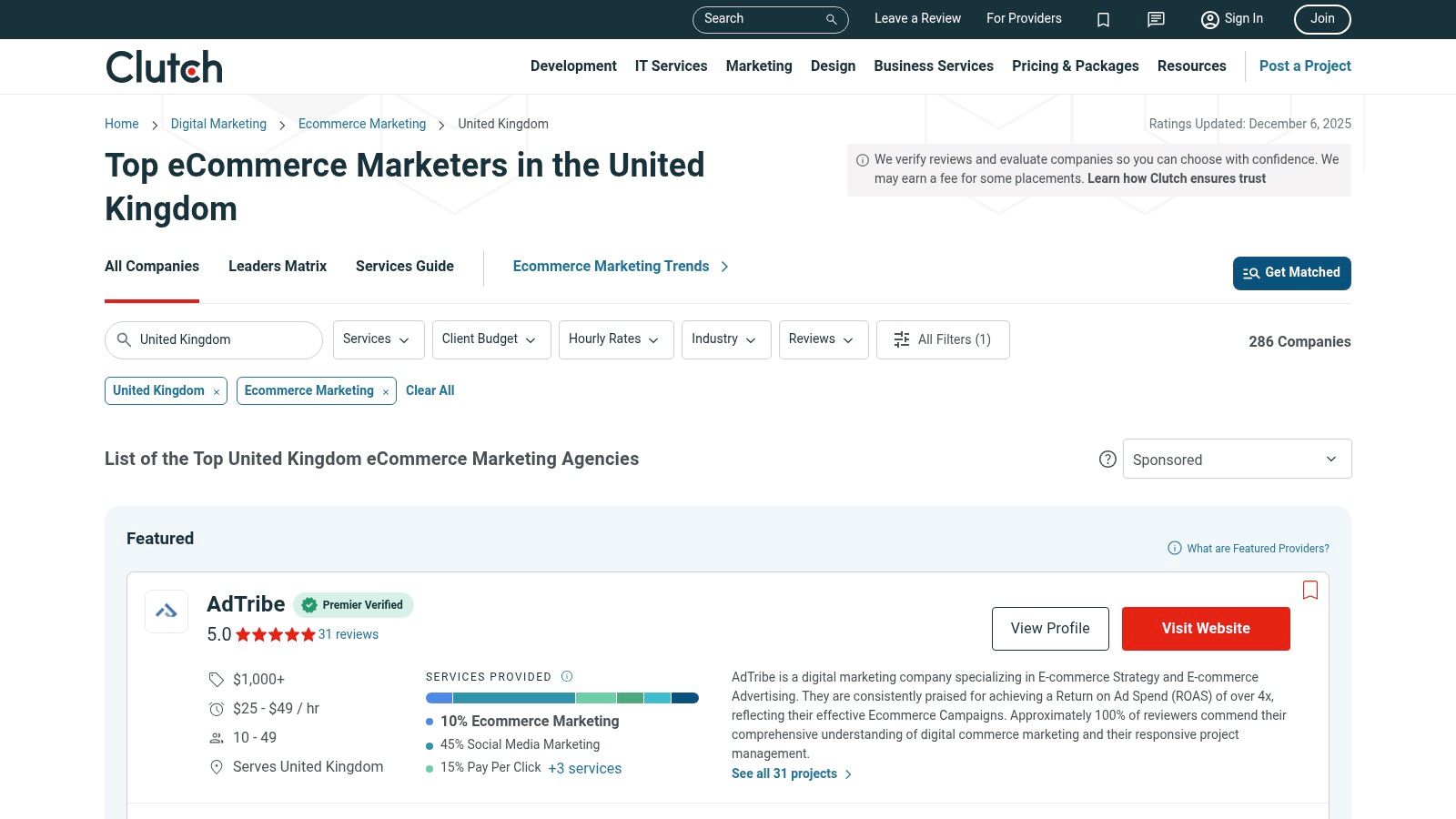
For businesses seeking a broader market view beyond a single platform, Clutch.co is a leading B2B directory renowned for its verified client reviews. It offers a comprehensive, UK-specific ranking of ecommerce marketing companies, making it an invaluable resource for due diligence and creating shortlists for requests for proposals (RFPs). Its core strength lies in aggregating genuine client feedback and presenting it alongside key agency data.
The platform allows you to compare potential partners based on their service focus, from PPC and SEO to email marketing and marketplace management. Crucially, it provides a degree of pricing transparency that many other directories lack. You can often see an agency’s typical hourly rate bands and minimum project sizes, which helps in quickly disqualifying firms that are outside your budget before you even make contact.
Why It Stands Out
Clutch’s emphasis on verified, in-depth client reviews is its primary differentiator. These aren't just simple star ratings; they are detailed interviews conducted by Clutch analysts, covering the project scope, results and overall experience. The platform’s "Leaders Matrix" also provides a visual tool to compare agencies based on their proven ability to deliver and their focus within the ecommerce marketing landscape.
Pros and Cons
| Pros | Cons |
|---|---|
| Strong due-diligence signals via verified, detailed client reviews and case study highlights. | Featured placements may be influenced by paid promotion, not just merit. |
| Easy shortlisting for RFPs using filters for budget, location, industry and service focus. | Profile information can be outdated ; not all agencies regularly update pricing or services. |
| Comprehensive market snapshot across a wide range of ecommerce marketing disciplines. | Review quality can differ , with some reviews being more detailed and useful than others. |
Practical Tip
Use Clutch to build a preliminary list of 3-5 agencies. Pay close attention to reviews from clients who are similar to your business in size and industry. When you find a promising agency, look beyond their overall rating and read the specific feedback on project management, communication and the tangible results they delivered. This process is a key part of choosing the right digital agency for your ecommerce growth and ensures you make a well-informed decision.
4. DesignRush – Top Ecommerce Marketing Agencies in the UK
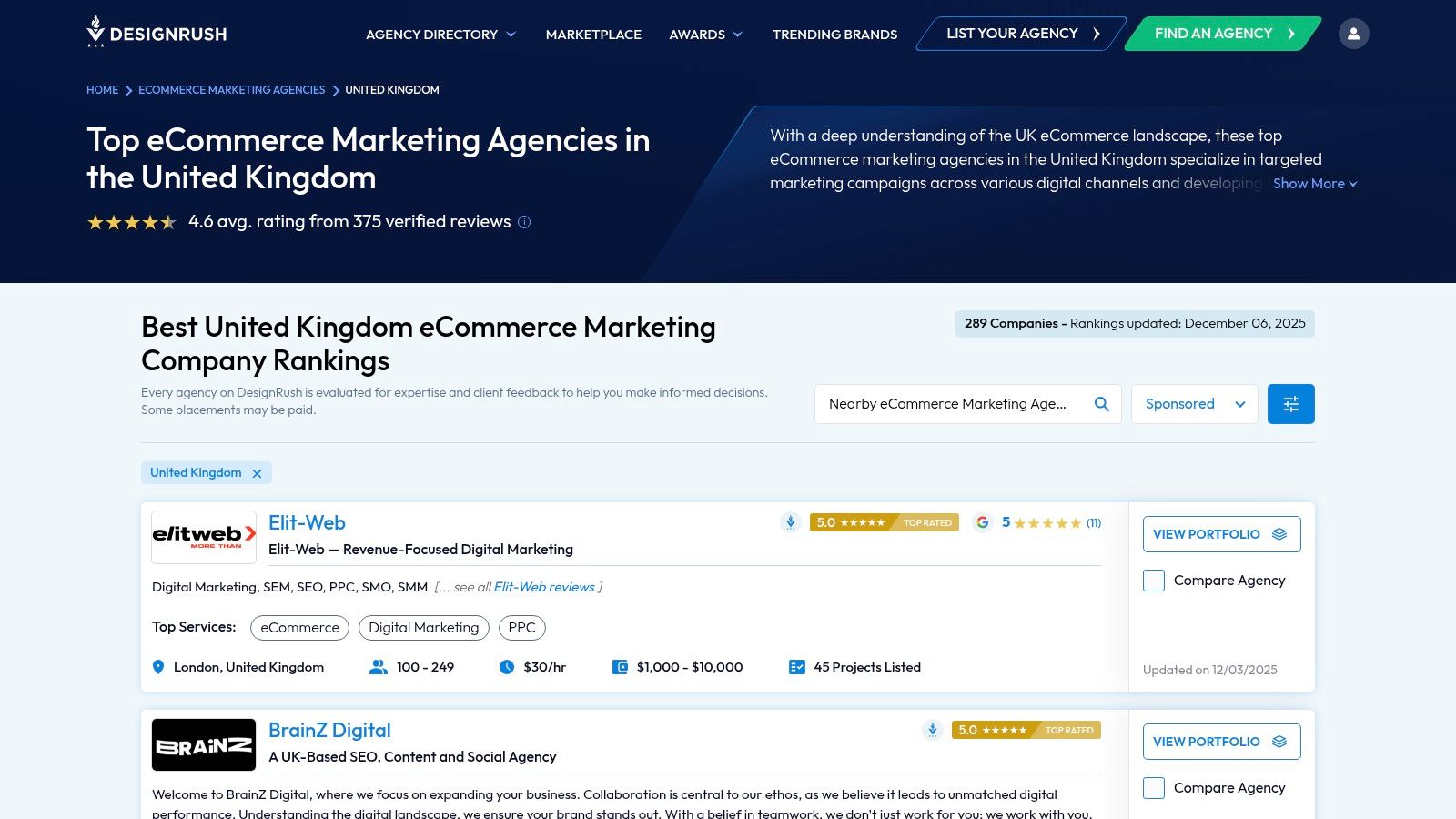
DesignRush is a B2B marketplace that helps businesses find and compare professional agencies. Its curated directory of the UK's top ecommerce marketing companies provides a high-level overview of the market, making it an excellent starting point for your research. The platform aggregates key data points like review scores, hourly rates, team size and minimum project budgets into a scannable format.
With over 290 firms listed, the strength of DesignRush lies in its ability to help you quickly filter and compare potential partners. You can sort agencies by specific services such as PPC or SEO, filter by location to find local expertise and narrow the field based on your budget. Each agency profile is presented on a consistent card, allowing for an easy side-by-side comparison of pricing signals and specialities.
Why It Stands Out
What makes DesignRush particularly useful is its transparency around pricing and company size. Many directories hide this information but DesignRush presents hourly rates and minimum project values upfront which saves significant time during the initial shortlisting phase. Furthermore, its date-stamped rankings give you a sense of how recently the listings have been evaluated or updated, adding a layer of relevance to your search.
Pros and Cons
| Pros | Cons |
|---|---|
| Quick scanning of options with highly visible pricing signals, reviews and specialities. | Proprietary curation means some placements may be sponsored, so independent vetting is crucial. |
| Recency indicators (date stamps on rankings) help you assess the freshness of the listings. | Less depth on case studies and portfolio details compared to visiting an agency's own website. |
| A great supplementary resource to use alongside other directories to triangulate your options. | Agency data is self-reported , so it's important to verify claims during your outreach. |
Practical Tip
Use DesignRush for initial discovery and to create a broad list of potential ecommerce marketing companies that fit your budget. Once you have a shortlist of five to ten agencies, visit their individual websites to delve deeper into their case studies, client testimonials and company culture. This two-step process combines the efficiency of a directory with the detailed insights of direct research.
5. Upwork – Hire Ecommerce Marketers (UK)
For businesses needing specific skills without the commitment of a full agency retainer, Upwork is a leading freelance marketplace. Instead of hiring one of the broad-service ecommerce marketing companies, Upwork allows you to directly source individual UK-based specialists for distinct tasks like Klaviyo email automation, Amazon PPC management or conversion rate optimisation. This approach is ideal for augmenting an in-house team or executing targeted projects with defined scopes and budgets.
The platform's strength lies in its detailed filtering and transparent freelancer profiles. You can search for UK-based marketers and narrow the results by specific skills, hourly rate and job success score. Profiles often include comprehensive portfolios, client reviews and a history of past projects, giving you significant insight before you even initiate contact. Upwork’s built-in escrow and milestone billing system provides a secure framework for payments, protecting both client and freelancer.

Why It Stands Out
Upwork stands out for its flexibility and access to a vast talent pool. You can find an expert for almost any ecommerce niche, from a Google Ads specialist for a two-week campaign sprint to a marketplace operator for ongoing Amazon and eBay management. The Job Success Score and detailed client feedback provide a reliable, data-driven way to gauge a freelancer’s past performance and reliability, reducing the risk associated with hiring.
Pros and Cons
| Pros | Cons |
|---|---|
| Wide range of rates allows you to find specialists that match both tight and flexible budgets. | Quality varies significantly between freelancers; careful vetting is essential. |
| Fast way to pilot channels or fill in-house skill gaps without long-term retainers. | Higher management overhead is required compared with a full-service agency. |
| Secure payment system with escrow and milestones provides financial peace of mind. | Not a strategic partner ; freelancers are typically task-focused rather than holistic. |
Practical Tip
When posting a job, be extremely detailed about your requirements, deliverables and desired outcomes. This will attract higher-quality proposals from relevant freelancers. For short-term projects, consider starting with a small, paid test task to evaluate a candidate’s skills and communication style before committing to a larger project. This approach can highlight many of the advantages of outsourcing your marketing without immediate long-term risk.
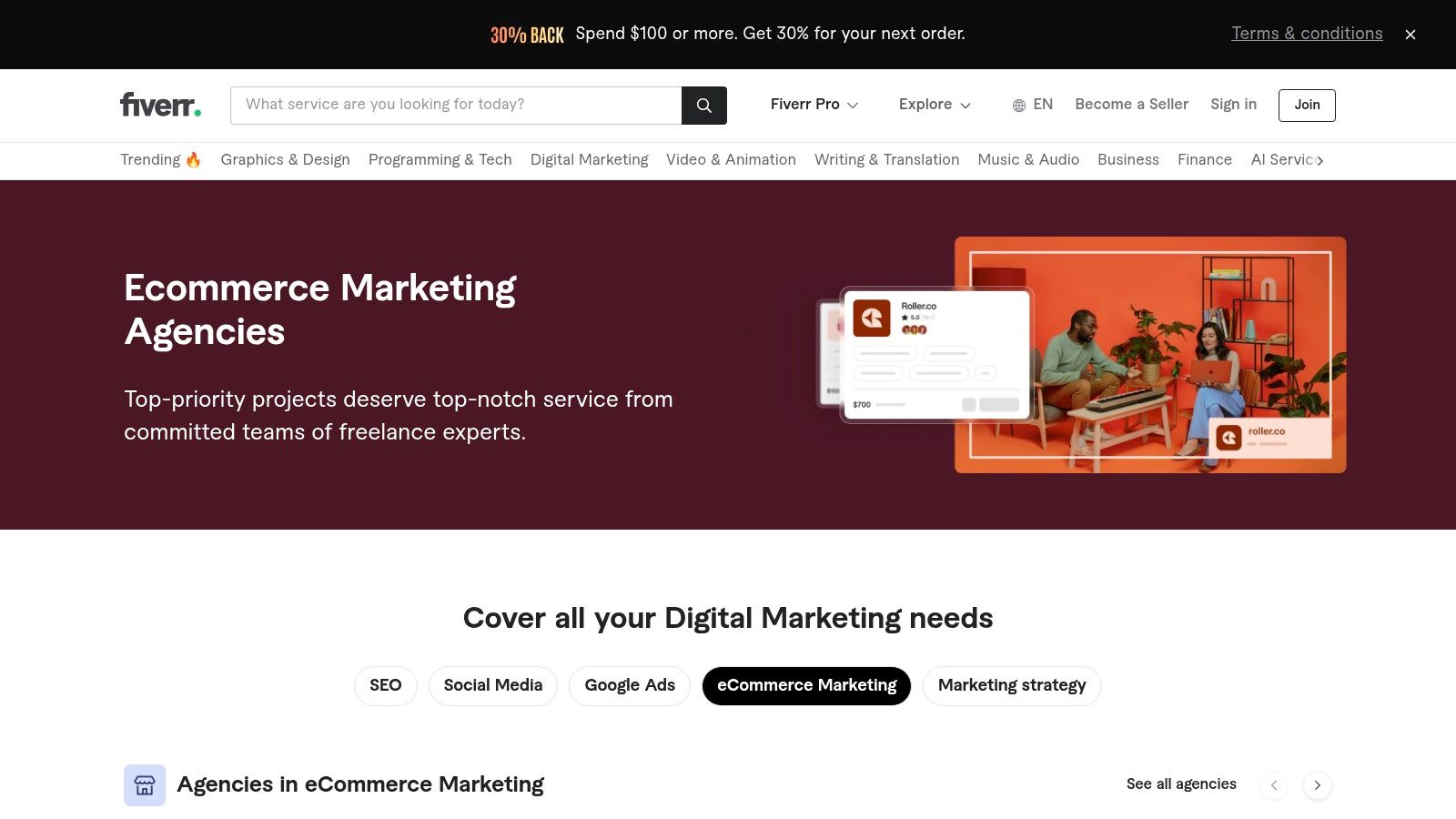
6. Fiverr – Ecommerce Marketing Services and Agencies
For start-ups and businesses needing specific, task-based support, Fiverr offers a vast marketplace of freelancers and agencies providing ecommerce marketing services. It moves away from traditional retainers, focusing instead on fixed-price “gigs” for discrete tasks like setting up a Google Analytics 4 property, designing an email flow or optimising an Amazon product listing. This makes it an ideal platform for testing new marketing channels or handling one-off projects without committing to a long-term contract.
The platform's strength lies in its granularity and transparent pricing. You can find highly specialised support for almost any ecommerce need, from a quick conversion rate optimisation (CRO) audit to creating user-generated content for social media ads. The ability to engage with individual specialists or full-service ‘Fiverr Agencies’ provides a flexible pathway to scale your marketing efforts as your business grows.
Why It Stands Out
Fiverr excels at speed and accessibility. You can find, hire and onboard a marketing specialist for a specific task in a matter of hours, not weeks. The user review system alongside badges for repeat clients and top-rated sellers provides a layer of social proof to help you vet potential providers. Buyer protection with clearly defined scopes and delivery times adds a degree of security to the transaction, making it a lower-risk option for sourcing tactical support.
Pros and Cons
| Pros | Cons |
|---|---|
| Very fast procurement for narrowly scoped needs, perfect for one-off projects. | Quality is uneven across providers, so careful selection and vetting are crucial. |
| Transparent entry-level pricing lets you test tactics without large financial commitments. | Some listings may promise unrealistic outcomes (e.g. guaranteed sales); watch out for red flags. |
| Scales from single gigs to agency-level packages, all within the same platform. | Best for tactical execution , not high-level, long-term strategic partnership. |
Practical Tip
Use Fiverr to build a "virtual bench" of specialists for different tasks. You could hire one freelancer for SEO keyword research, another for creating email templates and a third for setting up your Meta ad campaigns. Always read recent reviews and look for providers with detailed portfolios that showcase relevant ecommerce experience. Start with a small, low-risk project to test a provider before committing to a larger package.
7. Yell Business – UK Digital Marketing Packages
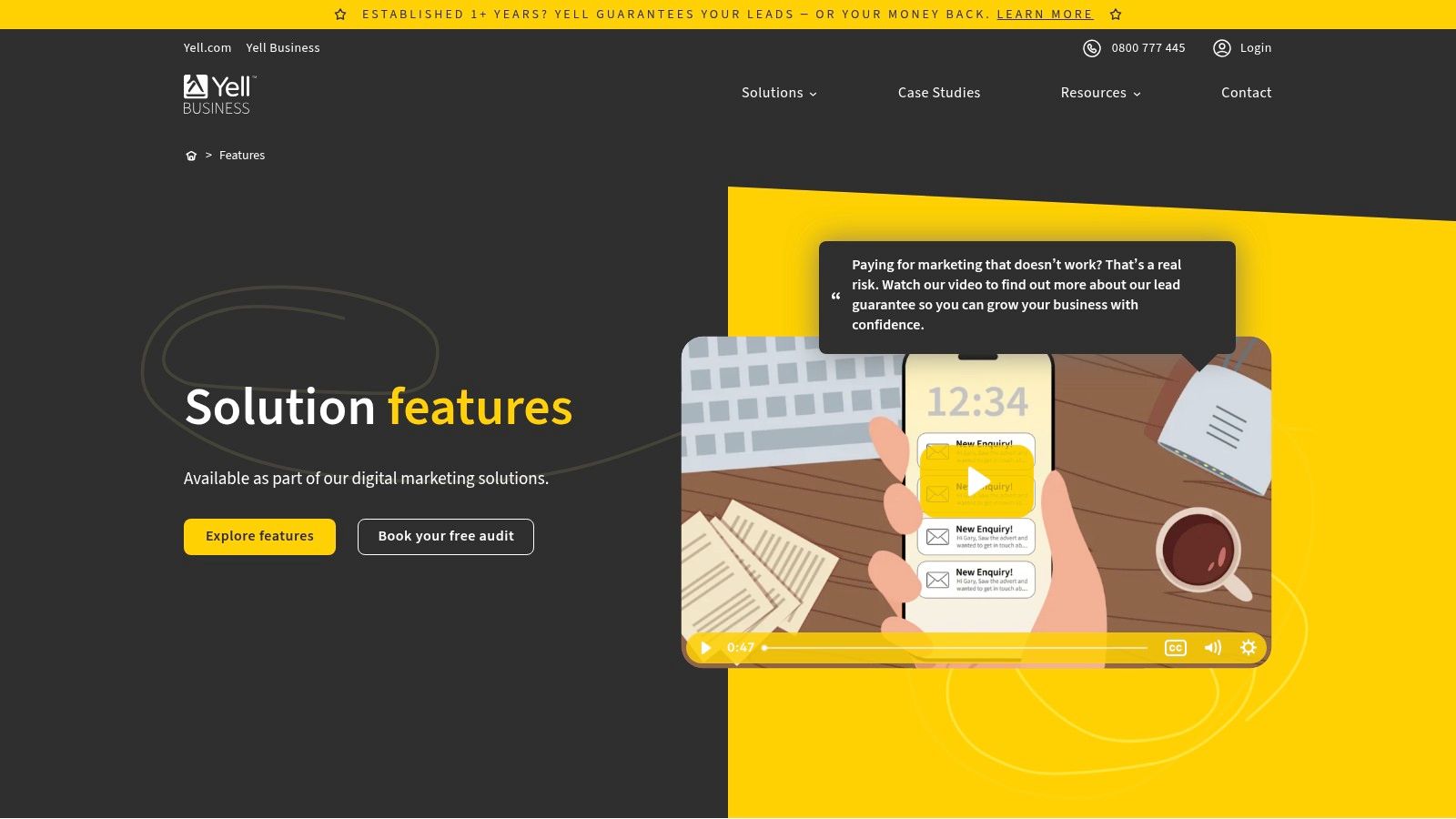
For UK-based SMEs that prefer an all-in-one approach, Yell Business offers packaged digital marketing services that bundle key activities into a single, predictable monthly plan. Known for its long-standing business directory, Yell has evolved into a provider of "done-for-you" marketing solutions, making it an accessible entry point for ecommerce businesses that need a comprehensive service without engaging multiple specialist agencies.
The core of Yell’s offering is its tiered packages, such as Amplify and Accelerate, which combine services like paid media management, social media posting, SEO and website builds. This model is designed for business owners who want a straightforward, managed solution, allowing them to focus on operations while Yell’s team handles the digital marketing execution. This structure is particularly beneficial for ecommerce companies with a local customer base or those just beginning their online marketing journey.
Why It Stands Out
Yell's main differentiator is its simplified, package-based model combined with its deep roots in the UK market. The clear, entry-level pricing and bundled services demystify the process for businesses that may feel overwhelmed by the complexities of digital marketing. Having a single UK-based point of contact for managed Google, Microsoft and Meta advertising alongside SEO and social media provides a level of convenience that specialist ecommerce marketing companies often don't offer.
Pros and Cons
| Pros | Cons |
|---|---|
| Predictable monthly pricing and a single vendor for a wide range of marketing services. | Less bespoke than specialist boutiques; packages might include services you don’t necessarily need. |
| Ideal for SMEs who prefer a packaged "done-for-you" solution instead of sourcing multiple suppliers. | Contract terms and performance can vary , so it's vital to assess attribution and objectives carefully. |
| Free digital marketing audit is available to help assess your needs before committing to a plan. | May not be suitable for larger ecommerce stores with highly specific or advanced marketing needs. |
Practical Tip
Before signing up, take advantage of Yell’s free audit to get an impartial view of your current online presence. When discussing packages, be very clear about your primary ecommerce goal (e.g. increasing online sales by 20%) to ensure the proposed activities are directly aligned with that objective. Ask specifically how they will measure and report on the ROI for your ecommerce store.
Top 7 Ecommerce Marketing Companies — Comparison
| Provider | Implementation complexity 🔄 | Resource requirements ⚡ | Expected outcomes 📊⭐ | Ideal use cases 💡 | Key advantages ⭐ |
|---|---|---|---|---|---|
| Superhub | High 🔄🔄🔄 — bespoke multi-channel setups | Medium–High ⚡⚡ — agency fees, production, tech | High 📊⭐ — rapid revenue & audience growth (case-proven) | Scaling brands, full-service launches, TV/cinematic campaigns | End-to-end capability, proprietary AI lead gen, industry expertise |
| Shopify Partner Directory | Low–Medium 🔄🔄 — brokered engagements | Variable ⚡ — depends on partner tier & scope | Strong for Shopify stores 📊⭐ — platform-native results | Shopify merchants needing vetted ecommerce specialists | Official Shopify ecosystem, partner tiers, transparent profiles |
| Clutch.co – UK Ecommerce Marketing Agencies | Low 🔄 — research & shortlist process | Low ⚡ — browsing; vendor costs vary | Reliable due-diligence signals 📊⭐ — verified reviews & pricing bands | RFP shortlisting, agency selection, benchmarking | Verified client reviews, pricing transparency, filters |
| DesignRush – Top UK Agencies | Low–Medium 🔄🔄 — curated comparisons | Low ⚡ — browsing; vendor costs vary | Useful pricing signals & shortlist 📊 | Market scan, quick vendor comparison, pricing checks | Curated listings, visible hourly/min budgets, recency indicators |
| Upwork – Hire Ecommerce Marketers (UK) | Medium 🔄🔄 — freelancer management overhead | Low–High ⚡ — wide rate spectrum, escrow available | Variable outcomes 📊 — good pilots, quality varies | Short projects, channel pilots, temporary skill gaps | Fast procurement, flexible budgets, work diaries & escrow |
| Fiverr – Ecommerce Marketing Services | Low 🔄 — fixed-scope gigs | Very Low ⚡⚡ — entry-level fixed prices | Quick tactical impact, quality varies 📊 | Narrow tasks, quick tests, audits, setup jobs | Fast procurement, transparent starting prices, scalable gigs |
| Yell Business – UK Digital Marketing Packages | Low 🔄 — packaged onboarding | Medium ⚡ — monthly packages, managed ads | Predictable local results 📊⭐ for SMEs | SMEs seeking packaged UK support and clear pricing | Clear packages/pricing, UK support, single-vendor management |
Your Blueprint for Selecting the Ideal Ecommerce Marketing Partner
Choosing from the diverse landscape of ecommerce marketing companies is a critical decision that will directly impact your brand's trajectory. The right partner acts as an extension of your team, driving strategic growth, while the wrong fit can lead to wasted budget and missed opportunities. This guide has presented a range of options, from full-service agencies like Superhub, offering end-to-end strategic and creative execution, to flexible platforms like Upwork and specialised directories such as Clutch.co. Your ideal choice depends entirely on your specific circumstances: your business stage, budget, in-house capabilities and long-term goals. To make the final decision with confidence, it is essential to move from discovery to a structured evaluation process.
Synthesising Your Options and Defining Your Needs
The key takeaway is that there is no single "best" ecommerce marketing company; there is only the best fit for your business. If you are a start-up needing foundational branding alongside performance marketing, a full-service agency might be ideal. Conversely, an established brand with a strong in-house team may only require a specialist freelancer from Fiverr or Upwork for a specific campaign or channel like SEO or PPC.
Before you reach out, crystallise what success looks like for you. Define the specific Key Performance Indicators (KPIs) that matter most. Are you focused on increasing Customer Lifetime Value (CLV), reducing Customer Acquisition Cost (CAC), improving conversion rates or boosting brand awareness? Having these metrics clearly defined will make your initial conversations with potential partners far more productive.
Moving Forward: A Practical Vetting Process
Once you have shortlisted two or three potential partners, your focus must shift to rigorous evaluation. This is where you separate the exceptional agencies from the merely adequate ones. A forward-thinking partner will likely integrate advanced technologies; for example, understanding how to use AI to launch ads is becoming increasingly vital for efficiency and performance.
Use the insights from our buyer's checklist to guide your conversations. Ask probing questions about their process, communication style and reporting methods. Scrutinise their case studies and ask to speak with current or former clients whose challenges mirror your own. Pay close attention to team chemistry during these calls. Remember, you are not just hiring a service provider but forging a partnership built on trust, transparency and shared objectives. This final step of due diligence ensures you select a partner who will not just meet your expectations but actively drive your ecommerce business toward a more profitable future.
Ready to partner with a full-service agency that blends strategic insight with creative execution to drive measurable growth? Explore how Superhub delivers end-to-end ecommerce marketing solutions tailored to ambitious brands. Visit Superhub to see our work and start a conversation about your goals.
Want This Done For You?
SuperHub helps UK brands with video, content, SEO and marketing that actually drives revenue. No vanity metrics. No bullsh*t.