
7 Best Digital Marketing Agencies UK 2026
Navigating the crowded field of digital marketing can be a daunting task for any business. Whether you're a start-up aiming to build a strong brand presence, an established company seeking to overhaul your online strategy or a motorsport team looking for sponsorship, finding the right partner is crucial for success. This guide is designed to simplify that process, cutting through the noise to connect you with the best digital marketing agencies UK has to offer.
We have compiled a definitive roundup of platforms and directories where you can discover, vet and compare top-tier agencies. Instead of providing a static list of firms we are giving you the tools to find a partner perfectly suited to your specific needs, whether that's social media management, content production or a complete digital transformation. For those keen on staying abreast of the latest strategies while searching, you can find helpful articles on the theclipbot Blog for Digital Marketing Insights.
Each entry in our list provides a clear overview of the platform, explaining how it works and what makes it a valuable resource for your search. We include direct links and practical insights to help you make an informed decision quickly and efficiently, ensuring you find a digital partner that can deliver tangible results and drive your business forward.
1. Superhub
Best For: Ambitious brands seeking rapid, data-driven growth.
Superhub has rapidly distinguished itself as one of the best digital marketing agencies in the UK, earning its place by delivering tangible, accelerated growth for a diverse portfolio of clients. Based in Devon, this agency combines innovative, bespoke marketing strategies with a powerful, tech-forward approach. It has become the go-to partner for emerging start-ups and established brands aiming to unlock their full potential and achieve significant market impact.
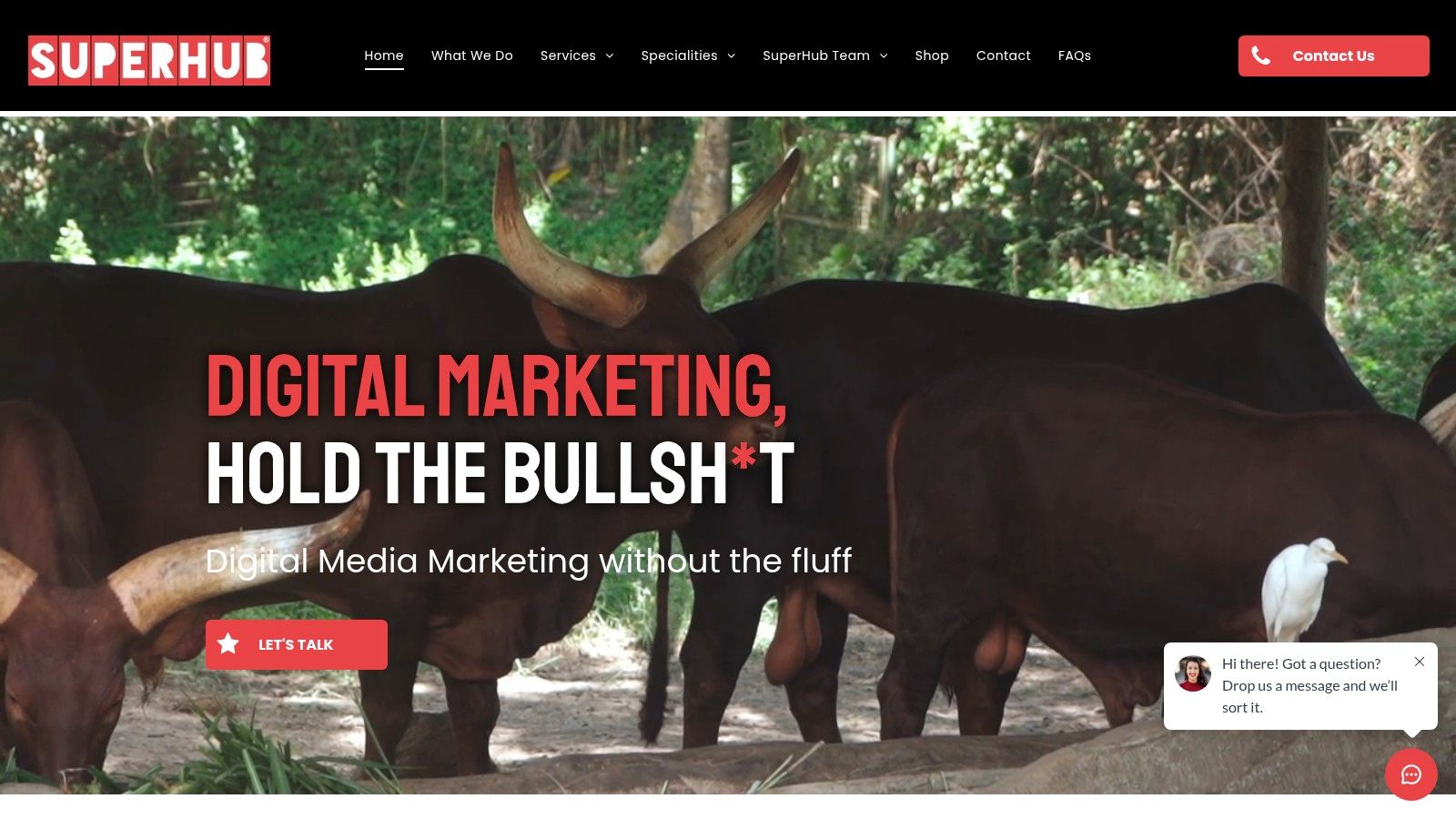
What truly sets Superhub apart is its integration of cutting-edge technology and deep industry expertise. The agency moves beyond standard marketing practices by leveraging proprietary AI-driven lead generation tools, which automate and optimise client acquisition with remarkable efficiency. This technological prowess is complemented by a comprehensive service offering that covers every facet of the digital landscape.
Key Strengths and Service Offerings
Superhub provides a holistic suite of services designed for maximum impact, ensuring every campaign is cohesive and performance-focused. Their core capabilities include:
- Strategic Digital Marketing: They develop tailored strategies that encompass SEO, PPC and content marketing, all driven by meticulous data analysis to ensure campaigns resonate with the target audience and deliver a strong return on investment.
- Advanced Web and App Development: Superhub builds future-proof digital platforms, from sophisticated websites to complex mobile applications, ensuring clients have a robust and scalable online presence.
- High-Impact Content and Film Production: Their in-house production team creates everything from cinematic drone footage and TV advertising to engaging social media content, helping brands tell compelling stories that captivate their audience.
- Sector-Specific Expertise: The agency has cultivated deep knowledge in competitive sectors such as motorsport, automotive, financial services and ecommerce, enabling them to devise highly effective, industry-specific campaigns. A notable success story includes taking a client from zero to £60,000 in turnover in just six weeks.
Expert Insight: Superhub's strength lies in its 'no-fluff' approach. By combining creative execution with relentless data analysis and AI automation, they streamline the path to growth, making them an ideal partner for businesses that demand measurable results and operational efficiency.
Pros and Cons
| Pros | Cons |
|---|---|
| Bespoke, Data-Driven Strategies: Campaigns are meticulously tailored to each client’s unique goals. | Pricing Not Public: Requires a direct consultation to receive a customised quote. |
| AI-Powered Lead Generation: Fully automated systems provide a significant competitive edge. | Niche vs. Scale: Focus on innovation may lead larger global firms to seek other partners. |
| Comprehensive In-House Services: A one-stop-shop for digital, development and film production. | |
| Proven Success and High Ratings: A strong track record of rapid growth and excellent client feedback. |
Practical Information
- Ideal For: Start-ups, established brands in motorsport or automotive sectors and any business seeking accelerated digital transformation.
- Getting Started: The initial step involves a consultation to discuss specific business goals, which allows Superhub to propose a tailored strategy and quote. Their customer-centric approach is frequently highlighted in testimonials, praising their professionalism and agility.
For businesses looking for a dynamic and results-obsessed partner, Superhub offers a compelling and comprehensive solution that consistently delivers outstanding outcomes.
Website: https://www.superhub.biz
2. Clutch – UK Digital Marketing Agencies
Clutch is not an agency itself but a comprehensive B2B directory and review platform that serves as an invaluable starting point for finding the best digital marketing agencies UK . It operates like a high-stakes matchmaking service for businesses, connecting you with verified service providers based on incredibly detailed, data-driven insights. Its key differentiator is the depth and authenticity of its client reviews, which are often gathered through live phone interviews conducted by Clutch analysts.
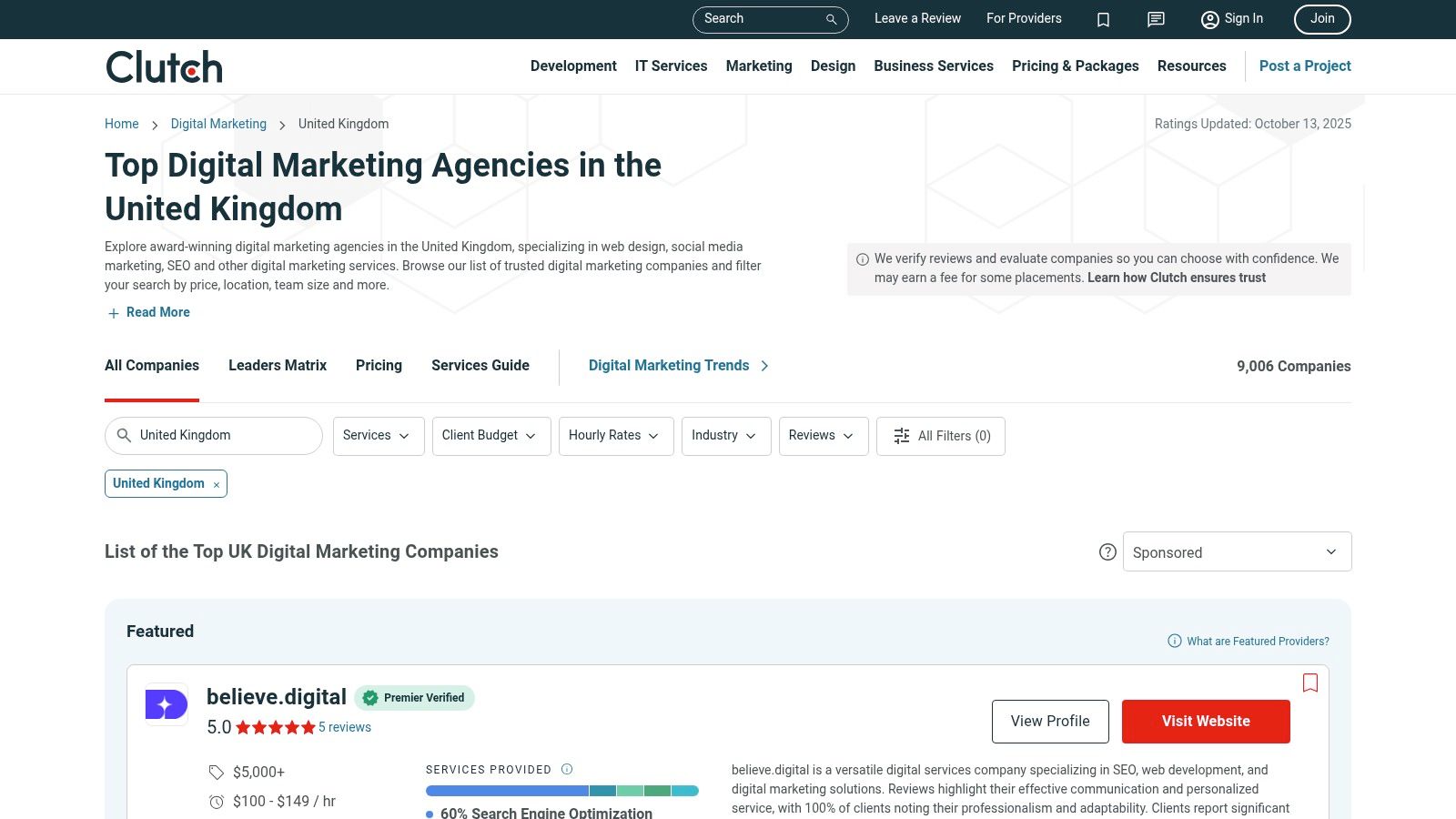
The platform’s strength lies in its powerful filtering system. You can narrow down the extensive list of UK agencies by your specific needs, including minimum project size, hourly rate, team size, location and industry focus. This granularity saves countless hours of research, allowing businesses to create a shortlist of relevant agencies quickly. For those wondering how to evaluate their options, Clutch provides a solid foundation; if you want to understand the finer points of selection you can learn more about how to choose a digital marketing agency.
Standout Features and Practical Use
Clutch's proprietary Leaders Matrix is a standout feature. It visually maps out agencies based on their "Ability to Deliver" and "Focus" within a specific service area. This tool helps you instantly identify market leaders versus niche specialists, offering a clear snapshot of the competitive landscape.
To get the most from Clutch start by using the filters to define your non-negotiables like budget and core service needs (e.g. SEO or PPC). Next, dive into the reviews of the top 5-10 contenders, paying close attention to project scope, results and communication style described by former clients. Finally, use the comparison tool to see how your shortlisted agencies stack up side-by-side on ratings and focus areas.
Pros:
- Transparent Pricing Indicators: Displays minimum project sizes and hourly rates.
- Extensive UK Listings: A vast and regularly updated database of agencies.
- Leaders Matrix: Helps identify top-performing agencies at a glance.
Cons:
- Sponsored Placements: Top results may be sponsored, requiring careful evaluation.
- Varying Quality: The sheer volume means due diligence is still necessary.
3. The Drum Recommends (by The Drum)
The Drum Recommends is an authoritative UK-centric directory deeply integrated into the respected media and marketing publication, The Drum. This platform distinguishes itself by leveraging The Drum’s industry reputation to provide a curated and highly credible list of the best digital marketing agencies UK . It operates on a system of client-verified ratings, ensuring that an agency's profile and reputation are built on genuine customer feedback and performance rather than just self-promotion.
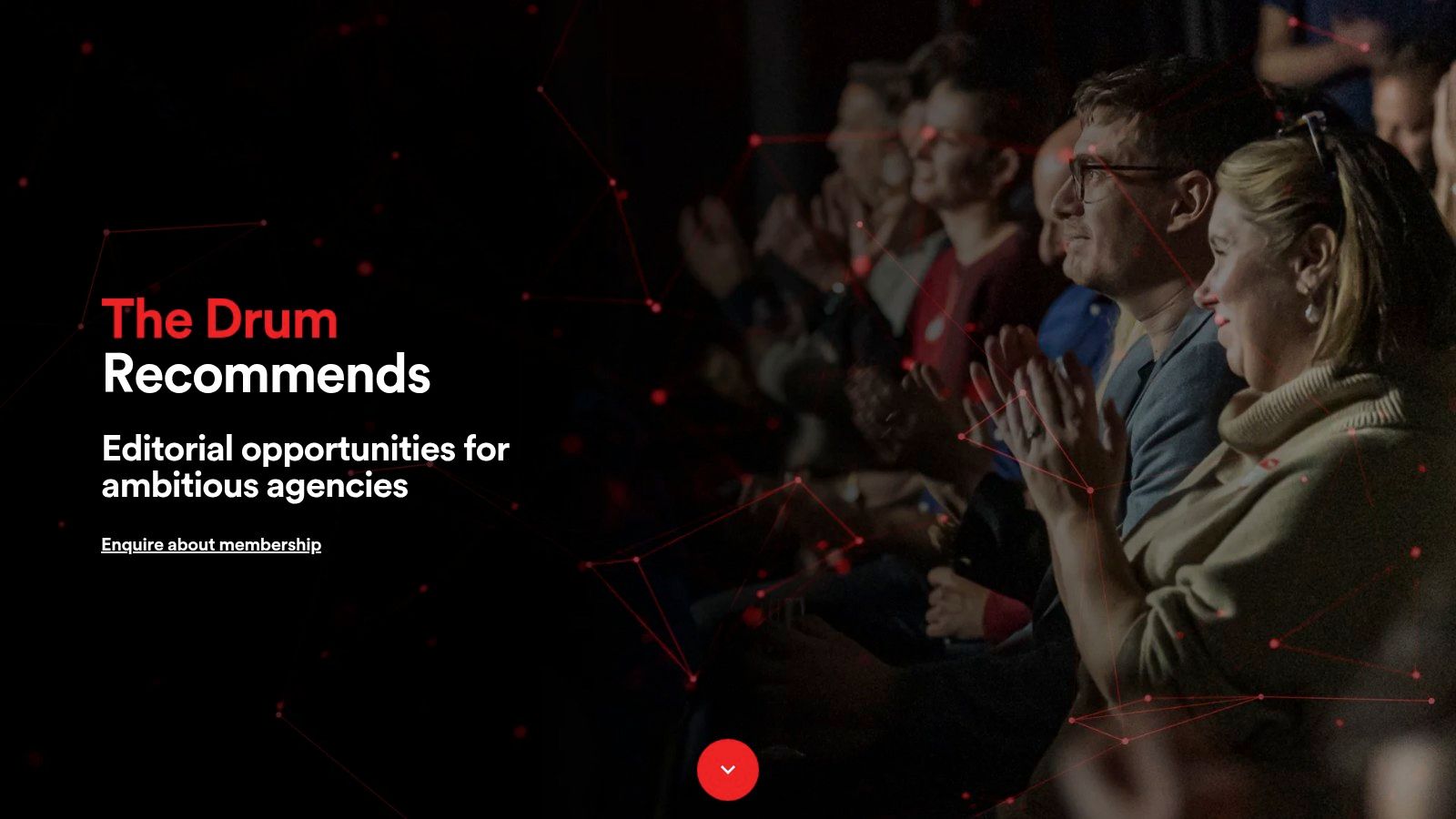
Its primary strength is its connection to the wider editorial ecosystem of The Drum. Agencies featured here often have their work showcased in industry news, case studies and award ceremonies, providing an additional layer of qualitative assessment beyond simple star ratings. This makes the platform particularly useful for businesses seeking partners who are not only competent but are also recognised industry leaders and innovators. The search functionality allows users to filter agencies by service, location, sector experience and company size.
Standout Features and Practical Use
A key differentiator for The Drum Recommends is its use of verified client ratings and industry awards as primary quality signals. An agency cannot simply buy a top spot; its position is earned through consistently high-quality feedback from its clients. This peer-reviewed system adds a level of trust that is hard to replicate.
To use the platform effectively start by exploring the rankings for your required service, such as 'Digital Strategy' or 'SEO'. Pay close attention to the 'Recommends' scores and read the detailed client testimonials, which often provide candid insights into project management and results. Cross-reference your shortlisted agencies with The Drum’s editorial content and awards sections to get a holistic view of their industry standing and creative capabilities before making contact.
Pros:
- High UK Relevance: Strong focus on the UK market with deep industry credibility.
- Verified Quality: Ratings and awards provide robust quality assurance.
- Detailed Agency Profiles: Comprehensive information on services, clients and team size.
Cons:
- Potential for Bias: Non-member or newer agencies may be under-represented.
- Slightly Clunky UX: Navigation can sometimes feel disjointed between the main site and the Recommends microsite.
Website: https://recommends.thedrum.com/
4. Sortlist – UK Digital Marketing Agencies
Sortlist is a dynamic matchmaking platform that streamlines the process of finding the right partner among the best digital marketing agencies UK . It operates by having businesses submit a detailed project brief, which its algorithm and human experts then use to match with the most suitable agencies from its extensive network. This brief-driven approach removes much of the initial guesswork and cold outreach, presenting you with a pre-vetted shortlist of interested and relevant candidates.
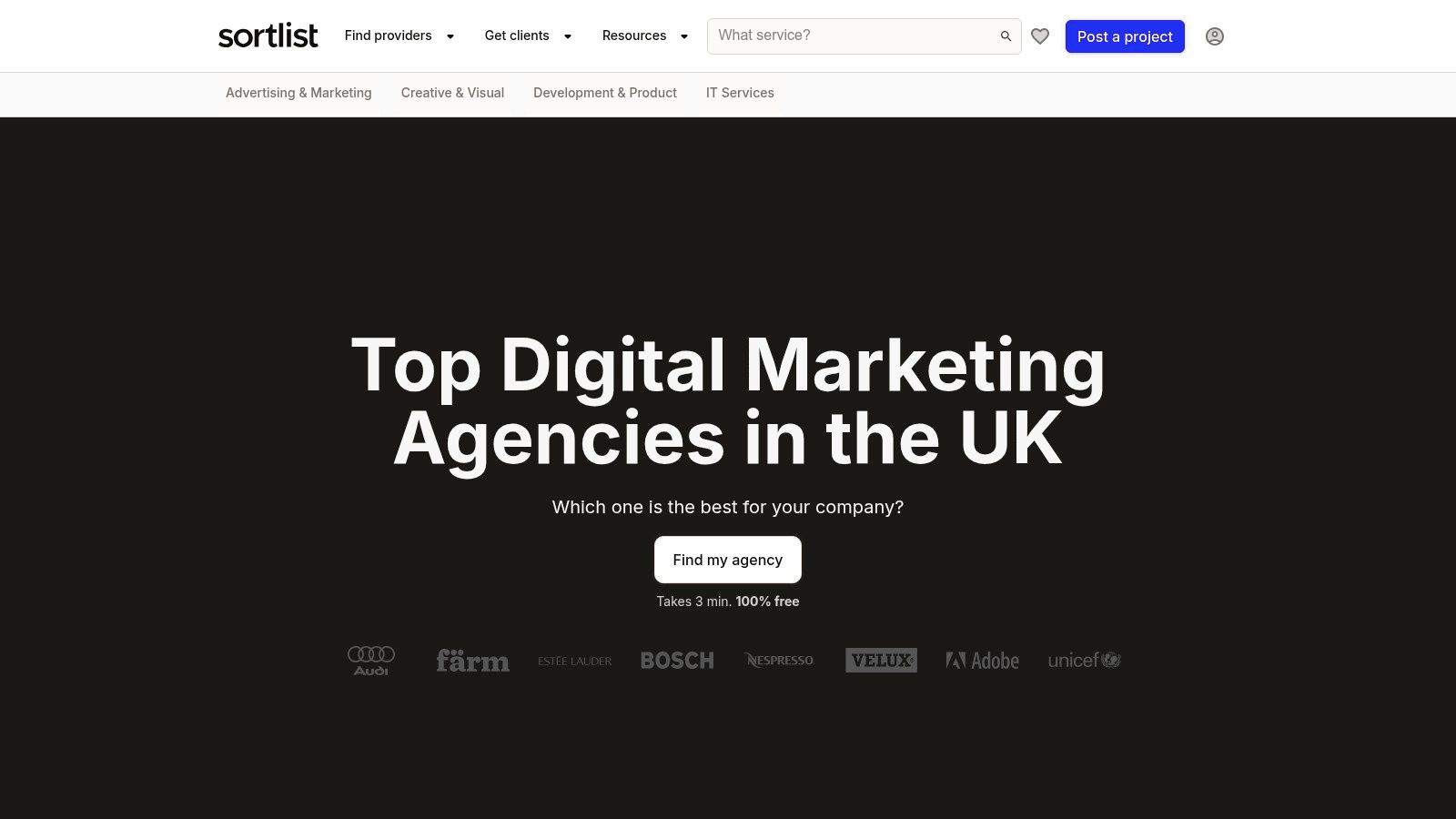
The platform is designed to save time and add a layer of confidence to the selection process. Instead of scrolling through endless directories you define your needs, budget and timeline and let qualified agencies come to you. Agency profiles are comprehensive, featuring client reviews, portfolio examples, team size and crucially, indicative budget ranges for their services. This transparency helps manage expectations from the outset and is one of the key benefits of outsourcing your marketing through a structured platform.
Standout Features and Practical Use
A key feature is the guided brief creation tool . Sortlist walks you through a series of questions to build a comprehensive project description that agencies can easily understand and evaluate. This structured process ensures you don't miss critical details, leading to more accurate and relevant matches from the start. Once matches are proposed the platform provides side-by-side comparison tools and an integrated chat function to facilitate communication.
To use Sortlist effectively be as specific as possible in your project brief. Clearly outline your goals, target audience, required services (e.g. SEO, social media, content marketing) and your budget. Once you receive your agency shortlist review their profiles and portfolios carefully, paying close attention to their experience in your specific industry. Use the integrated messaging to ask clarifying questions before committing to a formal conversation.
Pros:
- Time-saving Matching Process: Submitting one brief generates multiple relevant agency proposals.
- Human Support: Access to advisors who can help refine your brief and guide your selection.
- Good Sector Visibility: Easy to filter agencies based on their sector-specific expertise.
Cons:
- Profile Quality Variance: Some agency profiles are unclaimed or lack detailed information.
- Currency Defaults: UK pages can sometimes display budgets in euros, requiring attention.
5. DesignRush – Best Digital Marketing Agencies in the United Kingdom
DesignRush is another leading B2B marketplace that connects businesses with professional agencies but it sets itself apart through its strong editorial curation. While functioning as a directory it also provides editorially vetted rankings of the best digital marketing agencies UK , giving businesses a pre-qualified list to start from. This approach combines the breadth of a directory with the focused insight of an industry award list, highlighting agencies that have a proven track record.
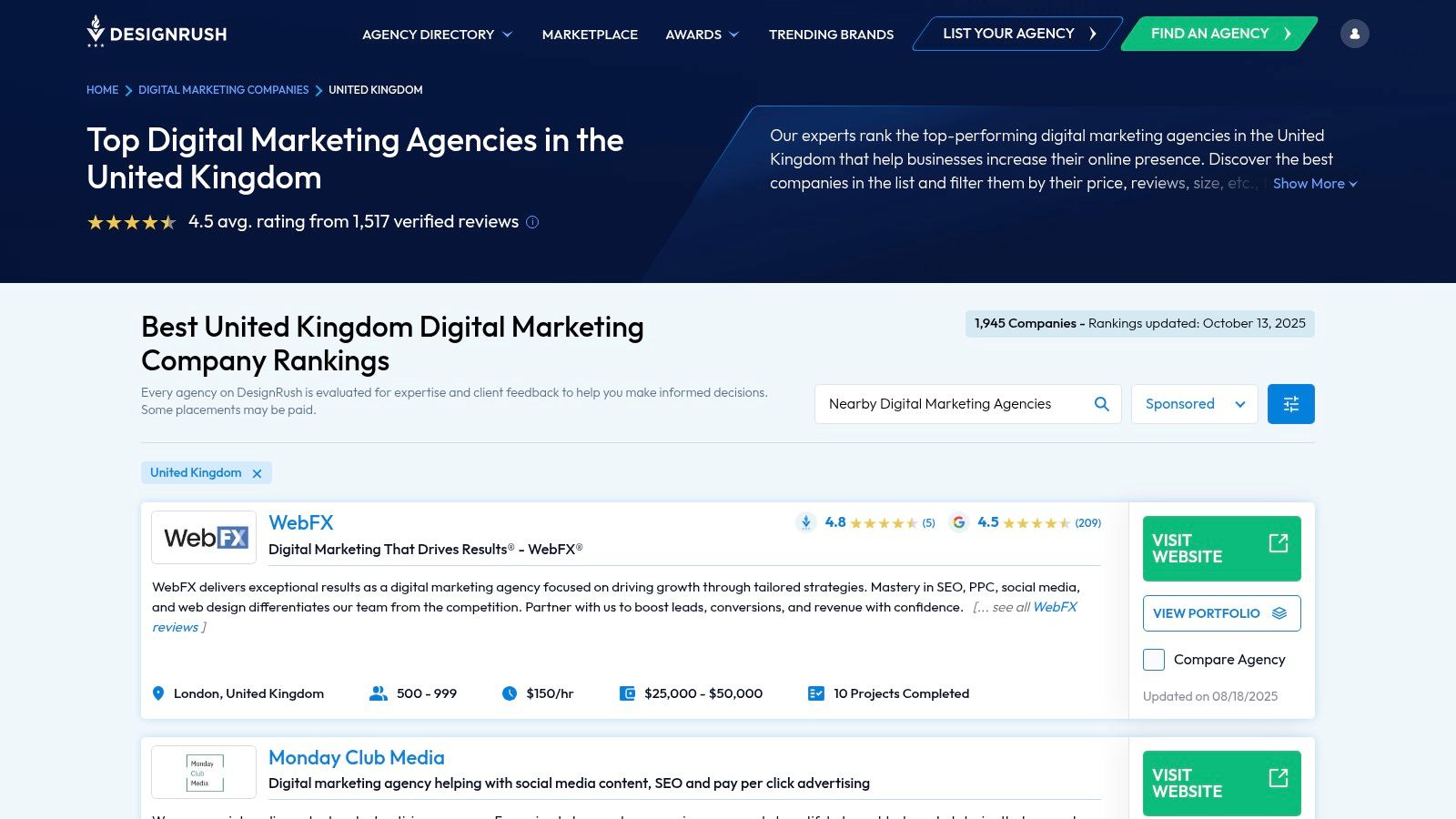
The platform is particularly useful for companies that need to quickly find providers within specific budget constraints. Its clear filtering for hourly rates and minimum project costs allows users to eliminate unsuitable agencies from the outset. Each agency profile is a rich resource, showcasing portfolios, key clients, leadership teams and service specialisations. This comprehensive overview is crucial for assessing an agency's suitability and understanding their core strengths before initiating contact, forming a key part of any robust selection process. For a deeper understanding of what to look for you can explore the ultimate guide to digital marketing in 2025.
Standout Features and Practical Use
A key strength of DesignRush is its curated ranking system . The platform’s internal team regularly reviews and ranks agencies based on their portfolio, client feedback and industry reputation. This editorial oversight helps to surface high-quality, established providers that might otherwise be harder to find in a purely algorithm-driven directory.
To use DesignRush effectively start by selecting your core service need, such as "SEO" or "Social Media Marketing", within the UK market. Apply the budget and team size filters to narrow the list to a manageable number of contenders. From there scrutinise the portfolios and case studies of the top-ranking agencies. Pay close attention to the industries they have served and the results they have delivered as this is the best indicator of their potential fit for your business.
Pros:
- Easy Shortlisting: Clear budget and service capability filters simplify the initial selection process.
- Editorial Curation: An in-house team vets and ranks agencies, surfacing established providers.
- Detailed Agency Profiles: Comprehensive information including client lists, portfolios and leadership.
Cons:
- Sponsored Placements: Promoted listings can influence agency visibility at the top of the results.
- Smaller UK Listing: The database of UK agencies is less extensive than on mega-directories like Clutch.
6. Upwork – Hire UK Digital Marketers and Agencies
Upwork shifts the focus from established firms to a dynamic marketplace of individual talent and boutique agencies. It is one of the world's largest talent platforms, providing a direct channel for businesses to hire vetted, UK-based digital marketing freelancers and smaller agency teams. This model offers unparalleled flexibility, allowing you to engage specialists for specific tasks like SEO audits, PPC campaign management or social media content creation without the long-term commitment of a traditional agency retainer.
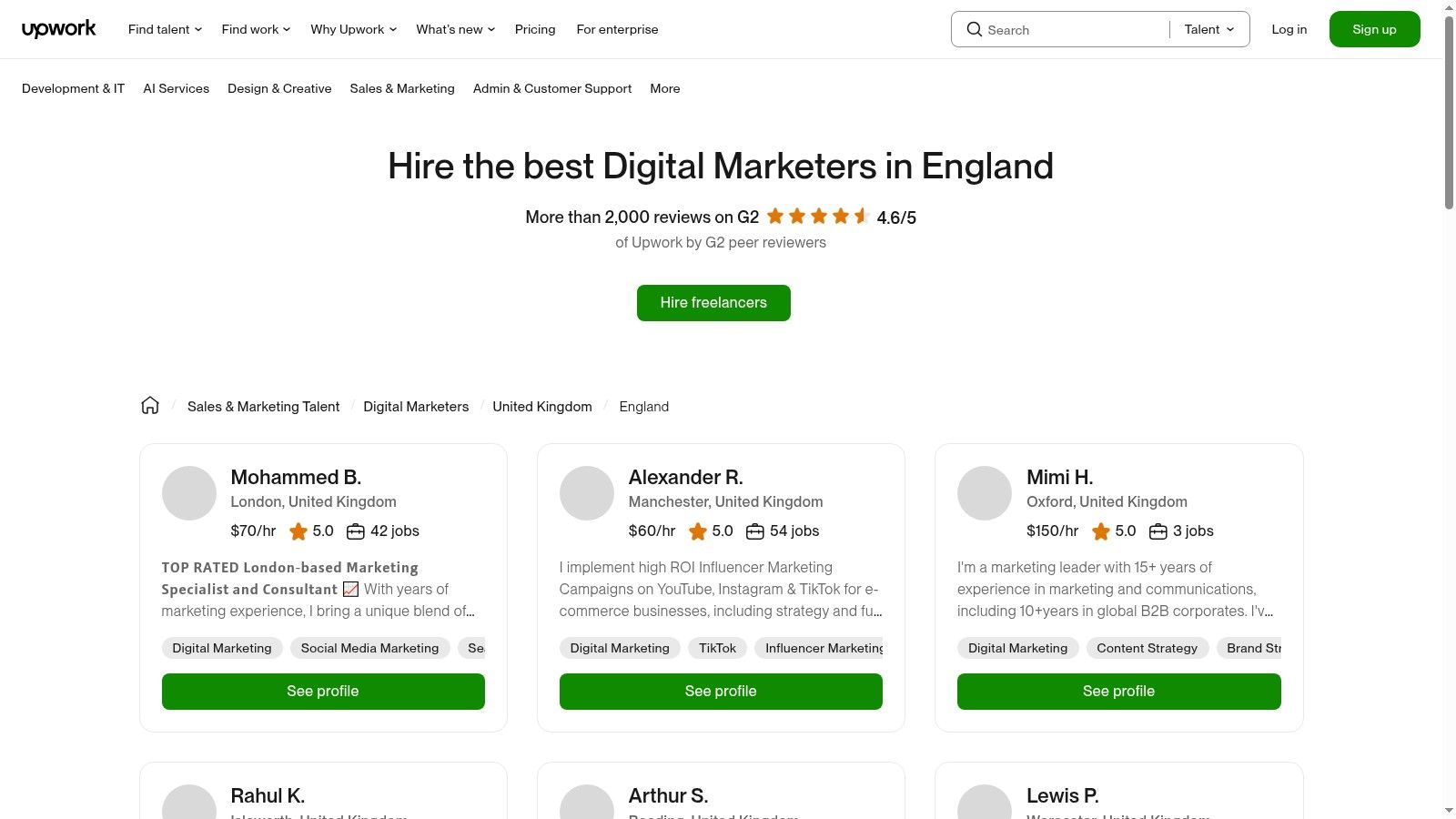
The platform’s core strength lies in its speed and granular control. Businesses can post a job detailing their requirements and often receive proposals from qualified UK marketers within 24 hours. Upwork’s built-in tools, including time-tracking and milestone-based payments via Escrow, provide a secure framework for managing projects and ensuring work is delivered to standard before funds are released. This makes it an ideal solution for start-ups needing agile support or larger companies looking to supplement their in-house teams.
Standout Features and Practical Use
A key feature is the Talent Marketplace itself, which allows for proactive searching. Instead of just waiting for proposals you can use robust UK-specific filters to search for freelancers or agencies based on skills, "Job Success Score", hourly rate and total earnings on the platform. This lets you identify proven experts with a track record of delivering results for other clients.
To use Upwork effectively create a highly detailed job post. Clearly outline your project scope, deliverables, budget and desired skills. When evaluating candidates look beyond their proposals; scrutinise their work history, client feedback and portfolio. Inviting a shortlist of 3-5 candidates for a brief video interview is a crucial step to verify their expertise and assess their communication style. This due diligence is vital for finding the right fit among the vast pool of talent.
Pros:
- Fast Access to Talent: Quickly find and hire specialists for specific needs.
- Clear Cost Control: Set fixed-price milestones or monitor hourly work logs for budget management.
- Flexible Engagement: Ideal for both short-term projects and long-term collaborations.
Cons:
- Variable Quality: The open marketplace means thorough vetting of candidates is essential.
- Platform Fees: Upwork charges service fees on payments made to freelancers.
7. Bark – UK Services Marketplace (Digital Marketing)
Bark is not a traditional agency but a UK-founded services marketplace designed to connect businesses with local professionals, including some of the best digital marketing agencies UK . It operates on a lead-generation model where you submit a detailed project brief and interested freelancers and agencies then send you quotes. This approach effectively reverses the search process, bringing potential partners directly to your inbox. Its main appeal lies in its simplicity and speed, making it an excellent tool for gathering initial quotes and understanding market rates.
The platform guides you through creating a "Bark," which is a detailed request outlining your digital marketing needs, budget and timeline. Once submitted your request is matched with relevant service providers in your chosen area, from London to Manchester. This system is particularly useful for small to medium-sized businesses that want to quickly compare costs and response times from multiple local specialists without conducting extensive individual outreach.
Standout Features and Practical Use
Bark’s key strength is its efficiency in canvassing the local market. The platform's guided brief submission process ensures you provide all the necessary information for agencies to create a relevant proposal, saving significant back-and-forth communication. Profiles for each provider include verified reviews, response time estimates and a "hired on Bark" count, offering social proof and performance indicators.
To use Bark effectively be as specific as possible in your initial brief. Clearly define your goals (e.g. "increase e-commerce sales by 20% through targeted PPC") and your ideal budget range. Once quotes arrive use the platform's messaging system to ask follow-up questions and assess the quality of communication. While it’s great for getting a feel for the market you should supplement your search by vetting your top choices' own websites and case studies.
Pros:
- Rapid Quote Gathering: Quickly receive multiple free quotes from various providers.
- Strong UK Local Coverage: Excellent for finding specialists in specific cities or regions.
- Free for Buyers: No cost to submit a brief and compare incoming proposals.
Cons:
- Variable Quality: As a lead-gen platform, the quality and experience of responders can vary greatly.
- Top-Tier Agencies Absent: Many elite, established agencies do not use lead-generation platforms.
Top 7 UK Digital Marketing Agencies Comparison
| Item | Implementation Complexity 🔄 | Resource Requirements ⚡ | Expected Outcomes 📊 | Ideal Use Cases 💡 | Key Advantages ⭐ |
|---|---|---|---|---|---|
| Superhub | Medium - requires tailored strategy setup | High - bespoke marketing & tech resources | High - rapid growth and multimillion contracts | Startups and established brands seeking growth | AI-driven leads, multi-channel expertise, proven ROI |
| Clutch – UK Digital Marketing | Low - directory with filtering tools | Low - user-driven platform | Medium - informed agency selection | Researching and comparing agencies by budget & service | Transparent pricing, verified reviews, large UK listings |
| The Drum Recommends | Low - rating platform | Low - curated UK industry insights | Medium - quality signals for UK agencies | UK-focused agency research with quality assurance | Verified ratings, awards, strong industry presence |
| Sortlist – UK Digital Marketing | Medium - moderated matchmaking process | Medium - client project briefs & agency data | Medium - fast matches and shortlist | Clients needing quick agency matches and comparisons | Time-saving matching, sector insights, chat tools |
| DesignRush | Low - curated editorial directory | Low - user browsing | Medium - shortlisted top agencies | Shortlisting based on curated rankings and budgets | Editorial curation, clear filters, portfolio showcases |
| Upwork – Hire UK Marketers | Low to medium - freelance marketplace | Variable - depends on hires and contracts | Variable - depends on freelancer quality | Hiring flexible UK-based freelancers or boutique agencies | Fast proposals, payment protection, localized talent |
| Bark – UK Services Marketplace | Low - lead generation platform | Low - submitting briefs to receive quotes | Variable - depends on provider quality | Quick quote comparisons from local digital marketers | Multiple free quotes, local coverage, responsive communication |
Making Your Final Choice: Partnering for Success in 2025
Navigating the landscape of UK digital marketing agencies can feel daunting but using the right platform simplifies the entire process. We have explored a range of powerful tools from curated directories like Clutch and The Drum Recommends to dynamic marketplaces such as Upwork and Bark. Each platform offers a unique pathway to connecting with the talent your business needs to thrive.
The key takeaway is that there is no single "best" platform for everyone. The ideal choice depends entirely on your specific requirements, budget and project complexity. A start-up in the motorsport sector might find a specialised, vetted agency on a platform like Superhub invaluable while a business needing a quick, specific task completed might turn to the freelance talent pool on Upwork.
Actionable Steps to Finding Your Perfect Agency Partner
To move from evaluation to action it is crucial to approach your selection with a clear strategy. Rushing this decision can lead to misaligned expectations and wasted resources.
Here is a simple framework to guide your final choice:
- Define Your Core Objectives: Before you even begin your search, clearly document what you want to achieve. Are you focused on increasing lead generation by 40%, boosting organic traffic through SEO or launching a new product with a targeted social media campaign? A precise goal will be your most important filter.
- Evaluate Portfolios with a Critical Eye: Look beyond flashy designs. Scrutinise case studies relevant to your industry and goals. Do their past results demonstrate a clear return on investment? Look for evidence of data-driven decision-making and a deep understanding of their clients' markets.
- Prioritise Cultural and Communicative Fit: The best agency-client relationships are true partnerships. During initial conversations assess their communication style, responsiveness and enthusiasm for your brand. A team that understands your vision and challenges you with new ideas is a powerful asset.
- Look for Future-Facing Capabilities: The digital world is constantly evolving. A forward-thinking agency will be proficient in areas like AI-driven marketing, data analytics and inclusive design. To ensure a truly successful partnership in 2025 look for agencies that prioritise inclusive design; understanding these 10 Essential Website Accessibility Best Practices for 2025 is a critical starting point.
Ultimately, selecting from the best digital marketing agencies UK has to offer is an investment in your company's future. By using the platforms detailed in this guide and applying a methodical selection process, you can forge a partnership that not only meets your immediate needs but also fuels your long-term growth and success. This strategic decision will be the catalyst that propels your brand forward in the competitive digital arena of 2025 and beyond.
Ready to connect with a pre-vetted, specialist agency that truly understands your sector? Superhub curates a network of top-tier UK marketing agencies, particularly for the automotive and motorsport industries, ensuring you partner with experts who can deliver exceptional results. Explore the Superhub platform to find your perfect match today.
Want This Done For You?
SuperHub helps UK brands with video, content, SEO and marketing that actually drives revenue. No vanity metrics. No bullsh*t.