

The Expert Guide to AI on Social Media in 2026
Imagine a world where your favourite platforms not only curate your feed, but also anticipate the next big trend before it takes off. That is the new reality of ai on social media in 2026. This expert guide delves into how artificial intelligence is transforming the way users engage, how brands create content, and how marketers shape their strategies.
We will reveal practical insights and actionable steps to help you stay ahead. Expect to explore AI-driven personalisation, ethical dilemmas, sector-specific case studies, and the future trends shaping online communities. Prepare to unlock a competitive edge and navigate the fast-evolving landscape with confidence.
The Evolution of AI on Social Media: 2020–2026
The evolution of ai on social media from 2020 to 2026 has been nothing short of transformative. Platforms have adapted rapidly, integrating advanced tools that now shape nearly every aspect of the user and brand experience.
Key Milestones in AI Integration
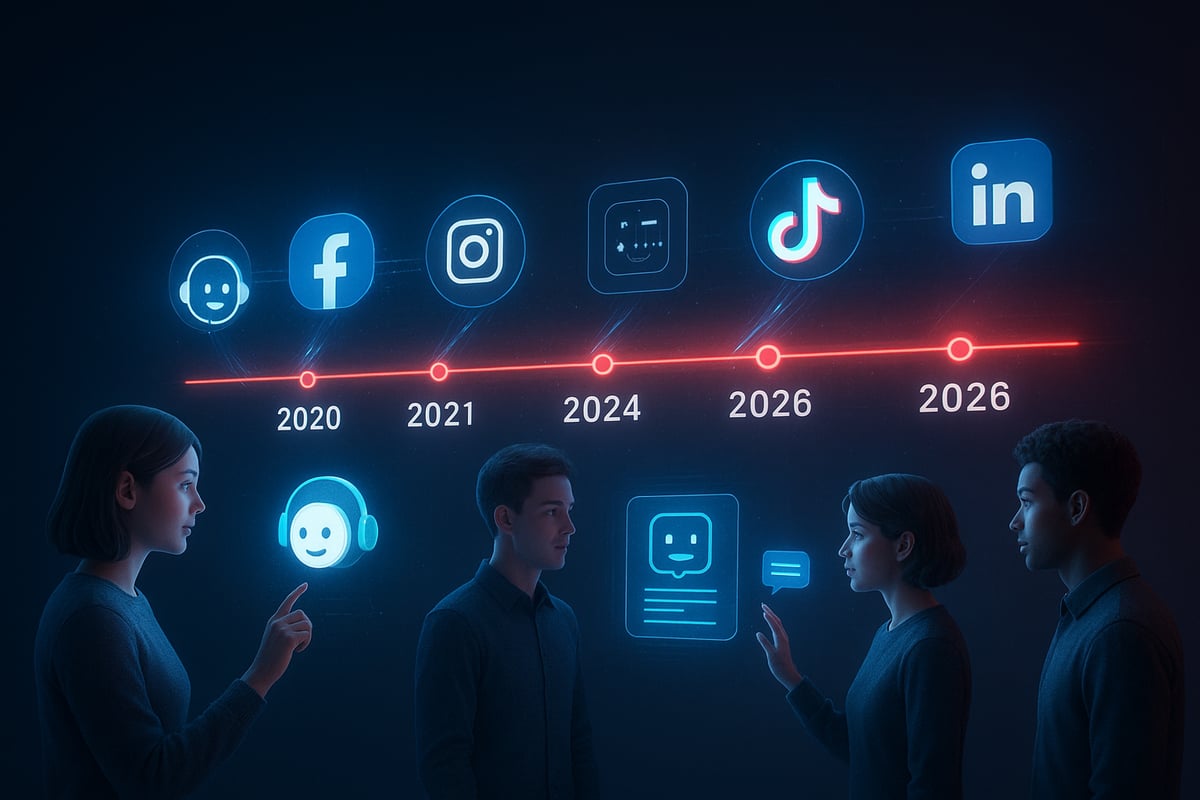
Between 2020 and 2026, ai on social media has seen landmark advancements. Major platforms such as Facebook, Instagram, TikTok, and LinkedIn introduced AI-driven algorithms that completely reshaped content discovery. TikTok’s ‘For You’ feed, powered by AI, set a new standard for personalisation, serving content tailored to individual preferences.
The rise of AI chatbots and virtual assistants has improved customer service and engagement. By 2026, a remarkable 80 percent of all social media content is influenced by AI, according to Statista's AI in Social Media Statistics. These milestones have laid the groundwork for how brands and users interact online.
Major Shifts in User Experience
The adoption of ai on social media has revolutionised user experience. AI now personalises newsfeeds and advertisements, ensuring each user sees content most relevant to their interests. Automated content moderation systems actively monitor and flag inappropriate or false information.
Platforms like Instagram have rolled out AI-driven accessibility features, such as automatic image descriptions and translations. While these innovations improve inclusivity, they also raise questions about user trust and data transparency, prompting ongoing discussions about ethical standards.
AI and Content Creation Tools
The emergence of advanced ai on social media has changed how content is created and shared. AI-powered generators produce videos, images, and written posts at scale, enabling brands to keep up with the demand for fresh, engaging material. Tools like Canva’s Magic Write and Meta’s AI video editors allow even small teams to compete with larger organisations.
Influencer marketing has also shifted, with AI-driven meme generators and branded content tools making campaigns more dynamic. As of 2026, 65 percent of marketers are using AI tools for content creation, illustrating the widespread impact on digital marketing strategies.
Sector-Specific Adoption Trends
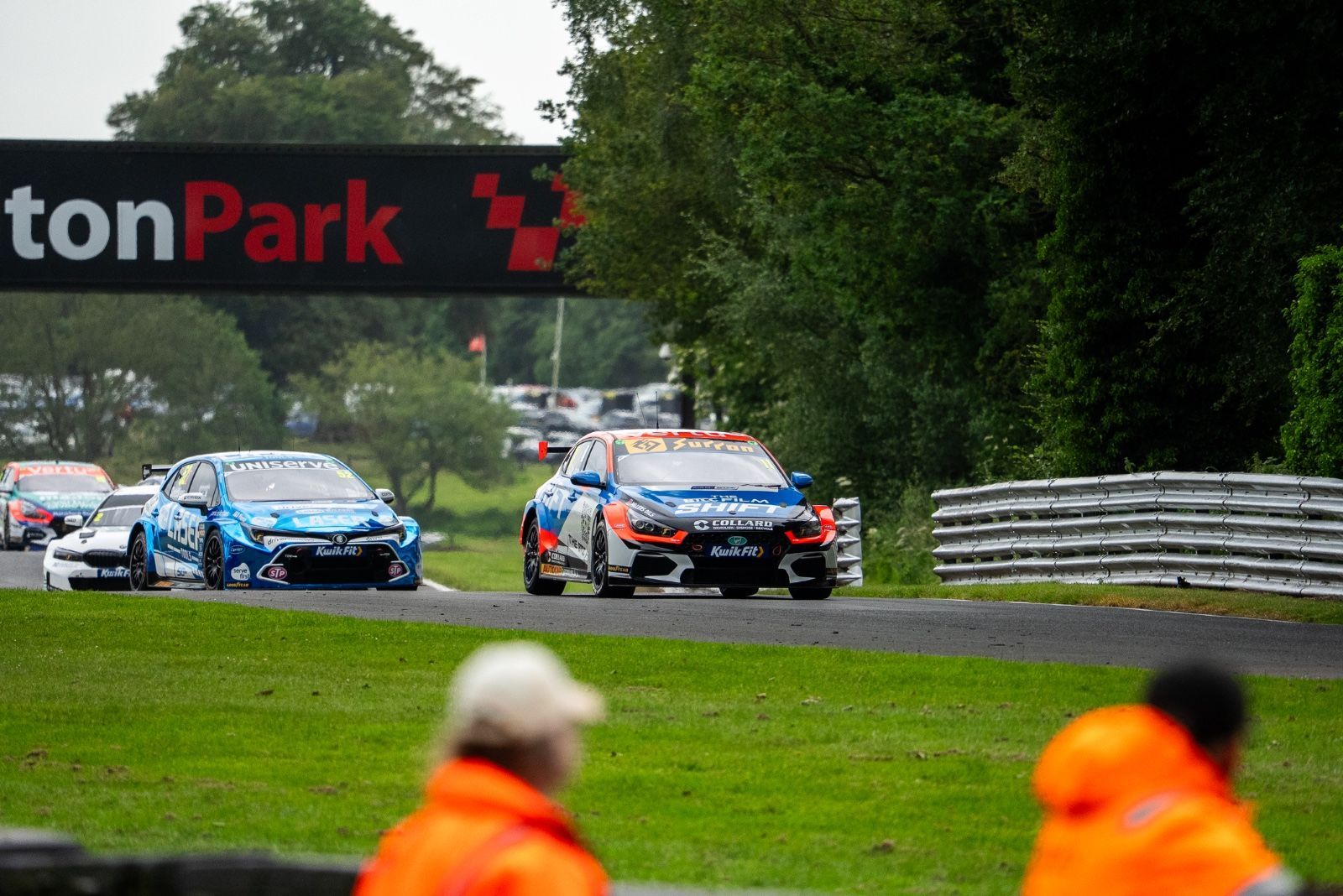
Adoption of ai on social media varies by sector, with each industry leveraging unique benefits. Motorsport integrates AI for real-time analytics and interactive highlights, enhancing fan engagement. The renewables sector uses AI to power sustainability campaigns and community advocacy.
Tourism brands deploy AI chatbots for personalised travel recommendations, while fast food chains automate customer interaction and menu suggestions. For technology companies, AI is both a core tool and a trendsetter, driving innovation across the digital landscape.
How AI Transforms Social Media Marketing in 2026
Artificial intelligence is redefining the landscape of social media marketing in 2026. Marketers, brands, and agencies are experiencing a seismic shift as ai on social media enables new levels of targeting, efficiency, and creativity. The impact spans every stage of the marketing funnel, offering tools and insights that were unimaginable only a few years ago.
To succeed, it is crucial to understand how these AI-driven changes affect personalisation, content production, real-time engagement, analytics, and success stories across industries. For a comprehensive overview of foundational strategies for brand growth, see the Social media management guide.
Hyper-Personalisation and Predictive Targeting
By 2026, ai on social media has transformed how brands connect with audiences. AI analyses vast amounts of behavioural data, from browsing habits to purchase history, to deliver highly personalised content and adverts. This hyper-personalisation ensures users see what truly interests them, increasing the likelihood of interaction.
Predictive analytics now enables brands to segment audiences with precision. For instance, fast food chains use AI to identify late-night snackers and deliver tailored promotions when engagement peaks. Personalised campaigns powered by AI achieve a 30% higher engagement rate, highlighting the competitive edge offered by these technologies.
- Personalised video ads based on user preferences
- Automated product recommendations in feeds
- Dynamic messaging adapting to real-time behaviour
In this environment, brands must continually refine their targeting strategies to maintain relevance and resonance.
Content Creation and Automation
Content production is no longer the bottleneck it once was. Thanks to ai on social media, automated tools can generate videos, images, and copy for campaigns within minutes. Platforms like Canva’s Magic Write and Meta’s AI video editors empower marketers to produce polished assets that align with brand guidelines and audience interests.
AI-driven scheduling tools optimise post timing, ensuring content lands when audiences are most active. Motorsport teams, for example, use AI to create and publish race-day content instantly, keeping fans engaged throughout the event.
Key benefits of AI-powered content automation:
- Reduced manual workload for marketing teams
- Greater consistency in content quality and tone
- Rapid adaptation to trending topics and user feedback
The result is a more agile and responsive approach to content marketing.
Real-Time Engagement and Social Listening
Instant interaction is now the norm thanks to ai on social media. AI-powered chatbots handle customer queries, provide recommendations, and resolve issues around the clock, delivering seamless experiences at scale.
Social listening tools, powered by AI, analyse sentiment and monitor brand health in real time. Tourism brands, for example, instantly respond to reviews and feedback, while AI systems can detect emerging issues before they escalate.
- 24/7 chatbot support for customer engagement
- Sentiment analysis for proactive brand management
- AI-driven crisis response and mitigation
Marketers leverage these insights to fine-tune messaging, protect reputation, and foster meaningful connections with their communities.
Data-Driven Decision Making
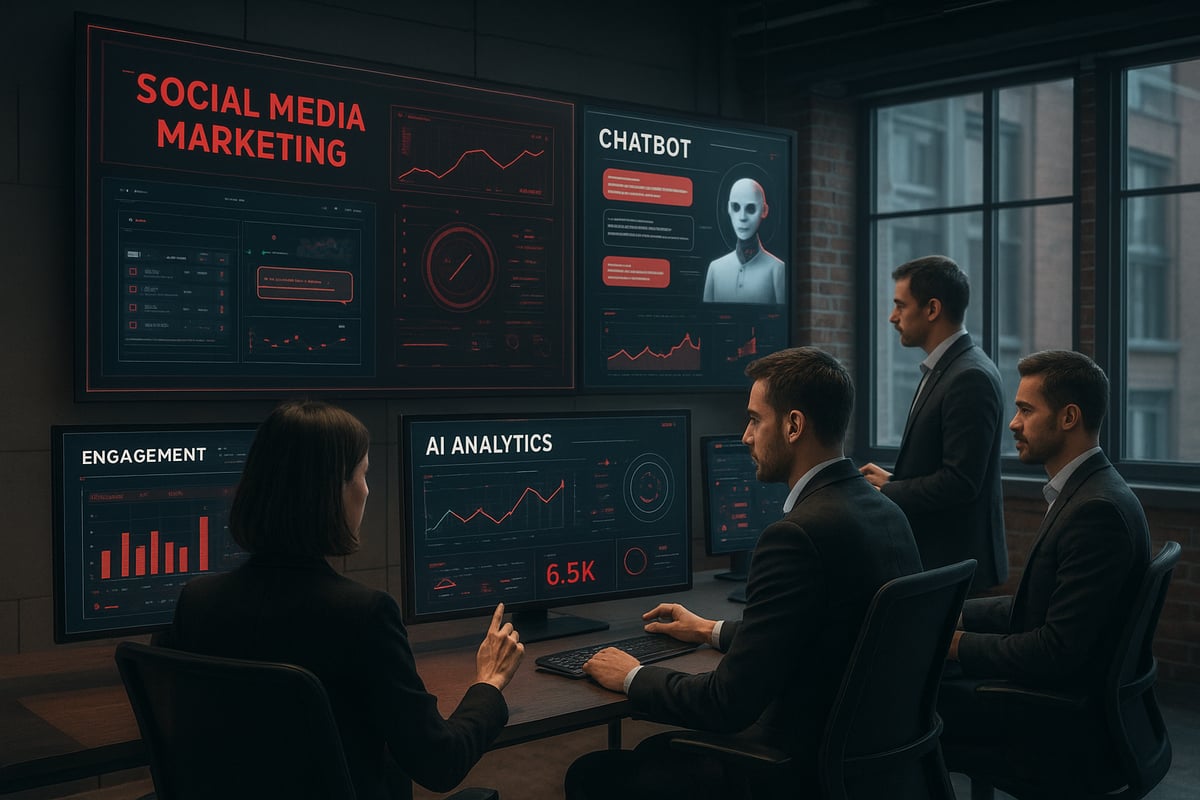
Marketing decisions in 2026 are underpinned by advanced analytics dashboards powered by ai on social media. These platforms aggregate data from multiple channels, providing a holistic view of campaign performance and audience response.
AI enables attribution modelling, helping brands understand which touchpoints drive conversions and where to invest resources. The renewables sector, for instance, tracks the impact of advocacy campaigns on public opinion, using AI to optimise future outreach.
A snapshot of AI-driven analytics in marketing:
| Metric | Benefit |
|---|---|
| Engagement Rate | Real-time optimisation |
| Conversion Attribution | Improved budget allocation |
| Sentiment Tracking | Enhanced brand health |
| ROI Measurement | Data-backed decision making |
By 2026, 70% of B2B brands rely on AI analytics to guide their marketing strategy, ensuring every pound spent is accounted for.
Case Studies: Success Stories Across Sectors
Across industries, ai on social media is delivering measurable results. In motorsport, AI enhances fan interaction during live events, offering real-time stats and interactive experiences. The renewables sector leverages AI-powered advocacy tools to mobilise support and counter misinformation.
Tourism brands report increased bookings through personalised travel recommendations, while fast food companies drive local sales with automated, geo-targeted campaigns. Even technology brands are making headlines by launching products via AI-driven social media events.
These case studies demonstrate that AI is not just a trend but a transformative force, enabling brands to achieve greater impact, efficiency, and engagement across the board.
Ethical Challenges and Responsible AI Use on Social Media
As ai on social media continues to advance, ethical considerations have never been more critical. Marketers, brands, and platform users alike face a new landscape where data privacy, misinformation, algorithmic fairness, and the balance between human and machine input require careful navigation.
Data Privacy and User Consent
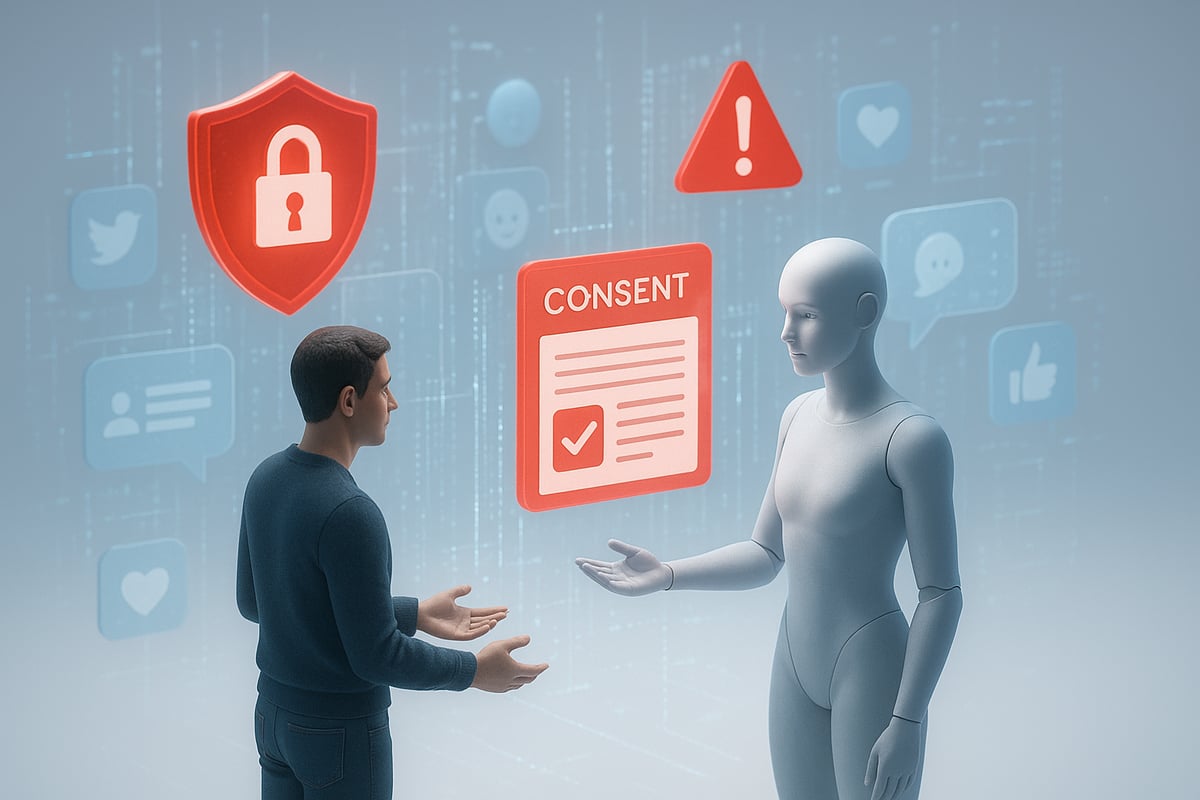
With ai on social media shaping every interaction, how platforms gather and process personal data is under intense scrutiny. Recent updates to GDPR and UK data protection laws in 2026 require explicit user consent for AI-driven features.
For example, Facebook has introduced new consent-driven AI tools, giving users greater control over their data. Enhanced privacy dashboards now allow individuals to manage preferences for personalisation and ad targeting.
Transparency tools empower users to see how their information is used. As AI capabilities grow, maintaining trust depends on clear communication and robust privacy safeguards.
Combating Misinformation and Deepfakes
The rapid spread of misinformation and deepfakes remains a central challenge for ai on social media. Platforms are deploying advanced AI models to detect fake news, manipulated media, and harmful content before it goes viral.
TikTok, for example, has implemented AI-driven alerts to warn users about potentially misleading videos. Automated moderation teams now work around the clock, supported by machine learning that identifies suspicious patterns in real time.
According to Ofcom, AI moderation has led to a 90% reduction in viral fake news since 2024, signalling significant progress in safeguarding online trust.
Algorithmic Bias and Fairness
Despite its benefits, ai on social media can introduce bias, impacting marginalised groups and reinforcing stereotypes. Platforms are responding by auditing algorithms, introducing fairness checks, and developing transparency reports.
LinkedIn’s diversity-focused AI recruitment tools are designed to counteract bias, helping ensure equal opportunities. However, the ethical and anthropological issues posed by AI-driven recommendations remain complex; for a deeper exploration, see Ethical Challenges of AI Recommender Systems.
Ongoing industry collaboration and independent oversight are essential to address these challenges, ensuring AI serves all communities fairly.
The Human-AI Balance
As ai on social media becomes more prevalent, maintaining authentic, human-centric engagement is vital. While automation streamlines content creation and customer service, human creativity and empathy set brands apart.
Tourism brands are blending AI-powered personalisation with real human stories, creating compelling experiences that resonate. Ethical influencer marketing now requires careful distinction between genuine voices and AI-generated personas.
Ultimately, balancing innovation with authenticity will define success and public trust in the future of social media.
AI in Action: Sector Spotlights for 2026
Artificial intelligence is no longer a futuristic concept. In 2026, ai on social media is driving innovation across every major industry. Let’s explore how different sectors are harnessing AI’s power to transform engagement, marketing, and customer experience.
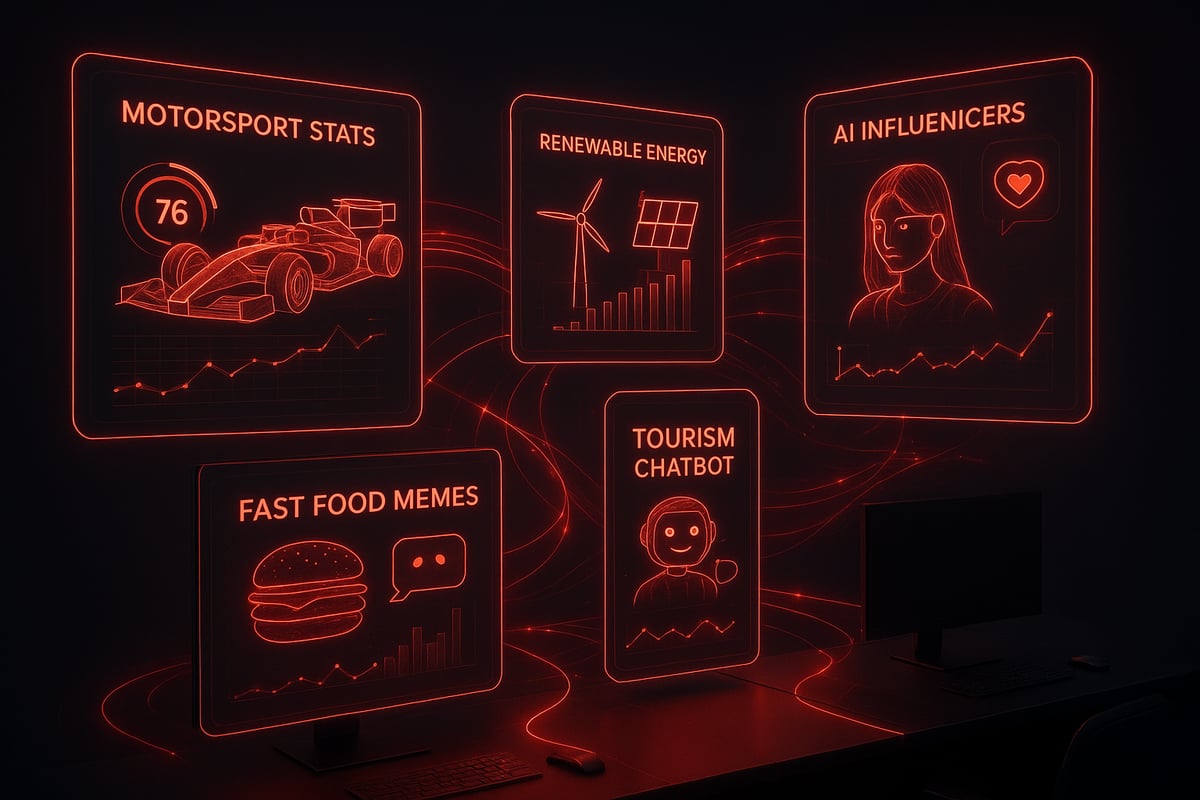
Motorsport: Real-Time Analytics and Fan Engagement
Motorsport has become a showcase for ai on social media, blending data with excitement. AI-powered analytics deliver live race insights straight to fans' feeds, transforming passive spectators into active participants. Formula E’s AI-driven fan voting lets viewers influence race outcomes in real time.
Data insights enable sponsors to target audiences with pinpoint accuracy. Virtual reality, paired with AI, creates immersive experiences, allowing fans to feel the thrill from anywhere. This synergy has led to a 60% increase in fan engagement, according to Motorsport UK in 2026.
Renewables: Advocacy, Education, and Community Building
In the renewables sector, ai on social media is amplifying advocacy and education campaigns. AI-driven social content busts myths about sustainability, ensuring accurate information reaches wide audiences.
Brands deploy AI chatbots to answer public queries instantly, building trust and transparency. Influencer partnerships are now powered by AI analytics, matching advocates to target communities with precision. These tools make it easier to foster community support for green initiatives and drive meaningful change.
Tourism: Personalised Experiences and Chatbots
Tourism is thriving as ai on social media tailors travel experiences to individual preferences. AI trip planners on social platforms suggest destinations, activities, and local hotspots based on user interests and behaviour.
Real-time translation and AI-powered chatbots break down language barriers, making global travel accessible. Tourism boards use AI for virtual tours and curate user-generated content, highlighting authentic experiences. This personal touch boosts engagement and inspires wanderlust across digital channels.
Fast Food: Automated Marketing and Customer Interaction
Fast food brands are embracing ai on social media to automate marketing and streamline customer interactions. AI-driven menu personalisation suggests meals based on users’ order histories and trending topics.
Order bots on social platforms handle customer requests instantly, reducing wait times. Brands leverage AI to monitor trends and launch meme-based promotions, keeping content timely and relatable. According to UK Hospitality, half of all social media orders in 2026 use AI chatbots, underscoring their impact.
Technology: Trendsetting and Influencer AI
Technology brands are leading the charge with ai on social media, using AI-generated influencers and virtual ambassadors to launch products. These digital personas engage audiences and create buzz around new releases.
Social listening tools powered by AI track conversations and sentiment, guiding campaign strategy. Tech companies now host AI-driven live streams for product unveilings, making launches interactive and data-driven. With 40% of top influencers now AI-generated, the landscape is evolving rapidly.
Cross-Sector Collaboration and Innovation
Cross-sector partnerships are thriving thanks to ai on social media. Motorsport, renewables, tourism, and tech brands collaborate on joint campaigns, sharing AI-driven insights for greater impact.
For example, green racing initiatives combine data from multiple industries to promote sustainability. This collaborative approach is highlighted in resources like Social media hub success 2026 , which explores how AI can unify diverse sectors for shared success. Future opportunities abound as brands innovate together, leveraging AI’s versatility.
Measuring ROI and Impact Across Sectors
Measuring success with ai on social media requires advanced tools and sector-specific KPIs. AI analytics platforms now provide real-time dashboards, helping brands track engagement, conversions, and sentiment.
Here’s how sectors compare:
| Sector | Key KPI | AI Tool Example |
|---|---|---|
| Motorsport | Fan engagement | Live analytics platforms |
| Renewables | Advocacy reach | Sentiment monitoring |
| Tourism | Bookings from social | AI-driven recommendation |
| Fast Food | Social orders | Chatbot analytics |
| Technology | Influencer reach | Virtual persona tracking |
Continuous learning from AI-generated insights ensures that brands not only measure ROI but also refine their strategies for ongoing growth.
Preparing Your Brand for AI-Powered Social Media: A Step-by-Step Guide
Adopting ai on social media is no longer optional for brands aiming to thrive in 2026. The following guide offers practical steps to ensure your business not only keeps pace with innovation but also builds a sustainable, ethical, and results-driven presence.
Assessing Your Current Social Media Strategy
Begin by auditing your existing presence and performance across platforms. Evaluate the effectiveness of your content, engagement rates, and current use of ai on social media tools. Identify gaps in automation, personalisation, and analytics. For instance, fast food brands often review chatbot response times and customer satisfaction levels to pinpoint areas for improvement. Set clear objectives for AI integration, such as reducing manual workloads or enhancing campaign targeting. Document these findings to create a baseline for future measurement.
Choosing the Right AI Tools and Platforms
Selecting the right technology is crucial for maximising the benefits of ai on social media. Compare leading solutions for content creation, analytics, and automation. Consider sector-specific needs, such as motorsport teams requiring real-time video editors or tourism boards seeking multilingual chatbots. Evaluate platforms based on:
- Ease of integration
- Cost-effectiveness for SMEs
- Vendor support and updates
A cost-benefit analysis can reveal which tools offer the best value. Explore resources like Mastering content for social media to inform your selection process.
Building Ethical AI Practices
Ethical considerations underpin successful use of ai on social media. Develop transparent data policies that clarify how user information is collected and used. Train your teams on responsible AI practices, ensuring compliance with GDPR and sector regulations. For example, renewables brands often make user privacy a core principle in their advocacy campaigns. Regularly review consent mechanisms and update privacy statements as regulations evolve. Align your approach with both legal requirements and public expectations.
Integrating AI into Daily Social Media Operations
Operationalising ai on social media means embedding automation into everyday tasks. Automate scheduling, moderation, and reporting to streamline workflows. Use AI insights to adjust content in real time, responding to audience trends or crises quickly. Tourism boards, for example, employ AI for 24/7 customer engagement and content curation. Maintain a balance between automation and human oversight, ensuring that authentic brand voice and creativity remain central to your presence.
Upskilling Teams for the AI Era
Empower your workforce to leverage ai on social media by investing in training and cross-functional collaboration. Equip marketers with AI literacy and hands-on experience using new tools. Fast food chains have found success by running AI bootcamps for staff, fostering a culture of innovation. Consider partnerships with digital agencies or technology providers for ongoing support. Encourage open dialogue between creative, technical, and analytics teams to maximise the value of AI-driven insights.
Monitoring, Measuring, and Refining AI Strategies
Continual improvement is key to effective ai on social media. Set clear KPIs and track them using AI-powered dashboards. Employ A/B testing to compare campaign variations and gather actionable feedback. Tech brands often iterate their influencer strategies based on AI-generated performance data. Use tables to compare engagement rates, conversion figures, and content reach across campaigns. This approach ensures your strategies remain agile and responsive to changing platform algorithms.
| Metric | Pre-AI Implementation | Post-AI Implementation |
|---|---|---|
| Engagement Rate | 2.5% | 4.3% |
| Response Time | 3 hours | 10 minutes |
| Content Output/Month | 12 | 30 |
For industry benchmarks and the latest productivity insights, review Emplifi's 2026 Social Media Marketing Report.
Future-Proofing Your Social Media Presence
Staying competitive with ai on social media requires ongoing vigilance. Monitor emerging trends and regulatory changes to adjust your approach proactively. Invest in scalable solutions that adapt as your brand grows. Motorsport brands, for instance, are preparing for next-generation fan engagement by adopting flexible AI platforms. Build resilience by regularly reviewing ethical standards and compliance protocols. By future-proofing your strategy, your brand remains ready for whatever the digital landscape brings.
The Future of AI on Social Media: Trends to Watch in 2027 and Beyond
The horizon for ai on social media in 2027 and beyond promises even greater transformation. As platforms evolve, brands and users alike will experience new levels of immersion, emotional connection, and regulatory oversight. Let us explore the three major trends set to redefine the digital landscape.
AI-Generated Virtual Worlds and Metaverse Integration
By 2027, ai on social media will fully embrace immersive, AI-powered environments. Users will interact in virtual spaces where AI curates experiences, recommends connections, and facilitates branded storytelling.
For example, virtual tourism will allow users to explore destinations through AI-guided avatars, creating deeper engagement. Statistically, 1 in 3 users will engage with metaverse content weekly (Ofcom, 2026), reflecting a shift in consumer expectations.
AI’s role in content discovery will also expand. Brands will need to adapt their strategies for AI-powered search and visibility, leveraging insights like those found in AI search optimisation explained to remain competitive.
Advanced Emotional AI and Sentiment Prediction
Emotional intelligence in ai on social media will reach new heights. Platforms will use AI to interpret user emotions in real time, adjusting content and offers accordingly.
Imagine a fast food brand detecting a user’s mood and delivering a tailored promotion at just the right moment. This deepens customer loyalty and creates memorable experiences.
However, the use of emotional data demands responsibility. Brands must consider the ethical implications of collecting and responding to users’ feelings, ensuring transparency and consent remain at the forefront.
Regulatory and Societal Shifts
As ai on social media grows more sophisticated, regulation will intensify. Anticipate new UK guidelines on AI-driven advertising, with a focus on transparency and accountability.
Public demand for ethical AI will shape platform policies. Brands must prepare for stricter compliance requirements, balancing innovation with user trust.
Looking ahead, those who embrace responsible AI integration and adapt to societal expectations will lead the next era of digital engagement.
As we’ve explored, AI is transforming every aspect of social media, from personalisation and content creation to ethical considerations and future trends across sectors like motorsport, renewables, tourism, fast food, and technology. If you’re looking to harness these innovations for your own brand or want guidance on building a forward-thinking strategy that delivers real results, I recommend taking the next step. Let’s discuss how your business can leverage AI to stand out and grow in 2026 and beyond. Book a free consultation
Want This Done For You?
SuperHub helps UK brands with video, content, SEO and marketing that actually drives revenue. No vanity metrics. No bullsh*t.