

12 Best Free Email Marketing Platforms UK 2026
Email marketing remains one of the most effective ways to connect with your audience, drive sales, and build lasting customer relationships. For small businesses, startups, and sole traders, the initial cost of specialised software can be a significant hurdle. This is precisely where the best free email marketing platforms provide a powerful, cost-effective solution to get started, test your strategies, and grow your subscriber list without any financial commitment.
However, not all 'free' plans are created equal. Some offer generous subscriber limits but basic features, while others focus on powerful automation tools or seamless integration with other business software. Choosing the wrong one can lead to hitting restrictive limits quickly or missing out on essential functionality your business needs to grow. This comprehensive guide is designed to help you navigate these options with clarity.
We have analysed the top 12 free email marketing platforms available today, helping you choose the perfect fit for your specific business goals, whether you are a local service provider or a growing e-commerce brand. We'll look beyond the marketing claims to assess real-world limitations, ideal use cases, and what to expect when you're ready to scale. Each review includes screenshots and direct links, so you can make an informed decision and start building your email strategy immediately.
1. Mailchimp: The Popular All-Rounder
Mailchimp is often the first platform that comes to mind when discussing email marketing, and for good reason. Its forever-free plan is one of the best free email marketing platforms for new businesses and sole traders wanting to establish a professional presence without initial investment. The platform's user interface is famously intuitive, making it straightforward to design your first campaign using the drag-and-drop editor and basic templates.
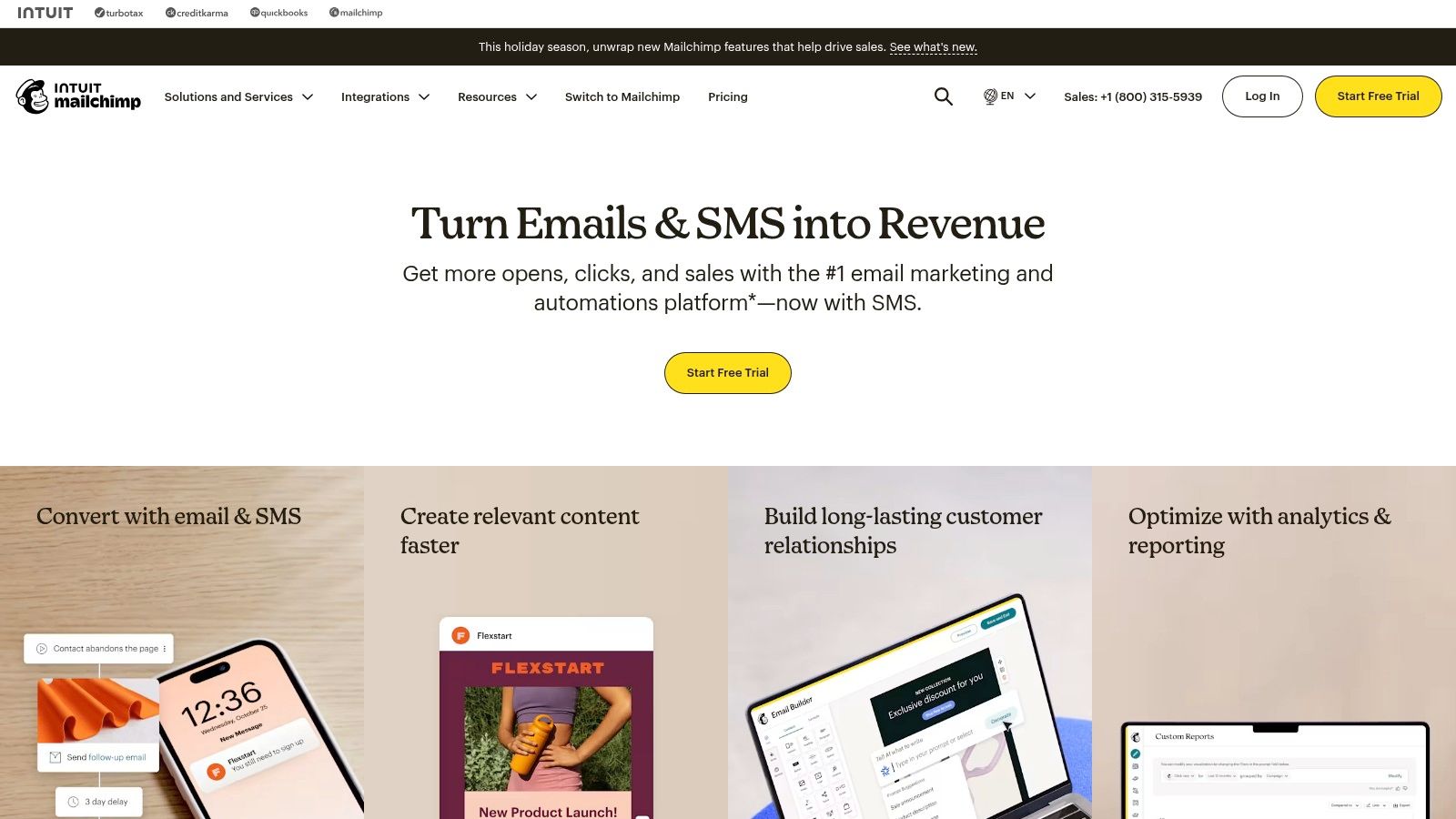
While the free tier limits are quite restrictive at 500 contacts and 1,000 monthly sends (with a 500-per-day cap), it provides a valuable testing ground. You can experiment with basic automations like welcome emails, build landing pages, and analyse performance with its straightforward reporting tools. This entry-level access allows you to apply fundamental strategies and build a solid foundation. For those looking to maximise their efforts, understanding core principles is key; you can explore these concepts further with our guide to email marketing best practices for 2025 success.
Key Details & Limitations
- Best For : Startups, bloggers, and small online shops needing a simple, widely supported tool to get started.
- Pros : Excellent user experience, a vast ecosystem of integrations with tools like Shopify and WordPress, and a generous 14-day trial of premium features.
- Cons : The free plan’s contact and send limits are among the tightest, and mandatory Mailchimp branding is included in all emails.
- Website : https://mailchimp.com
2. MailerLite: The Modern & Generous Starter
MailerLite stands out with its clean, minimalist interface and one of the more generous free plans available, making it an excellent choice for those prioritising send volume over a large contact list. Its modern, lightweight approach doesn't compromise on functionality, offering powerful features like landing pages, pop-ups, and even surveys directly within its free tier. The platform is designed to be intuitive, allowing new users to quickly build professional-looking campaigns.
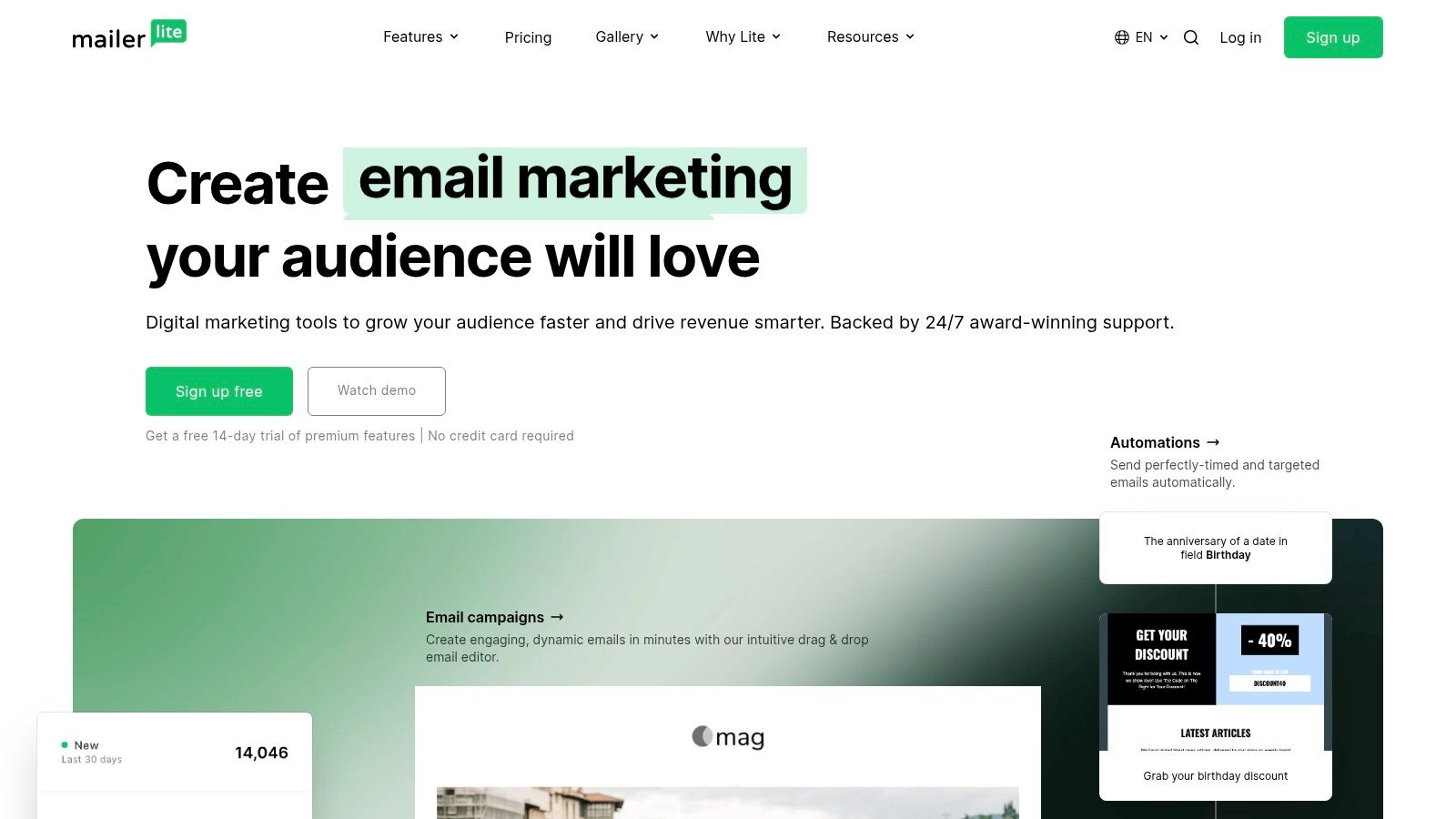
The free plan allows for up to 500 subscribers and an impressive 12,000 monthly emails, which is a significant advantage for businesses that communicate with their audience frequently. It also includes basic automation workflows, enabling you to set up welcome sequences or other simple triggers. This combination of a high sending limit and essential automation tools makes MailerLite one of the best free email marketing platforms for creators and small businesses focused on consistent engagement.
Key Details & Limitations
- Best For : Content creators, consultants, and small businesses who need a high monthly send limit and advanced features like landing pages from the start.
- Pros : Generous free monthly send limit, clean and fast user interface, includes pop-ups and landing pages on the free plan.
- Cons : The subscriber limit on the free plan is being reduced from 1,000 to 500, impacting existing users over the new threshold. MailerLite branding is present on free plan emails.
- Website : https://www.mailerlite.com
3. Brevo (formerly Sendinblue): The Multichannel Powerhouse
Brevo, previously known as Sendinblue, has evolved into an all in one marketing platform that offers one of the most generous free email marketing platforms available. Its strength lies in its high contact limit and multichannel capabilities, allowing you to store a vast audience list from day one without paying a penny. The platform offers a clean drag-and-drop editor and a decent selection of templates, making it accessible for those new to email marketing.
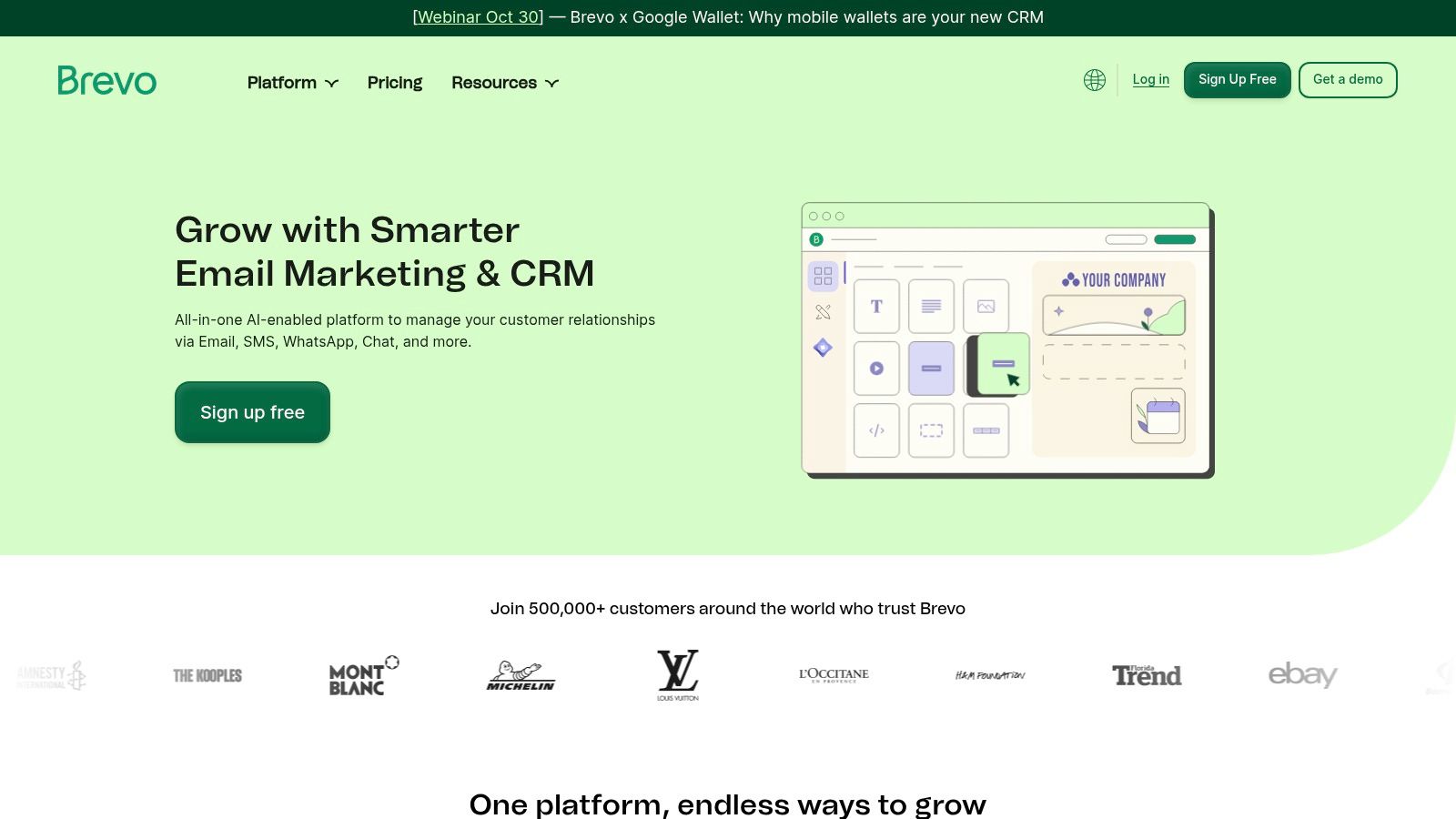
The free plan’s unique structure is built around a daily sending cap of 300 emails rather than a monthly limit. This is ideal for sending transactional emails like password resets or order confirmations, or for businesses that engage with smaller segments of their audience daily. While this can be a bottleneck for larger one off campaigns, it provides incredible value for businesses that can adapt their sending strategy to a daily cadence. The inclusion of SMS and WhatsApp marketing options, even in a limited capacity, sets it apart from many competitors.
Key Details & Limitations
- Best For : Growing businesses and e-commerce stores that need high contact storage and plan to send daily communications or transactional emails.
- Pros : Unrestricted contact storage on the free plan, integrated SMS and transactional email features, and a clear, simple upgrade path to remove daily limits.
- Cons : The 300-email daily sending cap can hinder large scale campaigns, and prominent Brevo branding is included in free emails.
- Website : https://www.brevo.com
4. HubSpot (Free Email Marketing within Marketing Hub)
HubSpot is more than just an email tool; it’s an entire ecosystem built around a powerful, free CRM. This makes it one of the best free email marketing platforms for businesses that prioritise contact management and plan for future growth. The platform seamlessly integrates email marketing with your customer data, allowing you to create more targeted and relevant campaigns right from the start. For businesses serious about leveraging customer relationships, a strategic HubSpot CRM implementation is fundamental to unlocking the platform's full potential.
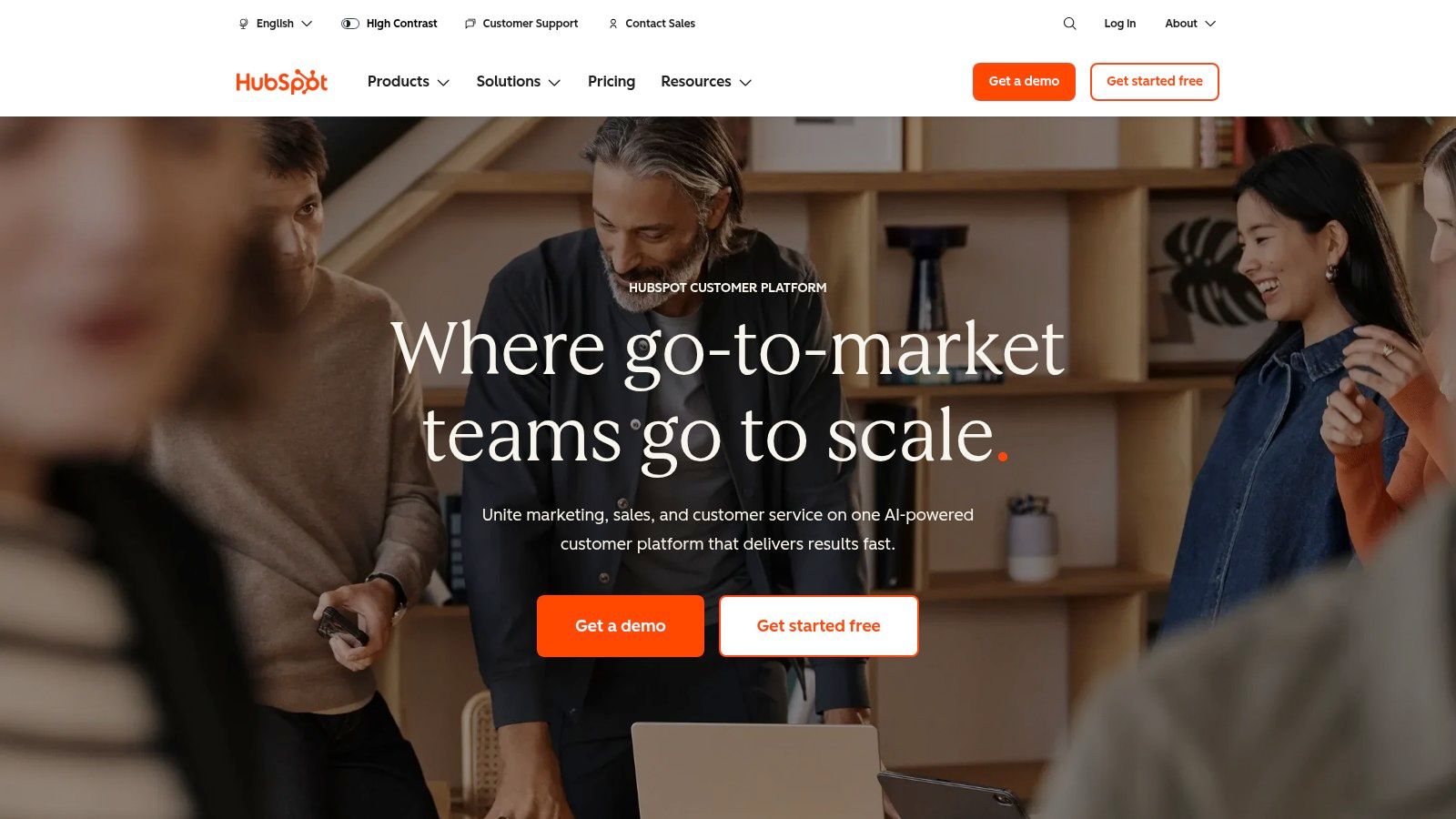
The free plan offers a generous 2,000 email sends per month, along with tools for building forms and landing pages to capture leads. While advanced automation is reserved for paid tiers, you can still set up basic follow-up emails after a form submission. The real strength lies in its unified view of the customer, which provides a solid foundation for more sophisticated strategies later on. Learning to leverage this data is key; you can discover more about using personalisation to boost engagement with our in-depth guide.
Key Details & Limitations
- Best For : Small businesses and startups wanting a unified CRM and email marketing tool with a clear upgrade path.
- Pros : Powerful free CRM is included, excellent educational content and support, and a scalable platform that grows with your business.
- Cons : Mandatory HubSpot branding on all free emails, advanced features are locked behind expensive paid tiers, and per-seat pricing can become costly.
- Website : https://www.hubspot.com
5. Mailjet: The Developer-Friendly Deliverability Expert
Mailjet is a powerful choice for those who value solid deliverability and technical flexibility, positioning itself as one of the best free email marketing platforms for businesses with an eye on compliance. Its forever-free plan is particularly generous with monthly sends, offering 6,000 emails per month, although this is balanced by a strict 200-email daily cap. The platform's strength lies in its robust, EU-based infrastructure, making it a reliable option for UK and European businesses concerned with GDPR.
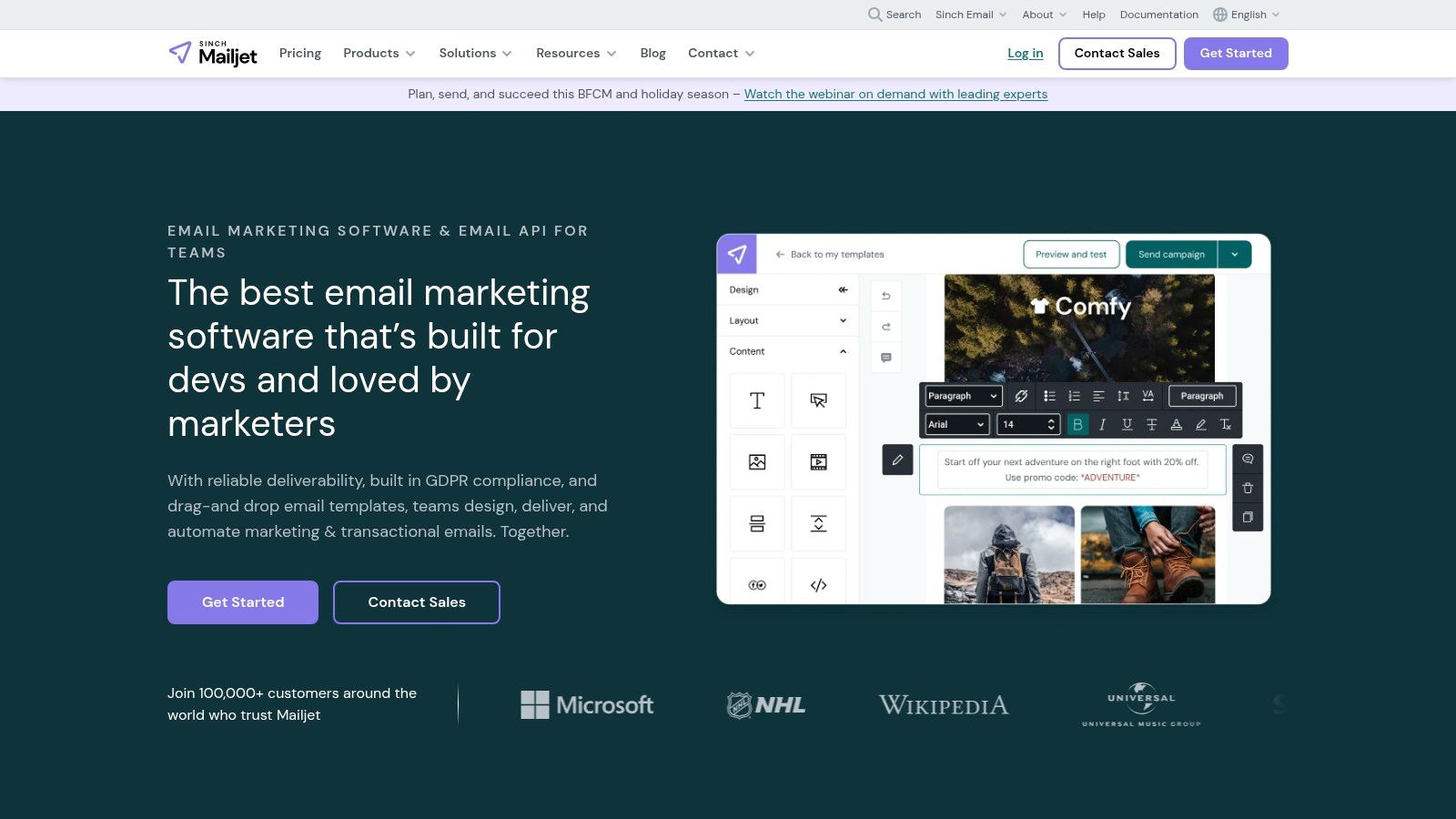
The free tier provides access to an intuitive email editor, basic performance statistics, and even a form builder to help grow your list. A unique feature is the collaborative editor, allowing multiple team members to work on a campaign simultaneously, a rarity on free plans. While the contact limit is not officially stated, it is generally around 1,000 to 1,500 before you are prompted to upgrade. If you exceed the daily sending limit, Mailjet simply queues the remaining emails for the next day, which is a helpful safeguard against delivery failures.
Key Details & Limitations
- Best For : Tech-savvy small businesses, developers, and European companies prioritising reliable delivery and data compliance.
- Pros : Generous monthly sending limit, strong deliverability with an EU focus, and a useful collaborative editor for teams.
- Cons : The 200-email daily sending cap can be restrictive for time-sensitive campaigns, and advanced features like automation and A/B testing are reserved for paid tiers.
- Website : https://www.mailjet.com
6. Sender: The Generous High-Performer
Sender stands out in the crowded market of the best free email marketing platforms by offering one of the most generous free plans available. It provides a substantial allowance of up to 2,500 subscribers and 15,000 monthly emails, making it an excellent choice for growing businesses and UK-based SMEs wanting to scale their operations without immediate financial commitment. The platform is designed to be straightforward, yet it packs powerful features like marketing automation, pop-ups, and a landing page builder right into its free tier.
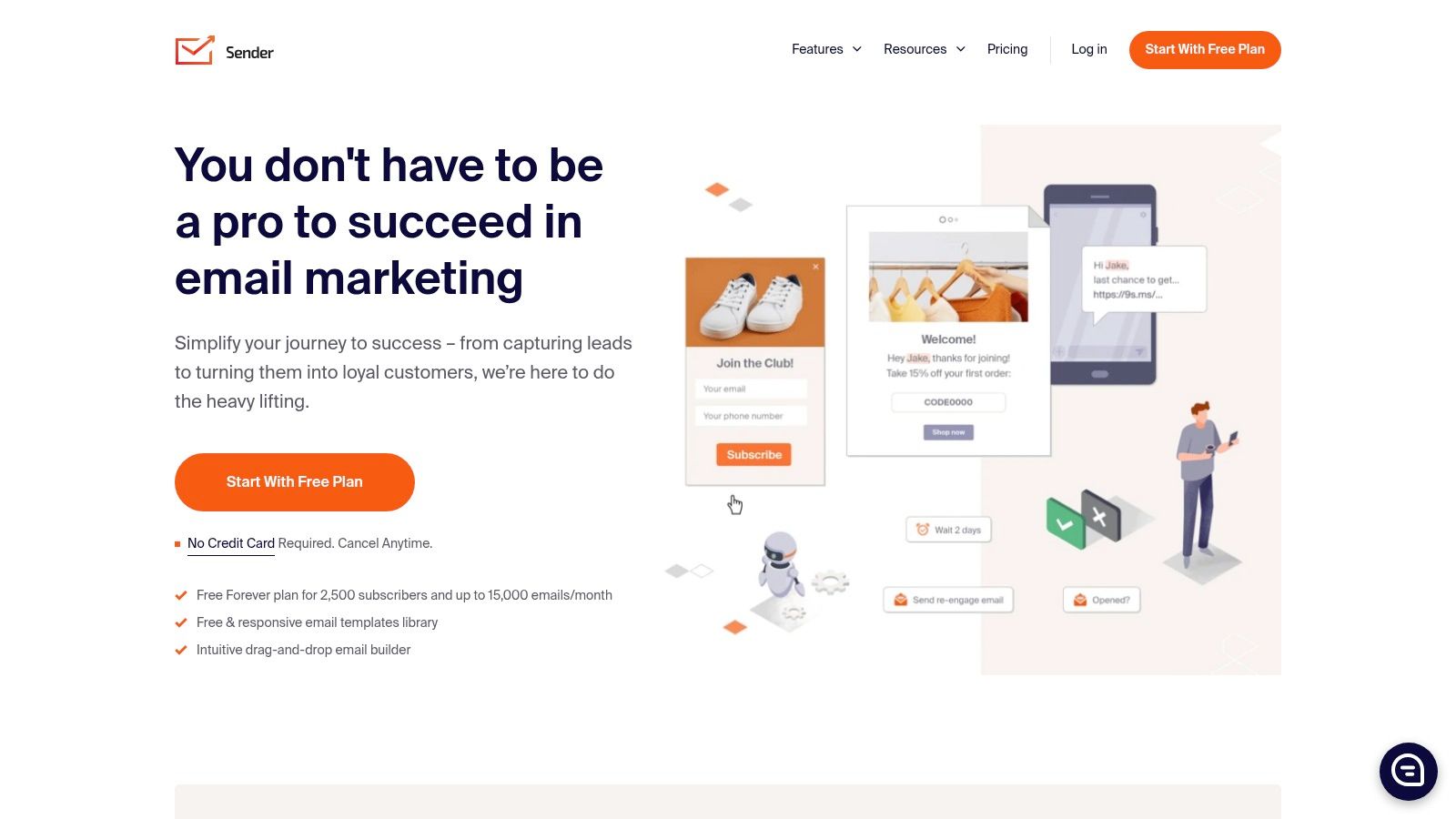
Unlike many competitors that impose strict daily send caps, Sender’s limit is monthly, offering greater flexibility for scheduling campaigns. Its standout feature on the free plan is the inclusion of 24/7 email and live chat support, a rarity that provides significant value for users needing quick assistance. This comprehensive support system is a key part of an effective digital marketing strategy, ensuring you can resolve issues swiftly and keep your campaigns running smoothly. The clear upgrade path with GBP currency support also simplifies financial planning for UK businesses.
Key Details & Limitations
- Best For : Growing small businesses, e-commerce stores, and marketers needing high-volume sending on a free plan.
- Pros : Exceptionally generous free limits for both subscribers and monthly sends, 24/7 support for all users, and no daily sending cap.
- Cons : Sender branding is present on all free emails and forms, and it has fewer native integrations compared to market leaders.
- Website : https://www.sender.net
7. Benchmark Email: The Straightforward Starter
Benchmark Email offers a refreshingly straightforward approach, making it one of the best free email marketing platforms for those who value simplicity and speed. The platform's free plan is quite generous, providing up to 500 contacts and 3,500 monthly email sends, which is more than enough for small businesses and creators to get started. Its drag-and-drop editor is clean and easy to master, allowing users to create professional-looking emails without a steep learning curve.
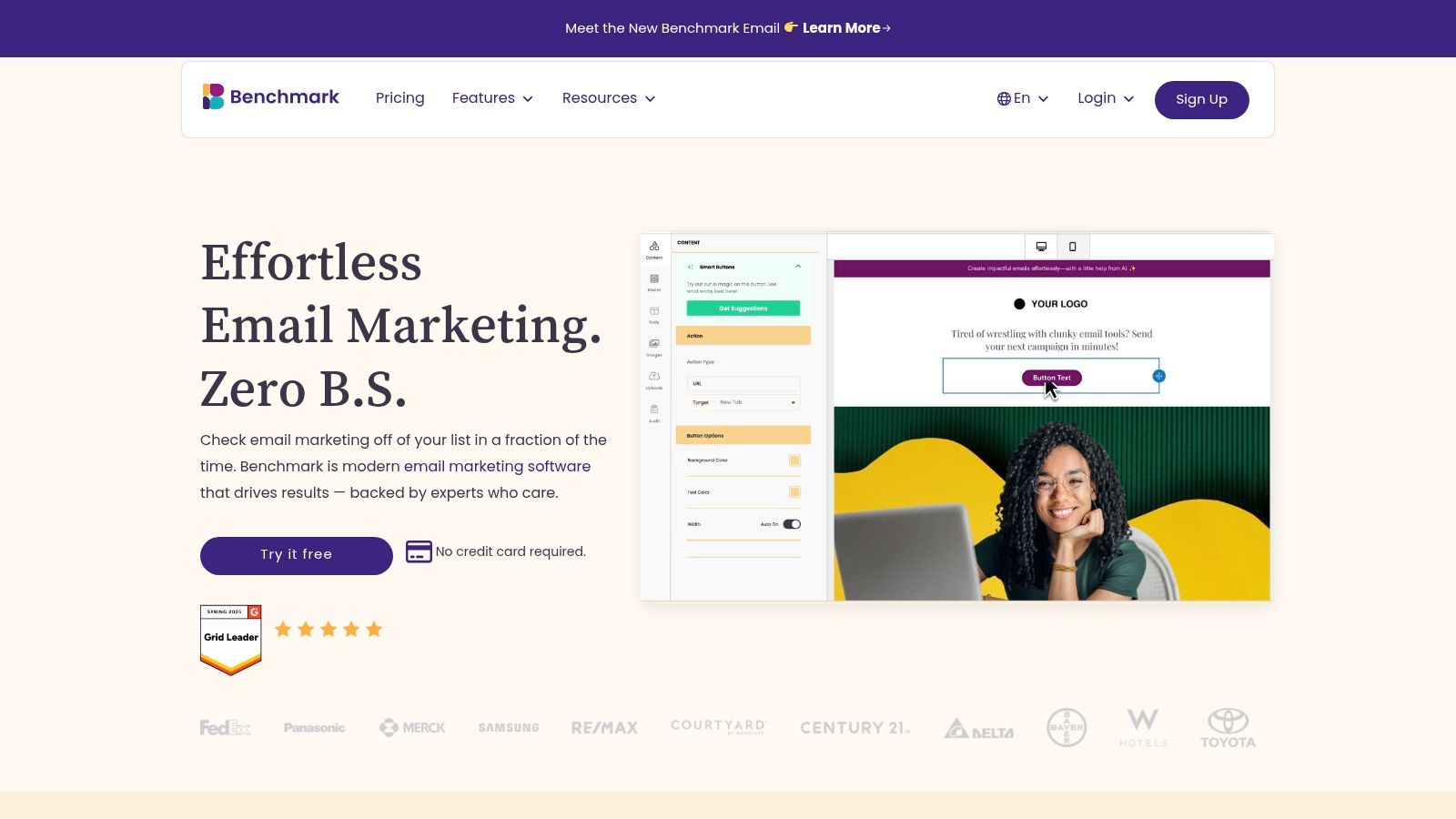
While advanced features like A/B testing, automation, and landing pages are reserved for paid tiers, the free offering covers the fundamentals well. You can build signup forms to grow your list and access basic reports to track your campaign performance. This focus on core email functionality ensures that new users are not overwhelmed, allowing them to build confidence before exploring more complex marketing tools.
Key Details & Limitations
- Best For : Small businesses, non-profits, and individuals who need a simple, no fuss tool for essential email campaigns.
- Pros : Generous free plan send limits, an exceptionally simple user interface, and flexible paid options, including pay as you go.
- Cons : The free plan is feature-limited and includes mandatory branding. Some documentation shows conflicting information on free send limits.
- Website : https://www.benchmarkemail.com
8. EmailOctopus: The High-Value Contender
EmailOctopus stands out in the crowded market of free email marketing platforms by offering one of the most generous free plans available. It is an excellent choice for businesses, particularly in the UK, looking for a cost effective solution without sacrificing core functionality. The platform's free "Starter" plan allows a substantial 2,500 contacts and 10,000 monthly emails, making it ideal for growing subscriber lists on a tight budget.
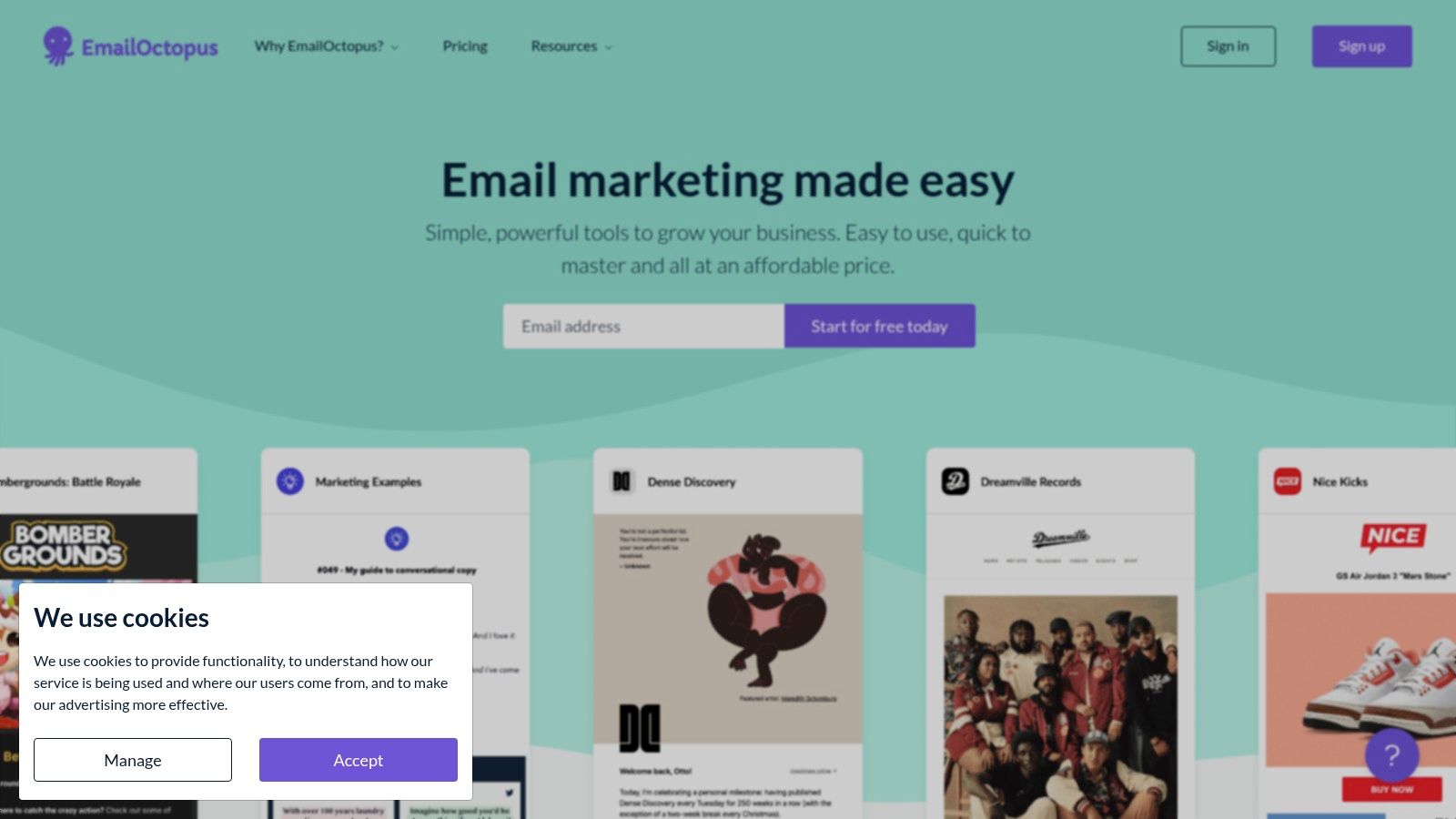
The user interface is refreshingly straightforward, prioritising ease of use over an exhaustive feature set, which helps new users get campaigns running quickly. Its key differentiator is the “Connect” plan, which lets you link your own Amazon SES account. While this requires some technical setup, it dramatically reduces sending costs, making it a compelling option for those sending high volumes of email. Its strong integration with WordPress and various form builders also makes list building a seamless process.
Key Details & Limitations
- Best For : Growing businesses, creators, and charities needing a generous free plan with a path to extremely low-cost sending.
- Pros : Highly generous free plan limits, an affordable upgrade path using Amazon SES, and a simple, no fuss user interface.
- Cons : The free plan includes mandatory EmailOctopus branding in every email, and its advanced automation features are less comprehensive than premium-focused competitors.
- Website : https://emailoctopus.com
9. Zoho Campaigns: The Integrated Ecosystem Player
Zoho Campaigns stands out as one of the best free email marketing platforms for businesses already invested in the Zoho ecosystem. Its free plan is particularly generous for small to medium-sized businesses, offering a high contact and send limit that allows for substantial growth before needing to upgrade. The platform’s main advantage is its seamless integration with other Zoho applications like Zoho CRM, creating a unified system for managing customer relationships and marketing communications.
The interface, while powerful, can present a learning curve for complete beginners compared to more streamlined competitors. However, its real strength lies in centralising data. For businesses that need their sales and marketing efforts to be perfectly aligned, this integration is invaluable. Given Zoho Campaigns' strength as an ecosystem player, delving into the top SaaS integration platforms can offer broader insights into connecting your email marketing efforts with other vital business tools, enhancing your overall operational efficiency and data synchronisation.
Key Details & Limitations
- Best For : Small to medium-sized businesses that already use or plan to use other Zoho products, especially Zoho CRM.
- Pros : A very generous free tier with up to 2,000 contacts, deep integration with the Zoho suite, and a commitment to GDPR compliance with EU data residency options.
- Cons : The user interface is less intuitive than some rivals, and key features like advanced automation are reserved for paid plans.
- Website : https://www.zoho.com/campaigns
10. AWeber
AWeber is a long-standing and respected name in the email marketing space, and its free plan offers a solid entry point for small businesses prioritising reliability and support. This plan is one of the best free email marketing platforms for those who value classic, dependable autoresponders and want to build simple yet effective email funnels without getting overwhelmed by complex features. The user interface is clean, focusing on core functionalities that help you get campaigns running quickly.
The free tier generously allows for up to 500 subscribers and 3,000 monthly email sends, which is more than many rivals offer. It includes access to a single list profile and one automation workflow, perfect for setting up a welcome series or a basic lead nurture sequence. While you will not get advanced segmentation or split testing, AWeber's reputation for high deliverability and its extensive library of educational resources provide a strong foundation for building an engaged audience.
Key Details & Limitations
- Best For : Small businesses, consultants, and creators who need a reliable tool with excellent support and educational materials to guide them.
- Pros : Strong reputation for deliverability, a generous monthly send limit on the free plan, and a smooth, logical upgrade path as your list grows.
- Cons : The free plan is limited to a single list and workflow, includes AWeber branding, and lacks advanced features like A/B testing.
- Website : https://www.aweber.com
11. GetResponse (Free)
GetResponse positions itself as more than just an email tool, offering a robust suite of inbound marketing features even on its forever-free plan. This makes it one of the best free email marketing platforms for entrepreneurs focused on lead generation from day one. The platform provides a solid foundation for early-stage projects with access to basic email tools, forms, and a surprisingly capable landing page builder.
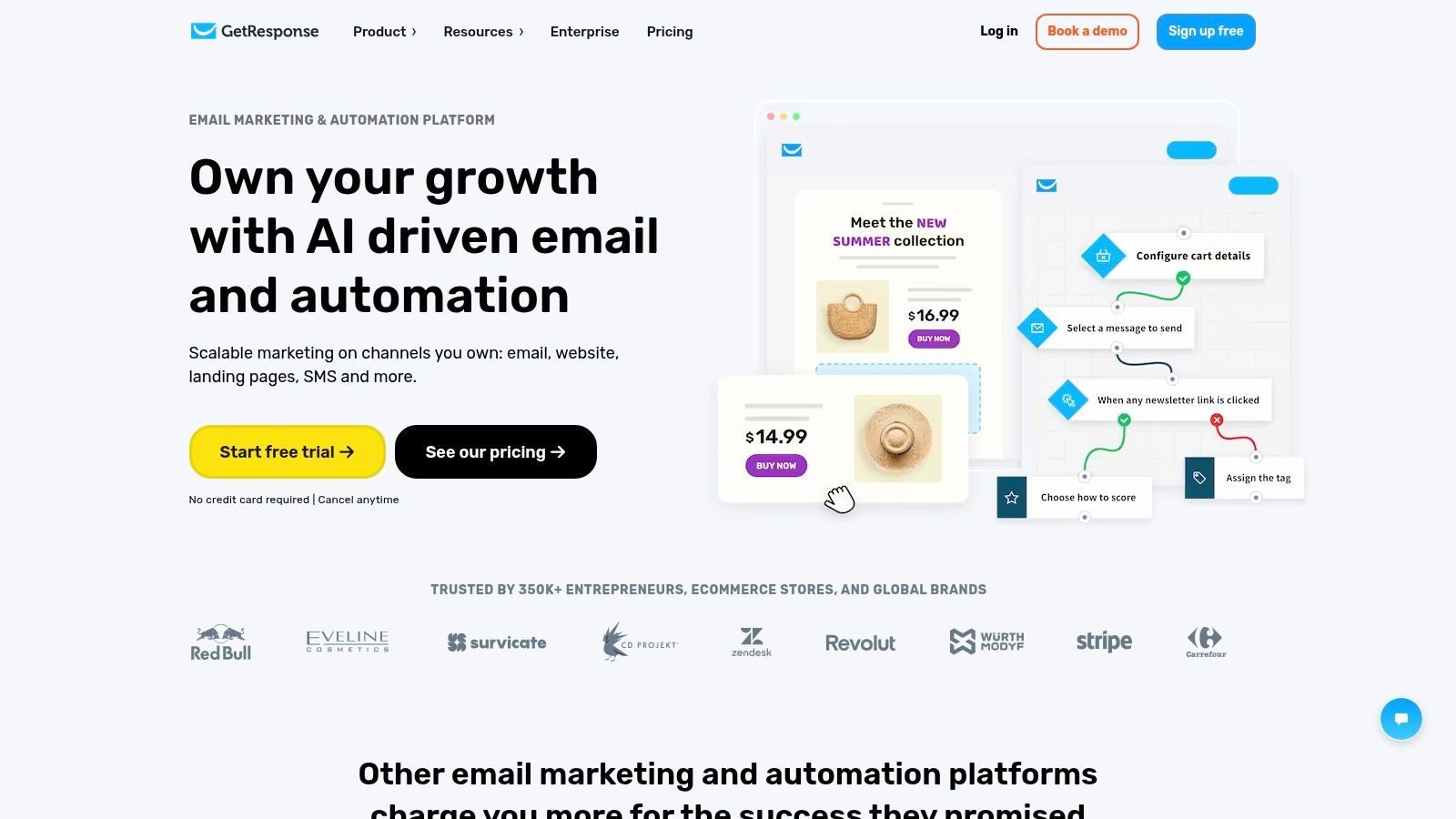
The free tier allows for up to 500 contacts and a generous 2,500 monthly emails, giving you more sending capacity than some rivals. A unique benefit is the temporary trial (14-30 days, depending on region) of premium features upon sign-up, allowing you to test advanced automations and conversion funnels before committing. For those just starting, this trial window is an excellent opportunity to build and test a complete lead capture and nurture system.
Key Details & Limitations
- Best For : Early-stage businesses and marketers wanting an all in one tool for building landing pages and email lists simultaneously.
- Pros : Generous monthly send limit, good selection of templates and a functional page builder, and 24/7 live chat support for all users.
- Cons : The 500-contact limit can be outgrown quickly, mandatory GetResponse branding is present in all free emails, and the trial period for premium features can vary.
- Website : https://www.getresponse.com
12. Klaviyo: The E-commerce Powerhouse
Klaviyo is a dominant force in the e-commerce marketing world, and its free plan offers a glimpse into its powerful, data-driven capabilities. This platform is designed from the ground up to help online stores convert customers, making it one of the best free email marketing platforms for businesses using Shopify, BigCommerce, or Magento. It excels at leveraging customer data, such as purchase history and browsing behaviour, to create highly targeted and automated campaigns.
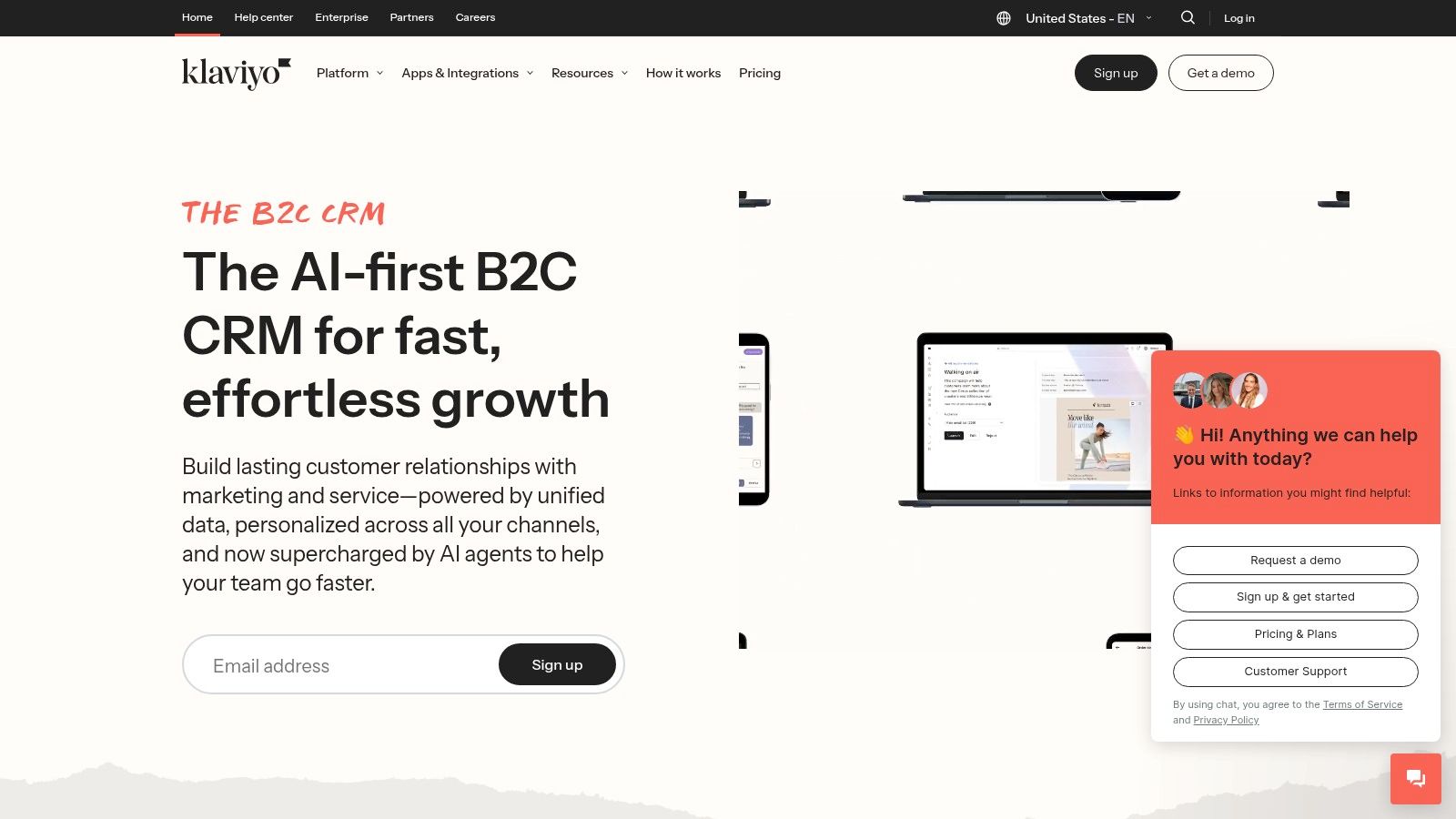
The free tier allows up to 250 contacts and 500 email sends per month, which is quite restrictive but sufficient for new stores to set up crucial automations. You can build abandoned cart flows, welcome series, and customer win-back emails that trigger automatically based on real-time actions. While advanced segmentation and revenue tracking are hallmarks of its paid plans, the free version provides a solid foundation for understanding how integrated email and SMS marketing can drive sales.
Key Details & Limitations
- Best For : New e-commerce businesses, particularly on Shopify, wanting to implement sophisticated, data-driven automations from day one.
- Pros : Unparalleled e-commerce integrations and product feeds, access to powerful automation flows on the free plan, and excellent scalability with UK/EU compliance focus.
- Cons : The free allowance is very small and will be outgrown quickly by a successful store. Pricing escalates significantly as your contact list grows.
- Website : https://www.klaviyo.com
Top 12 Free Email Marketing Platforms Comparison
| Platform | Core Features & Limits | User Experience ★★★★☆ | Value Proposition 💰 | Target Audience 👥 | Unique Selling Points ✨ | Price Points 💰 |
|---|---|---|---|---|---|---|
| Mailchimp | Free: 500 contacts, 1,000 sends/month, basic automations | Familiar UI, drag-drop, strong templates | Good for small lists, huge integrations | Beginners, e-commerce, SMBs | Extensive ecosystem, UK nonprofit discounts | Free tier; paid tiers add advanced features |
| MailerLite | Free: 500 subscribers, 12,000 emails/month, free automations | Clean, fast implementation | Generous sends, easy onboarding | SMBs, startups | Pop-ups, quizzes, landing pages | Free tier; premium trials |
| Brevo (Sendinblue) | Free: 300 emails/day, 100k contacts storage, multichannel | Simple editor, good EU compliance | Large contact storage, multichannel | GDPR-conscious, EU/UK businesses | SMS/WhatsApp, transactional email support | Free with daily caps; paid removes caps |
| HubSpot (Free) | Free: 2,000 sends/month, CRM + email marketing | Unified CRM + email, strong support | Scalable with CRM/sales tools | Small teams, growing businesses | All in one CRM and marketing platform | Free with branding; per-seat paid tiers |
| Mailjet | Free: 200 emails/day, ~1,000–1,500 contacts | Collaborative editor, reliable deliverability | Good for low volume EU/UK users | Low volume senders, EU-focused | EU-centric infrastructure | Free with limits; paid unlocks features |
| Sender | Free: 2,500 subscribers, 15,000 emails/month | Generous limits, 24/7 support | Great free limits, GBP currency support | UK SMBs on budget | No daily cap, strong free plan | Free with branding; upgrade options |
| Benchmark Email | Free: 500 contacts, 3,500 emails/month | Simple UI, quick setup | Flexible paid plans, GBP checkout | Small lists, entry-level users | Pay as you go, straightforward options | Free with branding; paid tiers |
| EmailOctopus | Free: 2,500 contacts, 10,000 emails/month | Simple UI, strong WordPress integrations | Low cost with Amazon SES option | UK/EU users, cost-conscious | Connect plan with unlimited AWS-sent emails | Free with branding; pay as you go AWS option |
| Zoho Campaigns | Free: 2,000 contacts, 6,000 emails/month | Part of Zoho suite, GDPR compliant | Good free tier tied to Zoho ecosystem | SMEs using Zoho | Integrated Zoho CRM & GDPR focus | Free with limits; paid expands features |
| AWeber | Free: 500 subscribers, 3,000 emails/month | Classic autoresponders, strong support | Reliable deliverability, educational content | Beginners valuing autoresponders | Established platform with strong tutorials | Free with branding; paid tiers |
| GetResponse (Free) | Free: 500 contacts, 2,500 emails/month | Solid templates, 24/7 chat support | Good lead gen tools, clear upgrade path | Early-stage projects | 14–30 day premium trial included | Free with branding; paid tiers |
| Klaviyo | Free: 250 contacts, 500 emails/month + SMS credits | Advanced e-commerce flows & segmentation | Best for e-commerce growth | E-commerce businesses | Shopify/BigCommerce integrations, revenue tracking | Small free tier; pricing scales fast |
Ready to Launch Your Email Strategy?
Navigating the landscape of the best free email marketing platforms can feel overwhelming, but as we have explored, the modern market offers a wealth of powerful, no-cost solutions for businesses of all sizes. From the generous sending limits of Sender and MailerLite to the all in one CRM capabilities of HubSpot and Brevo, the right tool to launch or revitalise your email strategy is within reach, and it does not need to impact your budget.
The key takeaway is that a "free" plan is not a lesser one; it is a strategic starting point. For a startup or small business, a platform like EmailOctopus offers straightforward functionality and a generous subscriber limit, perfect for building your initial list. In contrast, a more established company looking to integrate email with sales and customer service might find HubSpot’s free ecosystem an invaluable, unified solution, even with its initial email sending constraints.
Making Your Final Decision
Your choice should be a direct reflection of your immediate business needs and anticipated growth. Before you commit, consider these critical questions:
- What is my primary goal? Is it list growth, sales conversion, or simple newsletter communication? A platform like Klaviyo excels at e-commerce automation, whereas Mailchimp remains a strong all-rounder for content creators.
- How much technical skill do I have? Tools like MailerLite and Benchmark Email are celebrated for their intuitive drag-and-drop editors, making them accessible for absolute beginners.
- What are the "deal-breaker" limitations? Pay close attention to the subscriber and sending caps on each free plan. Also, consider branding; if removing platform branding is a priority, you will need to factor that into your long-term plan, as most free tiers require it.
- What does my growth path look like? Investigate the pricing and features of the paid tiers for your top two or three choices. The best free platform is one that can affordably scale with you as your business succeeds.
Ultimately, selecting one of the best free email marketing platforms is less about finding a flawless, feature-packed service and more about identifying the one whose limitations you can comfortably work within today, while offering a clear and cost-effective upgrade path for tomorrow. Start by building a high-quality list, focus on delivering genuine value in every email, and consistently analyse your open and click-through rates. This foundational work will ensure that when the time comes to invest in a paid plan, your email channel is already a well-oiled, revenue-generating machine.
Feeling confident about your choice but need help integrating it into a wider, data-driven marketing strategy? The expert team at Superhub specialises in creating comprehensive digital marketing systems where email, social media, and SEO work in harmony to drive measurable growth. Let us help you turn your chosen platform into a cornerstone of your success; visit us at Superhub to learn more.
Want This Done For You?
SuperHub helps UK brands with video, content, SEO and marketing that actually drives revenue. No vanity metrics. No bullsh*t.