

UK Guide to Choosing a Brand Video Production Company
Let's get one thing straight. A brand video production company isn't just a person with a fancy camera. They're a strategic partner. Their job is to take your business goals—whether that’s landing a new motorsport sponsor or getting more bookings for your Devon B&B—and turn them into visual stories that actually make you money.
They handle the entire process, from the initial idea right through to the final edited film.
What a Brand Video Production Company Actually Does
So, what are you really paying for? It's much more than just pointing a camera and hitting 'record'. A proper production company brings together storytellers, strategists and technical experts. They take your raw business objectives and shape them into a video that works hard for your brand. This is the crucial difference between hiring a professional outfit and just getting a freelancer with a drone.
A truly effective team is skilled in using powerful visual storytelling techniques. They aren't just capturing pretty shots; they're building a narrative designed to make your ideal customer feel something and then do something.
The entire process is strategic from the get-go. It usually looks something like this:
- Deep Discovery: First, they need to get under the skin of your business. They’ll want to understand your market, your customers and what you’re trying to achieve. It’s not about making a video; it's about making the right video.
- Concept and Scripting: Based on your goals, they'll develop a creative idea and write a script that gets your message across clearly and persuasively.
- Pre-Production Planning: This is all the logistical grunt work. Think scheduling, finding locations, hiring actors or voiceover artists and creating storyboards to map out every single shot. It's the most important stage.
- Professional Filming: On shoot day, a coordinated crew uses high-end gear to capture everything needed, paying close attention to lighting and sound to make you look world-class.
- Post-Production: This is where the magic happens. The editors piece the story together, grade the footage to match your brand’s colours, mix the audio, add graphics and find the perfect music track.
Most people think video production is all about the filming day. The reality? Around 80% of the work happens in pre-production (planning) and post-production (editing) . The final quality is decided long before anyone shouts "action!".
Ultimately, a results-focused company isn't just handing over a video file. They’re delivering a business tool designed to solve a specific problem—whether that’s a lack of sales leads, poor brand recognition, or trouble attracting good staff.
Our own video production services are built around delivering tangible business outcomes. If a potential partner talks more about their cameras than your commercial goals, they're not the right fit for your business.
The Production Journey: From Brief to Broadcast
So, what actually happens after you sign off on a video project? For many, it feels like a bit of a mystery. But a proper video partner won't just disappear and come back with a finished film. It's a clear, collaborative process with logical steps, designed to get from A to B without any nasty surprises.
Forget vague timelines and confusing industry chat. A solid production workflow is all about structure and communication. It's a deliberate journey designed to hit a specific commercial goal, not just to make something that looks nice.
This timeline shows how a strategic partnership works in practice – moving from core business goals to a video strategy, and then on to measuring the actual results.
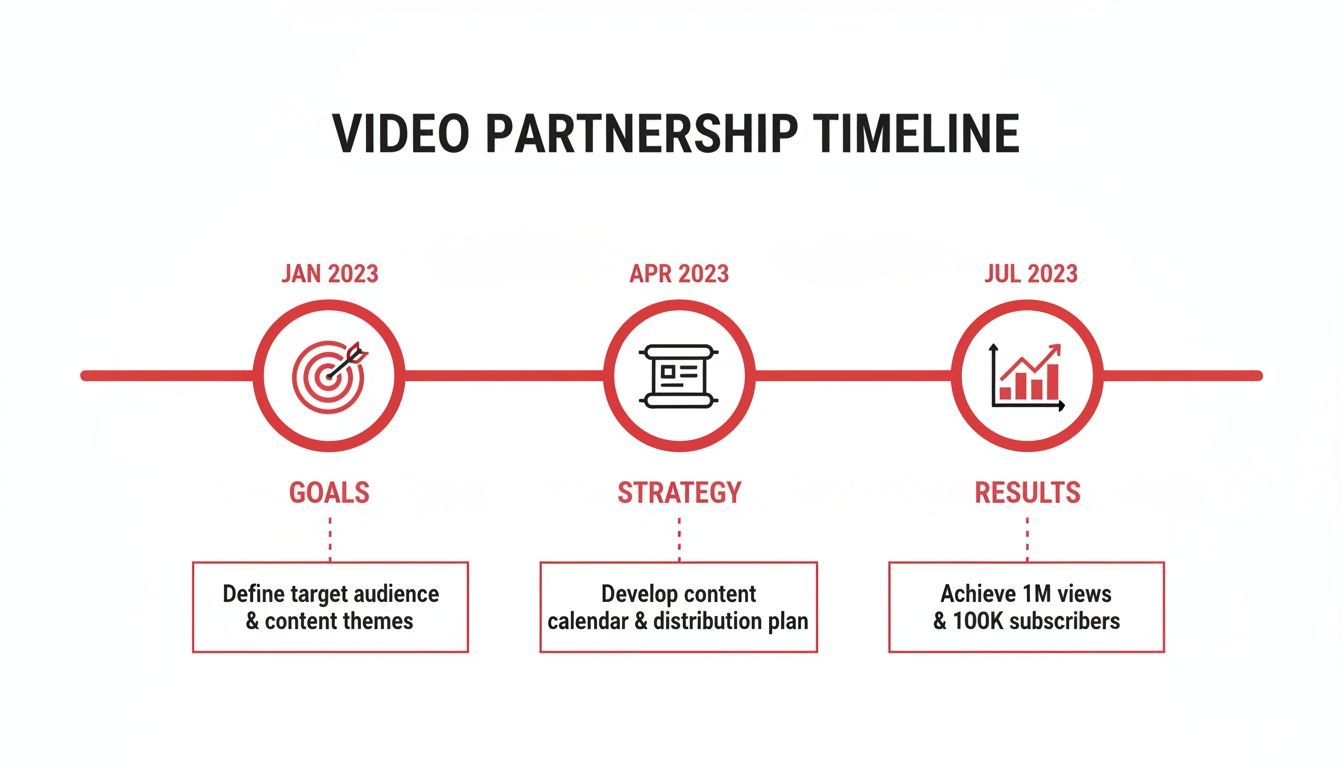
The key thing to remember is that great results come from a solid strategy, and that strategy is built on the goals you define right at the start.
Stage 1: Pre-Production and Strategy
This is where the magic really happens. We say around 80% of a project's success is locked in right here, before a single camera is switched on. Rushing this stage is the fastest way for a project to go over budget or completely miss the point.
We always kick off with a deep-dive discovery session to get right under the skin of your business. We don't just need to know what you do; we have to understand why it matters, who your ideal customers are, and what you want them to do after they've finished watching.
From that conversation, we get down to the practical stuff:
- Concept Development: This is where we shape your business goals into a creative idea that will actually land with your audience.
- Scriptwriting: A tight, focused script is written to get your message across without any fluff.
- Storyboarding & Shot Lists: We map out the entire video, shot by shot. This visual plan means everyone on the crew knows exactly what we need to capture on the day.
- Logistics: This covers everything else – from finding the right locations in Devon or further afield to casting actors and scheduling the whole crew.
Stage 2: Production and Filming
With a rock-solid plan in place, the filming day (or days) is all about execution. This is the part most people imagine when they think of "filmmaking," but in reality, it's often one of the shortest phases of the whole project.
Because all the strategic thinking has been done upfront, the shoot itself is efficient and focused. The director, camera operators, sound recordists and lighting crew are all working from the same blueprint—that storyboard and shot list we created earlier.
Your input here is crucial. We’ll have you on set to give feedback and make sure the vision we all agreed on is being brought to life properly. A good production partner makes this feel smooth and professional, not like a chaotic scramble.
Stage 3: Post-Production and Delivery
Once filming is complete, all the raw footage heads to the edit suite. This is where the story is pieced together and the final layers of polish are applied.
Post-production is so much more than just sticking clips together. It’s the craft of pacing, sound design and colour grading that turns good footage into a powerful commercial tool.
This final stage has a few key steps:
- Editing: We pick out the best takes and assemble them into a compelling story that follows the script.
- Colour Grading: The colour of every single shot is tweaked to create a consistent, professional look that fits your brand’s visual style.
- Sound Design & Mixing: We clean up the audio, add music and mix in sound effects to create a much more immersive feel.
- Graphics & Animation: Your logo, any on-screen text, or animated elements are added into the film.
- Review & Revisions: You get a draft of the video to review. We’ll work through any feedback you have and make the final tweaks before delivering the finished files in all the formats you need for your website, social media and presentations.
To give you a clearer picture, it's helpful to see how these stages translate into a real-world timeline.
Brand Video Production Timeline: A Realistic Overview
Getting a video made isn't an overnight job. Quality takes time, and this table breaks down the typical timeline for producing a high-quality 2-3 minute brand video.
| Production Stage | Key Activities | Typical Duration (for a 2-3 minute video) |
|---|---|---|
| Pre-Production & Strategy | Discovery, concept, scriptwriting, storyboarding, logistics, scheduling. | 1-3 Weeks |
| Production (Filming) | On-location or in-studio filming with crew, talent and equipment. | 1-3 Days |
| Post-Production | Editing, graphics, colour grading, sound design, music licensing. | 1-2 Weeks |
| Review & Revisions | Client feedback rounds and final amendments. | 3-5 Days |
| Final Delivery | Exporting video files in all required formats for web, social, etc. | 1 Day |
| Total Estimated Time | 3-6 Weeks |
As you can see, the bulk of the time is spent in careful planning and detailed post-production. It's this methodical approach that ensures the final video doesn't just look good, but actually does the job it was created for.
Core Services Your Video Partner Should Offer
Spotting a genuine brand video production company means looking way beyond the camera gear. Anyone can point a camera and shoot, but a true partner brings a full suite of services to the table—services designed to deliver a commercial return, not just a pretty film.
When you’re vetting a potential provider, their service list should feel less like a technical checklist and more like a strategic project plan.
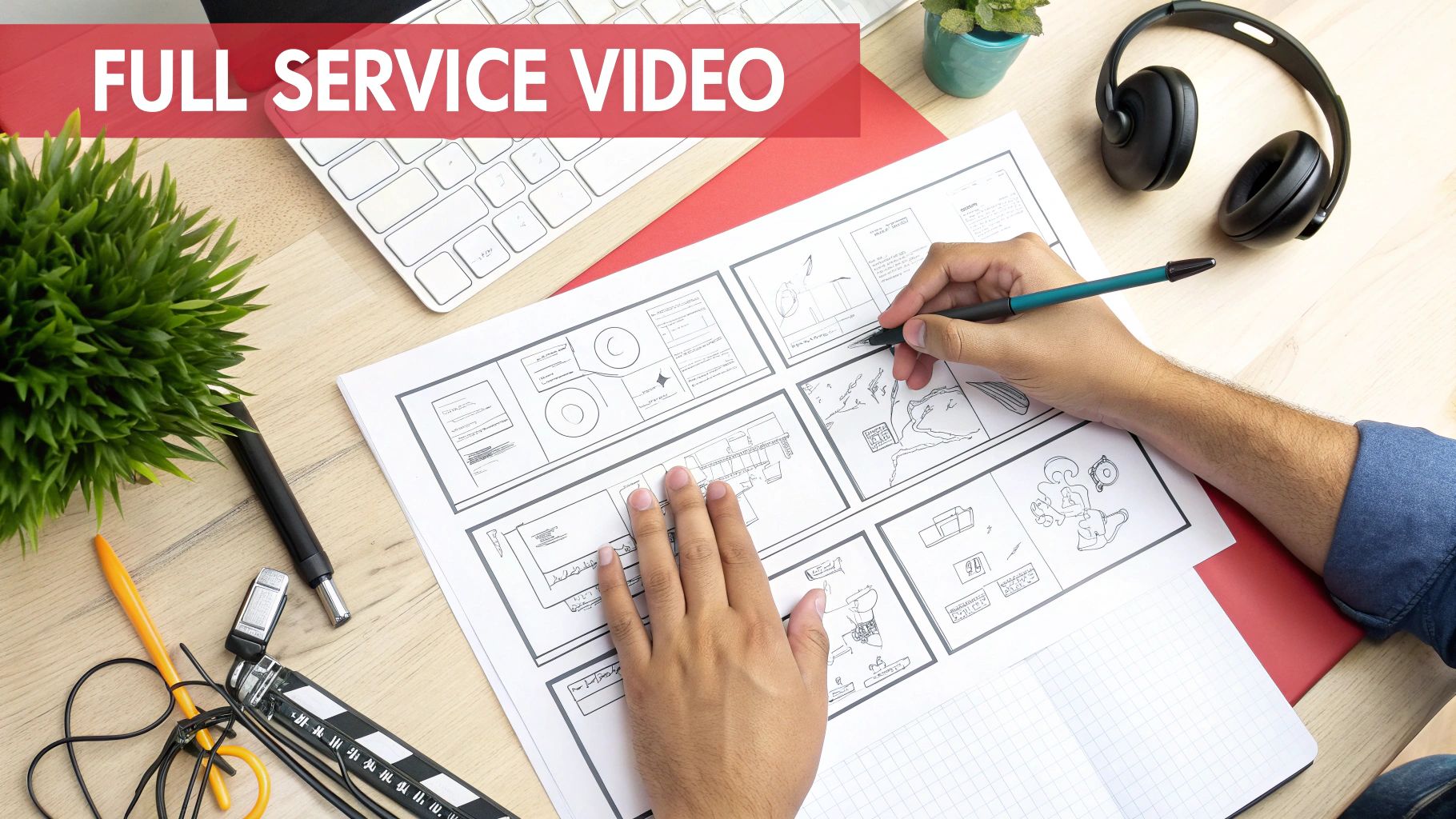
A full-service company manages the entire project from the first idea to the final analytics. This means you aren’t left trying to coordinate a dozen different suppliers or plugging the gaps in their expertise yourself.
Strategic and Creative Services
Long before a single frame is shot, the real work begins. This is where the value is created, turning a vague idea into a workable, results-focused plan. A proper partner will handle:
- Concept Development and Strategy: They should be able to take your business goal (like "increase leads by 20%") and translate it into a creative video concept that actually resonates with the people you're trying to reach.
- Scriptwriting and Storyboarding: A professional team writes a script that lands and creates a visual storyboard. This is the blueprint that makes sure every single shot tells the right story.
- Talent and Location Sourcing: They handle all the logistics—finding professional actors, voiceover artists, or the perfect filming locations—saving you a massive headache.
Production and Post-Production Excellence
This is the technical bit where the plan comes to life. A professional outfit has the crew, the equipment and the editing chops to deliver something that looks and feels high-end.
But filming is only part of it. Exceptional post-production is where the magic really happens. Your partner should be a wizard with advanced tools, including specialist drone video editing software, to turn raw aerial footage into a stunning narrative. Their service must include professional colour grading, sound design and adding graphics or animation. If you're curious about that last one, have a read of our article explaining how animation can work for your business.
Distribution and Asset Management
Making the video is only half the battle. A truly valuable partner also thinks about what happens after the final file lands in your inbox.
A great video that nobody sees is a complete waste of money. The best brand video production companies help you plan your distribution from day one, ensuring the content is optimised for the platforms where it will have the most impact.
Look for these essential post-project services:
- Distribution Strategy: They should guide you on where and how to share your video—whether it's on your website, social media, or in email campaigns—to get the most eyeballs and the biggest impact.
- Social Media Cut-Downs: One brand film is rarely enough. Your partner should create multiple shorter versions, formatted correctly for platforms like Instagram, LinkedIn and TikTok.
- Music and Asset Licensing: They must handle all the legal stuff, like securing the rights to use music and stock footage, so you don’t get hit with legal problems down the line.
The numbers back this up. In the UK, video marketing's dominance is undeniable, with 82% of online traffic now driven by video. Landing pages featuring video can boost conversion rates by up to 80% . And with 66% of consumers preferring short-form video, this multi-asset approach massively amplifies your ROI. It proves that investing in a proper UK brand video production company isn't a cost—it's essential for growth.
How Much Brand Video Production Costs in the UK
Right, let’s get straight to it. Asking how much a brand video costs is a bit like asking how much a car costs. A basic runaround gets you from A to B, but a high-performance racing car is a completely different investment, engineered for a very specific job. It’s exactly the same with video; the price is a direct reflection of the complexity and the results you’re aiming for.
Plenty of agencies will give you that frustratingly vague answer: “it depends.” While that’s technically true, it’s not helpful. We believe in straight answers. So, let's break down the actual cost drivers so you can understand what you’re paying for and spot a quote that’s either suspiciously cheap or wildly inflated.
The final figure on any quote from a UK brand video production company is just the sum of its parts. There's no magic number; it’s a calculation based on time, talent and technology.
The Key Cost Drivers
Understanding where your money goes is the first step. The price isn't pulled out of thin air; it’s directly linked to the resources needed to bring your vision to life and make sure it meets a professional standard. These are the main things that will shape your budget.
- Project Complexity & Creative Scope: A simple, single-location talking head video needs far less planning and crew than a multi-location brand documentary with actors, drone shots and complex graphics. The bigger the idea, the more resources it needs.
- Crew Size & Expertise: A small shoot might just need a camera operator and a sound recordist. A larger production could involve a director, producer, lighting technicians and a production assistant. Each specialist adds cost, but they also seriously lift the final quality.
- Filming Days: The number of days spent shooting is a huge cost factor. More filming days mean more fees for crew, equipment hire and location access. This is where sharp planning in pre-production saves you money.
- Equipment & Technology: Professional cinema cameras, lenses, lighting and audio gear are expensive. A company using top-tier kit will produce a much more polished final product, and this is reflected in the price. Specialised gear like high-end drones or motion-control rigs also adds to the budget.
- Location & Talent: Filming in a controlled environment like your own office is cost-effective. Hiring a specific location, a studio, or professional actors and voiceover artists will increase the investment.
- Post-Production Hours: Editing is often where the most time is spent. This isn’t just stitching shots together; it includes colour grading, sound design, motion graphics and licensing music. More complex edits demand more time from skilled editors.
Putting Budgets into Perspective
To give you a practical idea, let’s look at some anonymous, realistic examples. These aren’t fixed prices, but they show how the factors above affect the final cost.
A "simple" on-site testimonial video, filmed in a half-day with a two-person crew and minimal editing, might fall in the £1,500 - £3,000 range. It’s effective for a specific purpose but limited in scope.
In contrast, a multi-location brand documentary, filmed over two days with a larger crew, drone footage and detailed post-production could easily be £8,000 - £20,000+ . This is an investment in a powerful storytelling asset designed for a major commercial impact.
The bottom line is, you get what you pay for. A rock-bottom price often means corners are being cut—either with an inexperienced crew, substandard equipment, or a rushed job in the edit suite. A professional brand video production company will give you a detailed quote that breaks down these costs, showing you exactly where your investment is going. Be wary of anyone who can’t justify their pricing.
Putting Brand Video to Work in UK Industries
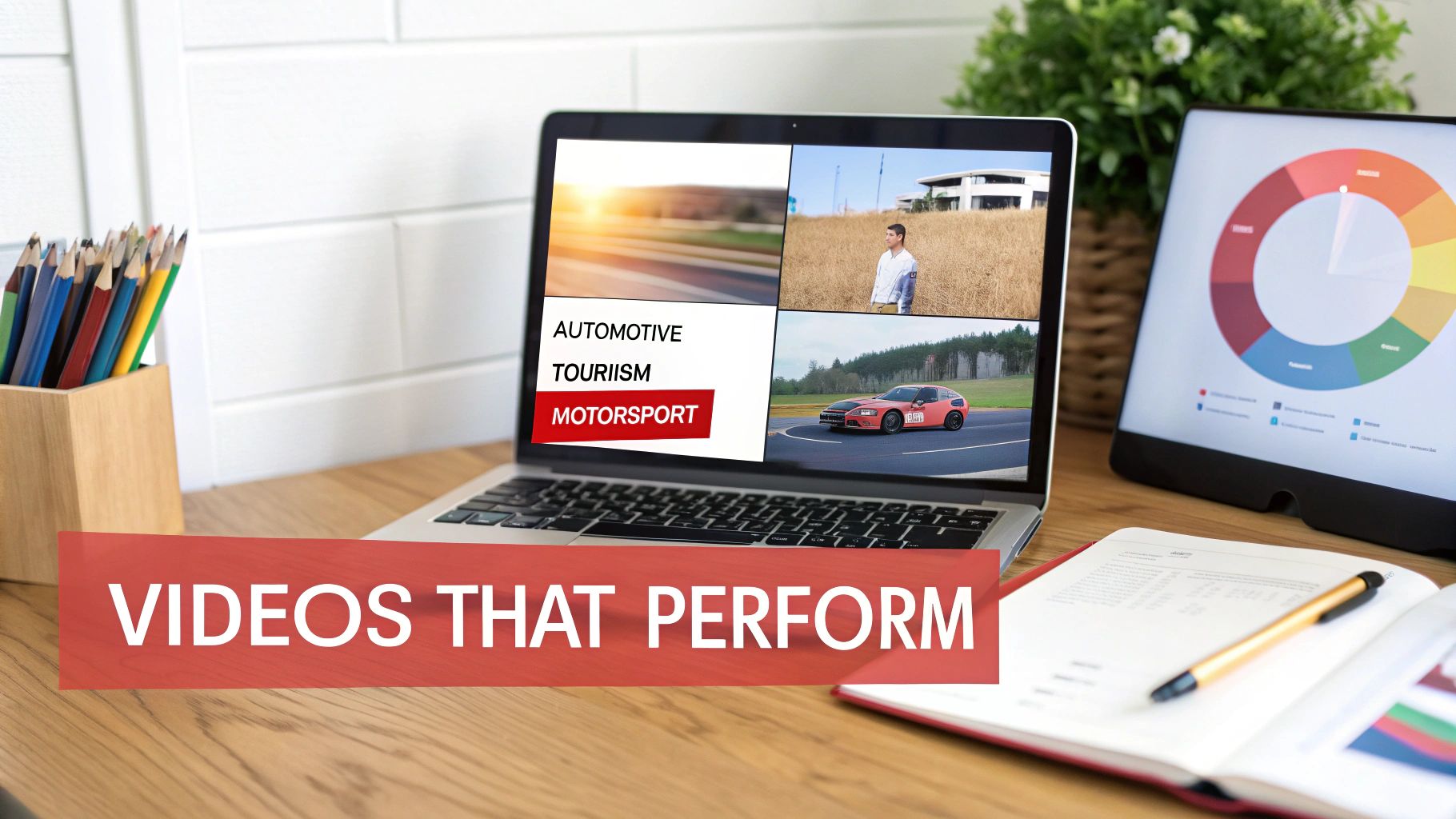
Theory is one thing, but application is everything. A great-looking video that doesn't solve a real business problem is just an expensive distraction. The true value of a brand video production company isn’t in making pretty films; it's in creating assets that work hard in specific, high-stakes industries.
This is where we cut through the usual agency fluff. Forget vague promises about ‘engagement’ and let’s talk about tangible results in sectors we know inside-out.
The UK's production scene is humming. As of 2025, there are 7,726 businesses in the Television Programme Production industry, pulling in a massive £14.2 billion in revenue. Recent government backing is pumping hundreds of millions into the creative sectors, fuelling the growth of regional specialists who really get local markets. You can read more about the UK's thriving production industry to see the full picture.
This investment highlights a simple truth: high-quality video isn't just for global giants anymore. It's a powerful tool for UK businesses of all sizes, especially in specialist sectors.
Motorsport and Automotive
The British motorsport scene, from club racing right up to the BTCC, runs on sponsorship. Attracting and keeping commercial partners is a constant battle, and this is where documentary-style video completely changes the game.
- The Goal: A BTCC team needs to lock down a new title sponsor for the upcoming season, an investment worth over £250,000.
- The Problem: Standard sponsorship decks are dry. They fail to convey the adrenaline, the dedication and the sheer brand exposure the sport delivers.
- The Video Solution: We produce a 5-minute documentary-style film, "The Road to Brands Hatch." It's not a sales pitch; it's a story. We follow the team principal, the lead driver and the chief mechanic through a race weekend, showing the grit behind the scenes, the engineering precision and the roar of the crowd.
- The Result: The video becomes the centrepiece of their sponsor outreach. It’s sent to a curated list of potential partners, leading to three serious conversations and, ultimately, a two-year sponsorship deal. The film didn't just tell sponsors what they’d get; it made them feel the excitement of being part of the team.
It's a similar story for an automotive dealership trying to stand out in a crowded market. A generic ad just won't cut it.
- The Goal: A South West dealership wants to increase test drives and sales for a new electric vehicle model.
- The Video Solution: We create a series of "day in the life" product videos. Instead of a slick voiceover, we feature a real local customer using the car for their daily routine—the school run, a trip to Dartmoor, the weekly shop. The videos highlight practical benefits like range, charging and boot space in a completely relatable way.
- The Result: Hosted on the dealer's website and pushed out through targeted social media ads, the videos drive a 30% increase in test drive bookings for that specific model within the first quarter.
Tourism and Hospitality in Devon
For tourism businesses in Devon and the South West, the goal is simple: get more heads on beds and visitors through the door. You’re selling an experience, not just a room or a ticket.
People don't buy what you do; they buy why you do it. In tourism, video is the most powerful way to show them the 'why'—the feeling, the escape, the memory they’re really looking for.
- The Goal: A luxury holiday cottage complex in the South Hams wants to boost off-season bookings and attract a higher-spending clientele from outside the region.
- The Video Solution: We produce an immersive destination film that captures the feeling of a Devon winter escape. It’s not just shots of empty rooms. It’s crackling log fires, windswept coastal walks and cosy pub lunches. Drone footage showcases the dramatic beauty of the coastline, while intimate shots capture the luxury details of the accommodation.
- The Result: The video is embedded on their homepage and used as the lead creative in a digital marketing campaign targeting couples in London and the Midlands. The campaign delivers a 45% increase in winter bookings year-on-year, successfully filling a traditionally quiet period. The video sold the dream, not just the cottage.
How to Choose the Right Video Production Partner
Hiring the wrong video company isn't just a hassle; it’s an expensive mistake that can set your brand back. Anyone can show you a glossy portfolio, but that tells you very little about their process, their strategic thinking, or how they handle things when a shoot goes sideways.
You need to tell the difference between a team that just makes pretty videos and a partner that delivers measurable results.
To do that, you need to go beyond the usual questions. The UK video production market is booming. In 2025, it generated USD 5,925.4 million in revenue, with projections soaring to USD 36,011.1 million by 2030. With that much choice, vetting partners properly is critical. This growth means more quality providers, but it also means more cowboys.
Ditching the Usual Questions
Forget asking, "Can I see your portfolio?" or "What cameras do you use?". Those are basic qualifiers. Any professional will have a decent camera and a reel.
To get to the heart of whether a brand video production company is the right fit, you need to ask tougher, more revealing questions. You need to test their business sense, not just their filmmaking skills.
Here’s a practical checklist of questions to ask before you sign anything.
-
"What's your process for understanding our specific business goals?" Their answer should be all about discovery sessions, target audience analysis and defining clear KPIs. If they just start talking about creative ideas, they've missed the entire point. A great video starts with strategy, not a shot list.
-
"How do you measure the ROI of the video projects you produce?" A true partner talks about leads, conversion rates and sponsorship value, not just views and likes. They should be able to explain how they connect video performance to actual business metrics. Vanity metrics don't pay the bills.
-
"Talk me through a project that went wrong and how you fixed it." This is the most important question you can ask. Every project has challenges. An honest answer reveals their problem-solving skills, transparency and accountability. A company that claims nothing has ever gone wrong is either inexperienced or lying.
-
"How do you plan for video distribution from the start?" A great video that no one sees is a failure. They should be asking where the video will live and talking about creating different versions for social media, your website and email campaigns from the outset. The platform dictates the format, not the other way around.
Vetting a video partner is just like hiring a key member of staff. You’re not just buying a product; you’re investing in a relationship and their expertise. Their ability to grasp your commercial objectives is far more important than the brand of camera they own.
These questions shift the conversation from technical specs to strategic value. For more guidance on vetting agencies, you can also check out our guide on how to choose a digital marketing agency.
An agency that welcomes these questions is confident in its ability to deliver. One that dodges them is a massive red flag.
Your Questions, Answered
Here are some straight answers to the questions we hear most often from UK businesses looking to get serious about video.
How Long Does a Brand Video Take to Make?
There’s no one-size-fits-all answer, but for a solid 2-3 minute brand film , you should set aside anywhere from four to eight weeks . That covers the entire journey, from our first chat to you getting the final files.
- Pre-production (the thinking part): This is where the magic happens – planning, scripting and strategy. It usually takes 1-3 weeks.
- Filming (the doing part): The actual shoot might only be 1-3 days on location.
- Post-production (the polishing part): Editing, graphics and sound design can take another 2-4 weeks to get just right.
Of course, simpler projects can be turned around faster, while a deep-dive documentary piece will naturally take longer. A proper partner will give you a clear, realistic timeline from day one. No surprises.
Do I Need to Write a Script Myself?
Absolutely not. In fact, if a production company expects you to show up with a finished script, they're not a strategic partner – they're just a camera crew. A huge part of what a true brand video production company does is work with you to figure out the story and write the script.
What you do need to bring are your business goals ("we need more qualified leads," or "we want to land a major sponsor"), a clear idea of who you're talking to and the key things you need them to understand. We then take that and turn it into a concept and a script that actually works on screen.
What Actually Makes a Brand Video Successful?
Success isn't about chasing viral views or vanity metrics. It’s about results.
A successful brand video is one that achieves the specific, measurable business goal it was created for. Everything else is just noise.
That could be generating qualified sales enquiries, boosting conversions on a key landing page, securing that game-changing sponsorship deal, or simply making your brand the first one people think of.
The formula is always the same: a clear strategic goal, a powerful story that connects with your audience, production quality that reflects your standards and a smart plan to get it in front of the right eyeballs. Success is designed, not accidental.
If you're tired of vague answers and want a video partner that focuses on your business goals, SuperHub can help. We create documentary-style content for brands that want to show, not just tell. Get in touch to discuss your project at https://www.superhub.biz.
Want This Done For You?
SuperHub helps UK brands with video, content, SEO and marketing that actually drives revenue. No vanity metrics. No bullsh*t.