
A Guide to Organic SEO Service in the UK
An organic SEO service is all about getting your website seen in the unpaid , natural search results. It’s a strategic mix of technical wizardry, sharp content, and building genuine authority online to climb the rankings on search engines like Google.
The whole point is to attract high-quality traffic from people actively looking for what you sell, creating long-term growth without a constant ad spend.
What Is an Organic SEO Service Anyway?
Imagine your website is a shop on a bustling high street. An organic SEO service is the craft of making your shop the most appealing, well-signed, and easy to find destination—without paying for giant billboards. It's the art and science of earning your prime location, not just renting it.
This service focuses entirely on your visibility in the natural, unpaid search results. When someone types a question into Google, the goal is to have your website pop up as one of the best, most relevant answers. Unlike paid ads (the sponsored links you see at the top), this spot is earned through trust and authority.
Earning Trust Instead of Buying Clicks
The philosophy behind organic SEO is sustainability. Paid ads are great, but they vanish the second you stop paying. A strong organic presence, on the other hand, delivers consistent traffic for the long haul. It builds a foundation for lasting success by focusing on what search engines and, more importantly, users actually value.
To get a solid grasp of the core principles behind this, it's worth digging into what is search engine optimization (SEO) explained.
A professional service pulls together several key disciplines to make this happen:
- Technical Health: Making sure your website is fast, secure, and easy for search engine bots to crawl. This is the bedrock of any successful campaign.
- Compelling Content: Creating genuinely useful articles, guides, and pages that answer your audience's questions and stamp your authority on your subject.
- Genuine Authority: Building your website's reputation across the web through high-quality backlinks and mentions from other trusted sites.
At its heart, an organic SEO service is an investment in your brand's digital credibility. It signals to both search engines and potential customers that your business is a trustworthy, authoritative, and valuable resource in your industry.
Ultimately, businesses invest in organic SEO to connect with customers who are already looking for them. This creates a powerful inbound marketing channel that drives high-intent traffic, generates leads, and fuels real business growth. It’s all about playing the long game to win the most valuable prize online: the trust of your audience.
The Real Business Impact of Organic SEO

Let’s move past the textbook definitions. The real reason businesses invest in organic SEO is its direct and undeniable impact on growth. It’s not just another line item in the marketing budget; for most UK businesses, it’s the engine. It drives the right kind of traffic, pulls in valuable leads, and builds a foundation for sustainable revenue.
Think of it this way: SEO builds a digital asset that actually appreciates over time, unlike a paid ad campaign that vanishes the second you stop paying for it.
The people finding you through a Google search aren't just window shoppers. They typed in a specific query because they have a need, a question, or a problem they’re actively trying to solve. That built-in intent is gold. It means they land on your site already motivated, making them far more likely to engage and convert than someone who just stumbled across an ad.
Sustainable Long-Term Value
Here’s the thing I love most about organic SEO: it’s cumulative.
It’s like planting a tree instead of buying a bouquet of flowers. Paid ads give you an instant splash of colour, but they wilt the moment your budget runs dry. SEO is different. Every piece of optimised content, every quality backlink you earn, is another root strengthening your website's foundation for years to come.
This creates a powerful compounding effect. As your authority grows, so does your ability to rank for even more competitive keywords. That brings in more traffic, which further solidifies your position as a market leader. You end up with a reliable source of leads that works for you 24/7, long after the initial work is done.
Superior Cost-Effectiveness
While SEO definitely requires an investment of time and money, its long term cost-effectiveness blows paid advertising out of the water. The return on investment (ROI) isn’t just about the immediate sale. It’s about building an asset that keeps generating leads without you having to pay for every single click.
The numbers don’t lie. For UK businesses, an organic SEO service is remarkably efficient. Leads from SEO close at a rate of around 14.6% , which dwarfs the 1.7% you see from old-school outbound marketing. Even better, a solid SEO strategy can slash the cost of acquiring a new customer by nearly 61% . You can dig into more of these powerful SEO performance statistics in the UK.
This kind of efficiency is a game changer. It frees up your marketing budget for other areas of growth, all while your organic channel keeps delivering a steady stream of high-intent customers.
Building Unshakeable Brand Credibility
Ranking high on Google does more than just bring in visitors—it builds trust. People instinctively trust organic search results more than the ads flagged as “Sponsored.” It’s seen as an endorsement from Google itself, a signal that your brand is an authority. Showing up on the first page for key terms in your industry positions you as a go-to leader.
A consistent, high-ranking presence in organic search is one of the most powerful credibility signals in the modern marketplace. It tells potential customers that your business is not only relevant but also a trusted and authoritative voice.
This trust is currency. It leads directly to higher engagement, stronger brand loyalty, and a massive competitive advantage. It’s a form of brand building that paid ads simply can’t buy, because it’s earned through quality and user satisfaction, not just a bigger budget. This credibility underpins the entire customer journey, making every other marketing effort you do that much more effective.
Inside a Modern Organic SEO Service
So, what are you actually paying for when you hire an organic SEO service? Let's lift the bonnet and have a look at the engine that drives real, sustainable growth online.
A modern, effective service is always built on three core pillars. They all have to work together, because a weakness in one completely undermines the others.
Think of it like building a house. First, you need a rock solid foundation that can support everything else. Then, you need the actual architecture and interior design to make it a place people want to visit. Finally, you have to build a great reputation in the neighbourhood, so people know you’re the best place on the street.
This image breaks down how those core components fit together.
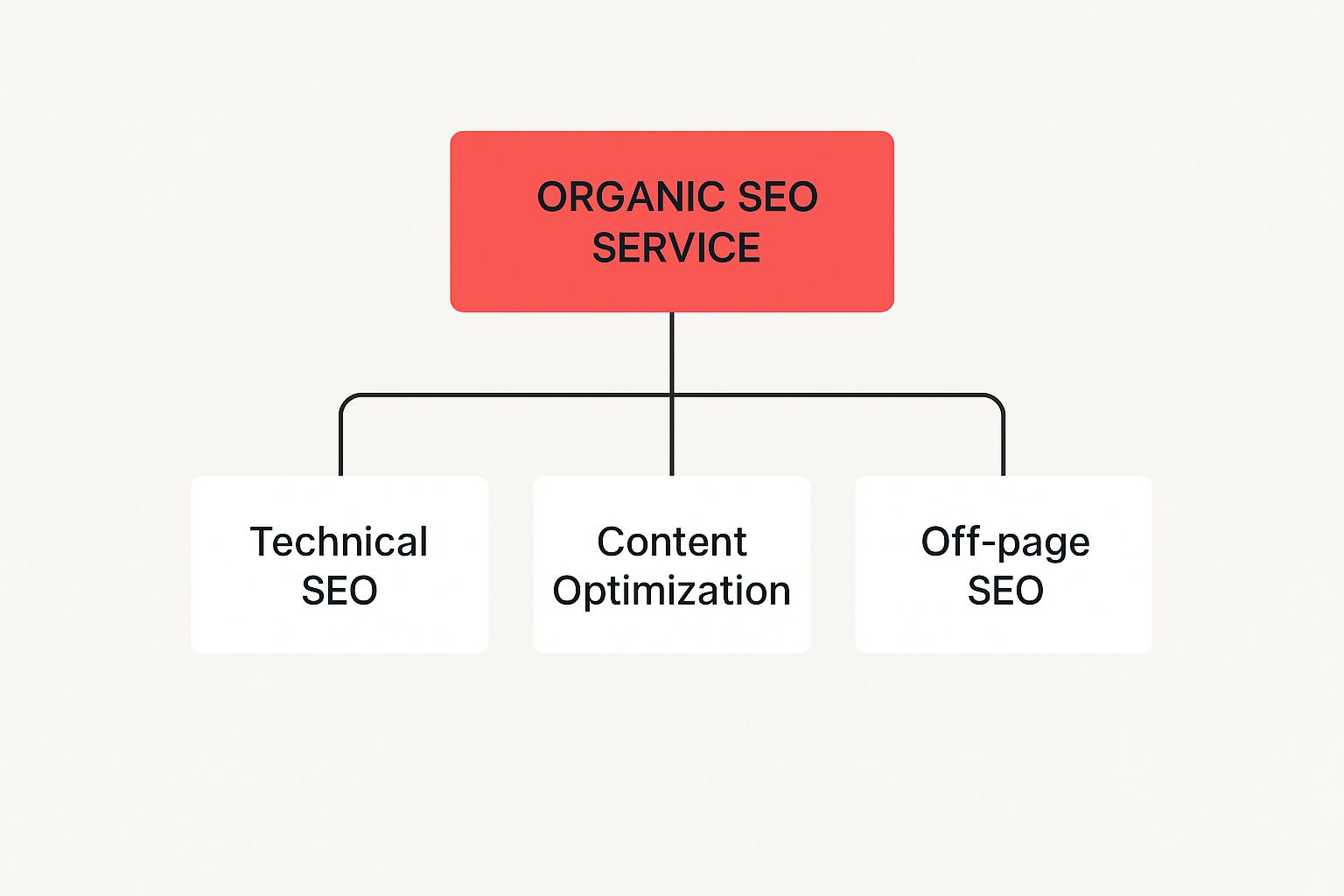
As you can see, a winning strategy is a blend of a solid technical base, brilliant on-page content, and strong off-page authority signals. Let's break down what each of those actually involves.
To make things clearer, here’s a quick overview of how these three essential pillars work together in any professional organic SEO service.
The Three Pillars of Organic SEO Services
| Pillar | Primary Goal | Key Activities |
|---|---|---|
| Technical SEO | Ensure search engines can easily find, crawl, and understand your website. | Site speed optimisation, mobile friendliness, fixing crawl errors, implementing structured data. |
| On-Page SEO | Create relevant, high-quality content that matches what users are searching for. | Keyword research, content creation, optimising titles and meta descriptions, internal linking. |
| Off-Page SEO | Build your website's authority and trustworthiness across the web. | Earning high-quality backlinks, managing brand mentions, local SEO (Google Business Profile). |
Each pillar is a specialism in its own right, but they only deliver serious results when they are managed as part of one cohesive strategy. Part of this is how you manage your reputation reviews and dealing with the balance of them maybe critical.
The Foundation: Technical SEO
Before you can even think about ranking for anything, your website needs to be technically sound. This is non-negotiable.
Technical SEO is all the behind the scenes work that allows search engines to find, crawl, and index your site without hitting any roadblocks. If Google's bots can't properly access your content, even the most amazing article or service page will remain invisible. It simply won't get into their system.
Imagine a librarian trying to organise a library where the lights are off and the shelves are broken. It doesn't matter how great the books are; they're impossible to find and catalogue. Technical SEO is about fixing the lights and building solid shelves.
Key activities here include:
- Improving Site Speed: Making sure your pages load in a snap. Slow sites are a huge turn-off for both users and search engines.
- Mobile Friendliness: Optimising your site for a flawless experience on smartphones and tablets, where most of your audience lives.
- Implementing Structured Data: Adding a special type of code (called schema markup) that helps search engines understand what your content is about , which can lead to more eye-catching search results.
- Fixing Crawl Errors: Hunting down and resolving broken links, redirect loops, and other gremlins that stop search engine bots from navigating your site.
The Architecture: On-Page SEO
Once the foundation is solid, it's time to build the house itself. This is your on-page SEO .
This part is all about optimising the individual pages of your website to be as relevant, useful, and user friendly as possible for your target keywords. It’s where your content strategy meets the user's experience.
This pillar is focused on creating and structuring content that directly answers the questions your potential customers are asking. A skilled organic SEO service will do deep keyword research to understand why people are searching, and then create content that perfectly matches that intent.
On-page SEO is the art of perfectly aligning your website's content with what your audience is actively looking for. It ensures that when someone lands on your page, they know instantly they've found the solution to their problem.
This goes way beyond just stuffing keywords onto a page. It’s a detailed process that involves optimising page titles, meta descriptions, headings, and internal links to create a logical and intuitive journey for every visitor. The goal is to provide such a valuable experience that people stay longer, engage more deeply, and start to see your brand as the go-to authority.
The Reputation: Off-Page SEO
Finally, with a well built house on a solid foundation, you need to build your reputation in the wider community. That's off-page SEO .
This refers to all the activities that happen away from your website to build its authority and trustworthiness. It's the digital equivalent of good, old fashioned word of mouth.
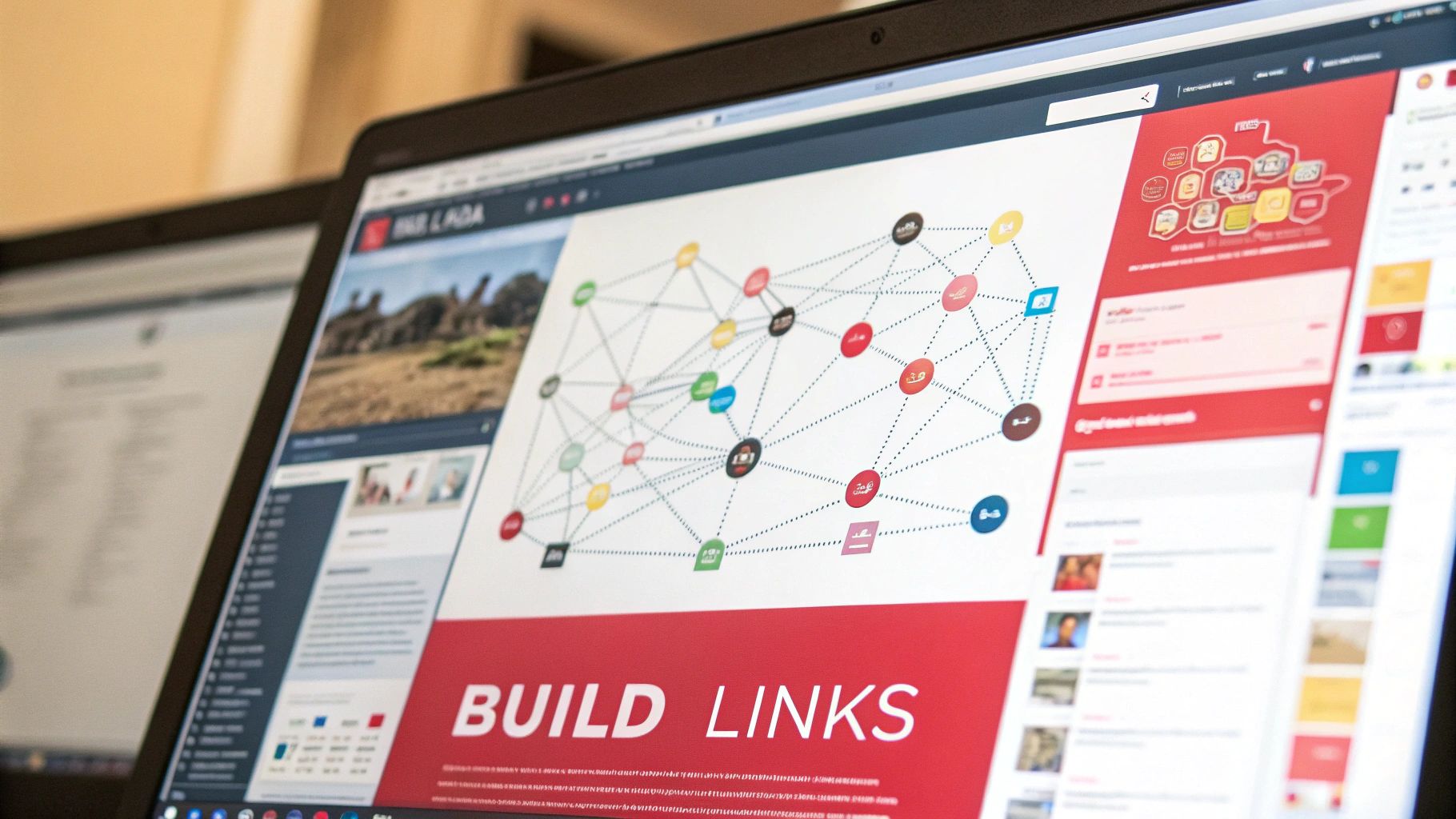
The biggest part of off-page SEO is link building . When another reputable website links to yours, it’s like a vote of confidence. It tells search engines that your content is valuable and trustworthy, which remains one of the most powerful ranking factors out there.
A professional service focuses on earning high-quality backlinks from relevant, authoritative sources—not just getting links from anywhere and everywhere. Other off-page signals include brand mentions, social media activity, and positive online reviews. By understanding the latest developments in SEO emerging trends and best practices, an agency can build a strong, natural backlink profile that stands the test of time.
Why Organic Search Is Your Biggest Traffic Source

To really get why an organic SEO service is so vital, you just need to follow the numbers. While every marketing channel has its role, organic search isn't just another source of traffic. For most UK businesses, it's the biggest, most powerful one they have.
Ignoring organic search is like setting up a shop on a bustling high street but keeping the doors bolted shut. The vast majority of online journeys—from finding a new brand to hitting 'buy'—start with a few words typed into a search bar. A strong organic presence isn’t a 'nice to have'; it's fundamental to survival and growth.
This is simply because it's how modern customers find answers, research what they need, and connect with businesses. Let's dig into the data that proves why this channel can't be an afterthought.
The Numbers Behind Search Dominance
The stats for the UK market paint a very clear picture of where your customers are spending their time. Recent data shows that a massive 53.3% of all website traffic comes directly from organic search. That means more than half of your potential customers are trying to find you through a search engine right now.
On top of that, around 68% of all online experiences begin with a search query. It confirms that search is the starting line for almost every digital interaction. If you’re not visible when they start that journey, you’re basically invisible for the whole race.
This makes investing in an organic SEO service a direct investment in your single biggest source of potential business.
Why Google Is The Only Game in Town
Here in the UK, Google doesn't just dominate the search market; it is the market. The tech giant holds an incredible 92.58% of the search engine market share. This near monopoly means that any serious effort to get found online has to be focused on understanding and working with Google’s algorithms.
The sheer dominance of Google means that ranking well on its results pages is not just a marketing goal—it is a core business objective. It is the most direct path to reaching the largest possible audience of motivated buyers in the United Kingdom.
This focus is everything. The only way to tap into that enormous stream of traffic is to prove to Google that your website offers quality, relevance, and authority. For businesses that rely on local customers, learning how to boost your business SEO with local listings is a powerful way to capture this highly motivated audience.
Translating Visibility into Business Metrics
At the end of the day, it's not about being visible for the sake of it. It's about turning that visibility into real, tangible results for your business. The data draws a straight line from organic search to leads and sales. In fact, 61% of UK marketers state that SEO and organic traffic generate more leads than any other marketing activity they do.
Why? Because SEO connects you with people at the exact moment they need something. Organic traffic isn't just bigger; it's often better quality. These aren't people passively scrolling—they are actively searching for solutions, making them the best possible leads you could hope to attract.
How to Choose the Right UK SEO Partner
Finding the right SEO provider in the UK can feel like a minefield. It’s a huge decision that will directly impact your company’s growth, so it pays to get it right.
The secret is to look past the shiny sales decks and too good to be true prices. You’re not just buying a service; you’re entering a strategic partnership. The goal is to find a team that feels like an extension of your own, one that’s genuinely invested in your success.
Look for transparency, custom built strategies (not cookie cutter packages), and clear, consistent communication. Making the right choice now will save you from a world of wasted money and frustration down the line.
Asking the Right Questions
Before you sign any contracts, it's time to do some digging. The answers you get to a few sharp, specific questions will tell you everything you need to know about their expertise, their process, and whether they're the right fit.
Don't be afraid to push them. Start by asking how they plan to get to grips with your business, your industry, and your customers. A one size fits all approach is a massive red flag. A great partner will want to understand your commercial goals and market position before they even whisper the word "keyword."
A truly effective SEO strategy is built on a deep understanding of your business goals. If a potential partner talks only about rankings and traffic without asking about your revenue targets, they are focusing on the wrong metrics.
Next, get forensic about their reporting and communication. How often will you hear from them? What will their reports actually show you? Vague updates that just flash traffic numbers are pointless. You need to see data that connects their work to your bottom line—things like organic leads, conversion rates, and ranking improvements for keywords that actually make you money.
Finally, grill them on their approach to link building. This is where many agencies cut corners and take massive risks. Ask them to walk you through their process for earning backlinks. If they get secretive, or start talking about private blog networks (PBNs) or buying links, run for the hills. Those tactics are a fast track to a Google penalty.
What to Look For and What to Avoid
When you’re weighing up a potential organic SEO service , it helps to have a mental checklist of green flags (good signs) and red flags (warning signs). This will help you cut through the jargon and compare different agencies on a level playing field.
A solid agency will be transparent, led by data, and honest about what’s achievable. They’ll take the time to walk you through their process and set clear, realistic expectations. In contrast, a low quality provider will often use pressure tactics, hide behind "proprietary" methods, and make guarantees they can't possibly keep.
Here's a simple table to help guide your decision.
Evaluating SEO Service Providers
Think of this as your cheat sheet for spotting a genuine partner amongst the pretenders. Use these criteria to hold every potential agency to the same high standard.
| Evaluation Criterion | What to Look For (Green Flags) | What to Avoid (Red Flags) |
|---|---|---|
| Strategy | A customised strategy based on your specific business goals and market analysis. | Generic, off the shelf packages that are applied to every client. |
| Transparency | Clear explanations of their methods and open access to performance data and reports. | Secretive or "proprietary" methods they refuse to explain. |
| Promises | Realistic forecasts based on data, focusing on long term, sustainable growth. | Guarantees of #1 rankings or promises of instant results. |
| Communication | A dedicated point of contact and a regular, structured reporting schedule. | Poor communication, missed meetings, or vague, infrequent updates. |
| Case Studies | Detailed case studies with real data and client testimonials you can verify. | A lack of proven results or an unwillingness to share client references. |
Ultimately, choosing the right partner is about finding an agency that gets your business, shares your values, and has the track record to prove they can deliver. Use this framework to make an informed choice and find an organic SEO service that will become a true asset to your business.
Measuring SEO Success That Matters
How do you actually know if your investment in an organic SEO service is paying off? It’s far too easy to get mesmerised by a big spike in website visitors, but that traffic is just noise if none of those people ever become customers.
Real success is found in the Key Performance Indicators (KPIs) that directly impact your bottom line. It's about moving past these surface level "vanity metrics" to understand the true value being delivered. We're talking about outcomes, not just activity.
Looking Beyond Raw Traffic Numbers
Any decent SEO partner will steer the conversation away from just boosting visitor counts and towards improving genuine business results. Sure, traffic growth is a good sign, but it’s only a small part of a much bigger picture. The real story is in the quality and behaviour of that traffic.
A meaningful report should be answering the questions that matter to you:
- Are we pulling in the right audience—people genuinely interested in what we offer?
- Are these visitors taking the actions we want them to, like filling out a contact form or buying something?
- Is the revenue we’re making from organic search actually growing?
The goal of an organic SEO service isn't just to bring more people to your website; it's to bring the right people and guide them towards becoming a customer. Success is measured in leads and revenue, not just clicks.
When you’re trying to gauge how effective your organic SEO service is, you need to understand KPIs like your visibility for key search terms. For a great breakdown of these ideas, check out a simple guide to Share of Market vs Share of Voice.
Key Performance Indicators That Really Count
If you want to hold your provider accountable and see the real return on what you’re spending, you have to focus on the metrics that drive business growth. A transparent agency will always build their reports around these vital KPIs.
These are the numbers that tell the real story of how your website is performing:
-
Organic Conversion Rate: This is the big one. It's the percentage of visitors from organic search who actually complete a goal—whether that's making a purchase, asking for a quote, or signing up to a newsletter. A rising conversion rate is proof that the quality of your traffic is getting better.
-
Lead Quality: Don't just count the leads; track them. How many of the enquiries from organic search move through your sales process and become paying customers? This metric directly connects your SEO work to its commercial value.
-
Keyword Ranking Improvements: Keep a close eye on your rankings for high-value, commercial intent keywords. Climbing the ladder for the exact terms your ideal customers are searching for is a massive indicator of progress. Similarly, understanding the impact of domain authority on search rankings gives you a clear view of your site's growing credibility in Google's eyes.
-
Revenue from Organic Search: For e-commerce businesses, this is the ultimate measure of success. By tracking the sales generated directly from your organic visitors, you can calculate a precise, undeniable return on investment.
Your Top Organic SEO Questions Answered
Dipping your toe into the world of an organic SEO service can definitely stir up a few questions. Let's cut through the noise and get you some clear, straightforward answers to the most common ones we hear. This should help you get a solid feel for the process and move forward with confidence.
How Long Does It Take To See Results?
Let’s be straight: organic SEO is a marathon, not a sprint. While you might spot small wins from technical tune ups within a few weeks, the really meaningful results—think major traffic growth and rock solid rankings—typically start showing up between four to twelve months .
Why so long? It all comes down to factors like how competitive your industry is, the current state of your website, and how consistently the work gets done. Think of it like pushing a boulder. It starts slow, but as you build momentum, the value and authority compound over time, delivering sustainable results that last.
Is Organic SEO Better Than Paid Search?
This is a classic question, but neither one is inherently 'better'. They're different tools for different jobs, and frankly, they work brilliantly together. A truly switched-on strategy uses both.
- Organic SEO: This is your long game. It’s about building lasting authority, credibility, and a steady stream of traffic that keeps delivering value even if you pause your spending. It’s the very foundation of your online presence.
- Paid Search (PPC): This is all about speed and precision. It gets you instant visibility and is perfect for targeted campaigns, shouting about special offers, or testing the waters in a new market.
The smartest approach uses PPC for quick wins and immediate data, while a dedicated organic SEO service builds the foundational, long term success that drives your business forward year after year.
The most powerful digital strategies harmonise the long term brand building of organic SEO with the immediate impact of paid advertising. One builds equity while the other seizes opportunities.
Can I Do SEO Myself or Should I Hire an Agency?
It’s definitely possible to handle the basics yourself, especially if you have a small website and a good amount of time to learn. Things like updating on-page content or managing a Google Business Profile are well within reach for many business owners.
However, modern SEO is a seriously complex beast. It’s a mix of deep technical audits, clever competitor analysis, strategic link building, and constantly adapting to Google’s latest mood swings. A professional agency brings a level of expertise, specialised tools, and dedicated focus that most business owners simply can't spare.
For any business that's serious about growth in a competitive space, hiring an expert organic SEO service is the most effective and efficient way to get meaningful, lasting results. It’s about making sure your investment is guided by people who have been there and done it.
Ready to see how a professional Superhub SEO strategy can transform your business? Get in touch with our team today and let's start your journey to the top of the search results.
Want This Done For You?
SuperHub helps UK brands with video, content, SEO and marketing that actually drives revenue. No vanity metrics. No bullsh*t.