
Sponsorship in Motorsport: Your Winning Strategy
Sponsorship in motorsport is not just about sticking a logo on a car. It is a powerful marketing partnership, a strategic investment where a brand connects with one of the most dedicated and passionate audiences on the planet to hit real business goals. This is about way more than just exposure.
At its core, it is a two-way street. The deal absolutely has to deliver measurable value to both the brand and the team.
What Motorsport Sponsorship Really Means
Think of it less like a donation and more like a high-speed marketing collaboration. A massive misconception is that sponsors are just throwing money at teams out of goodwill. The reality? It is a calculated business decision. A brand invests in a team or driver to get access to their audience, their image and their platform.
This partnership is built on mutual benefit. For the team, it is the lifeblood that keeps them competing—covering everything from developing the car to paying the race entry fees. For the brand, it is an incredible chance to build awareness, drive sales and create a genuine connection with a ridiculously loyal fanbase.
More Than Just a Logo
Truly effective sponsorship goes so much deeper than just slapping a logo on the livery. It is about a brand becoming part of the motorsport story itself. The smartest brands tap into the passion and global reach of racing to achieve very specific goals.
These objectives usually include things like:
- Building Brand Awareness: Getting your brand in front of millions of TV viewers and fans at the track.
- Engaging a Target Audience: Connecting directly with a demographic that is passionate, loyal and often has serious purchasing power.
- Creating Unique Experiences: Offering clients unforgettable access through VIP hospitality at race events.
- Driving Business Growth: Generating leads and sales by linking your brand with the excitement and high performance of motorsport.
A Strategic Business Transaction
At the end of the day, every deal has to deliver measurable value. This transactional nature is what separates professional sponsorship from a simple handout. And that principle applies right across the UK, from the pinnacle of Formula One all the way down to grassroots club racing.
As Motorsport UK , the national governing body, points out, sponsorship is a business relationship. It requires competitors to offer tangible marketing value in return for support, whether that is cash or equipment.
This ensures both sides are fully invested in making the partnership a success. The team works hard to provide exposure and activation opportunities and the sponsor uses those assets to hit its marketing targets. You can learn more about the critical role of sponsorship across all levels of UK motorsport, from the World Rally Championship to junior formulas.
This mutual dependency is exactly what makes sponsorship in motorsport such a powerful and effective marketing channel.
How a Motorsport Sponsorship Deal is Structured
Not all sponsorships are cut from the same cloth. In the high-octane world of motorsport, a deal is so much more than just a financial handshake; it is a carefully layered structure where the level of investment dictates your visibility and how deeply you are embedded with the team. Getting your head around this hierarchy is crucial, whether you are a brand looking for the perfect entry point or a team building out your partnership proposals.
Think of it like booking a flight. You can opt for economy, business or first class. Each choice gets you to the same destination but the experience, the perks and the price tag are worlds apart. Motorsport sponsorship works in a very similar way, offering distinct tiers of partnership to suit different ambitions.
This layered approach means there are genuine opportunities for brands of all shapes and sizes, from global giants to the local garage down the road. Each level serves up a unique mix of branding rights, exclusive access and the potential for unforgettable activations.
Ultimately, this structure is where a brand’s marketing goals and a team's needs meet in the middle. The deal itself is what pulls these two sides together to create a partnership that actually works for everyone.
As you can see, a winning partnership has to deliver on the sponsor's commercial goals while giving the team the vital resources it needs to get on the grid and compete.
The Different Tiers of Sponsorship
Let’s pull back the curtain on the common tiers you will find in almost any motorsport paddock. The specific names might vary from team to team—some might say 'Premium' where others say 'Principal'—but the underlying principles are always the same. It is a classic pyramid, with a single, all-encompassing title partner at the peak and a wider base of specialist suppliers holding everything up.
And it is about far more than just how big your logo is on the car. These tiers define the very nature of the relationship, influencing everything from driver appearances and media duties to exclusive B2B networking events in the hospitality suite.
- Title Partner: This is the top of the pyramid, the highest level of investment. The team's name often becomes intertwined with the brand's, creating icons like the ' Mercedes-AMG PETRONAS Formula One Team '. It offers unparalleled brand exposure and total integration into the team's identity.
- Principal Partner: A major sponsor who secures prime real estate on the most visible assets—think the car's sidepods, front and rear wings and the driver's race suits. They command huge media visibility and are seen as a core part of the team's journey.
- Official Partner: This tier provides strong brand presence, just in slightly less prominent positions than a principal partner. These deals are often category-exclusive, giving a brand ownership of a specific area, like the 'Official Logistics Partner' or 'Official Cybersecurity Partner'.
- Official Supplier / Technical Partner: These partners are the lifeblood of the team, often providing critical products or services in exchange for branding rights and association. It could be anything from high-performance lubricants and brake components to advanced 3D-printing services, forming the technical backbone that makes racing possible.
Comparing Sponsorship Levels
To really make sense of these tiers, it helps to see how the investment level, branding rights and core benefits stack up side-by-side. A smaller, specialist tech company might find incredible value as a technical supplier, whereas a global drinks brand will likely need the worldwide visibility that comes with a principal partnership.
The whole game is about finding the right fit for your brand's specific marketing goals and budget.
A successful sponsorship in motorsport is about finding the perfect alignment. It is not about buying the biggest package but the smartest one—the one that delivers on your objectives and weaves your brand authentically into the team’s story.
Below is a simple comparison to help visualise where different partnership levels typically sit.
Motorsport Sponsorship Tiers Compared
This table breaks down the general relationship between investment and the benefits a brand can expect, providing a clear framework for any potential sponsor weighing up their options.
| Sponsorship Tier | Typical Investment Range | Key Branding Assets | Primary Benefits |
|---|---|---|---|
| Title Partner | £££££ (Highest) | Team naming rights, primary livery space, all team assets | Maximum brand integration, global media exposure, full partnership status |
| Principal Partner | ££££ | Prominent car and driver branding (e.g., sidepods, wings) | High brand visibility, strong association with team performance |
| Official Partner | £££ | Secondary branding on car, team kit, garage panels | Category exclusivity, targeted audience engagement, B2B opportunities |
| Supplier / Technical | £ - ££ (or Value-in-Kind) | Minor branding on car, website, press materials | Product showcase, B2B networking, proof of technical excellence |
As you can see, each tier is designed to deliver a different kind of value, ensuring there is a strategic entry point for almost any business ready to get involved in the sport.
How To Value and Package Your Sponsorship Proposal

This is where the rubber truly meets the road. To land a serious sponsorship in motorsport , you have to stop guessing and start valuing your assets with real data. A potential partner needs to see a clear, logical line connecting their investment to a tangible business result. Your proposal is the map that shows them the way.
The process kicks off with a full audit of every single asset you can bring to the table. We are talking about more than just a logo on the car or race suit. Smart sponsors are hunting for an integrated marketing platform that delivers value across dozens of channels, so you need to put a number on everything.
Your job is to translate what happens at the track into the language of business. That means calculating broadcast media value, measuring your digital audience's engagement and putting a price on those exclusive hospitality experiences a sponsor simply cannot buy anywhere else. Only then can you start building packages that actually make commercial sense.
Calculating Your Sponsorship Value
Before you can package anything up, you need to know what it is worth. This is not a finger-in-the-air exercise; it should be methodical and backed by credible data. Put your marketing hat on and think about every single touchpoint where a sponsor’s brand can connect with your audience.
To give a complete picture of the opportunity, your valuation needs to be broken down into three core areas.
-
Media Value: This is the most traditional metric. It is all about calculating the potential value of on-screen exposure during race broadcasts and highlights shows. You can use industry-standard formulas to assign a value based on the size, location and on-screen duration of logo placements. And do not forget to factor in the media value from press coverage in magazines and online articles.
-
Digital and Social Reach: In today's world, your online presence is a massive asset. You must analyse your website traffic, social media engagement rates, follower demographics and video views. A highly engaged audience of 50,000 followers can easily be more valuable than a passive, disconnected audience of a million.
-
Experiential and B2B Value: This is where you quantify the ‘money-can’t-buy’ experiences. Place a real value on VIP hospitality passes, exclusive behind-the-scenes garage tours, driver appearances at corporate events and the chances for B2B networking within the paddock. These exclusive assets are often the key to unlocking the bigger deals.
Building Your Sponsorship Deck
Once your assets are valued, the next step is to bundle them into attractive, tiered packages that appeal to different budgets and marketing goals. This is usually presented in a professional sponsorship deck or proposal. This document is your sales tool—it needs to be polished, persuasive and crystal clear.
When putting your proposal together, it pays to look at how others have built and presented a successful pitch deck strategy. Your deck is your first impression and it has to communicate your value proposition instantly.
Your proposal should tell a story. It needs to introduce your team, showcase your audience, detail your assets and clearly explain why a partnership with you will help a sponsor hit their business goals.
Your deck must be structured logically. Start by introducing your team and its vision, then present your audience demographics and follow up with the tiered packages you have created. Each tier—maybe you will label them Bronze, Silver and Gold—should offer a clear step-up in value and investment. For a detailed breakdown, check out our guide on the top marketing things sponsors will want to see before they open their wallets.
Finally, always finish your proposal with a clear call to action. Tell the potential partner exactly what comes next, whether that is scheduling a call or arranging a meeting at the track. This professional approach shows you are serious about building a proper, mutually beneficial business partnership.
Bringing Your Sponsorship to Life with Activation
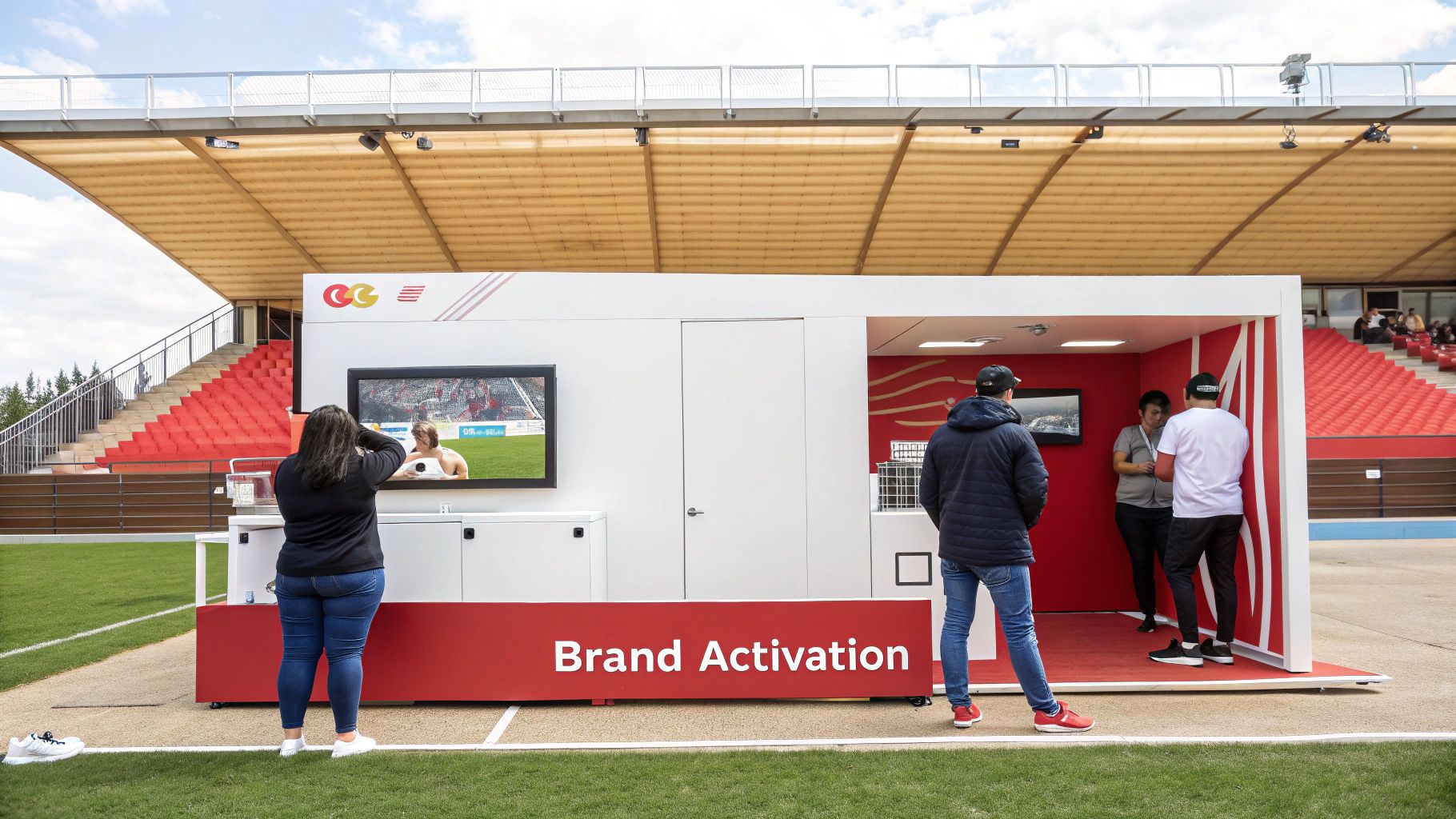
A logo on a race car is just the price of entry. It gets you into the game but it will not win it for you. The real magic, the part that generates a proper return on your investment, happens through activation .
Think of activation as the process of transforming a passive partnership into an active, engaging marketing campaign. Without it, your sponsorship is little more than expensive trackside advertising. With it, you have a powerful platform for storytelling, customer engagement and hitting real business goals. It is the crucial difference between your brand simply being at the race and being part of the race weekend.
This strategic effort needs its own budget, often a multiple of the initial sponsorship fee itself. A solid rule of thumb is that for every £1 you spend securing the rights, you should set aside another £1 to £2 specifically for activation. That investment is what fuels the campaigns that bring the whole partnership to life for fans, customers and even your own employees.
From Static Logo to Dynamic Story
Activation is all about using the rights and assets you have paid for to create meaningful interactions. It is how you take the raw excitement of the track and connect it directly to your brand, pushing beyond simple logo-spotting to build genuine affinity and loyalty.
This means creating compelling digital content, launching social media campaigns that get fans talking or hosting unforgettable experiences at the circuit. The goal is to weave your brand’s narrative into the motorsport story so your involvement feels authentic and adds real value to the audience.
A sponsorship provides the platform but activation is the performance. It is the planned set of activities that allow a brand to truly connect with the motorsport audience on an emotional level, turning passive viewers into active participants.
Successful activation turns your static branding into a dynamic, two-way conversation. It is what ensures your investment in sponsorship in motorsport delivers results far beyond simple brand exposure, creating a lasting impact that resonates long after the chequered flag has fallen.
Core Activation Strategies in Motorsport
The beauty of activation lies in its versatility; it can be moulded to fit almost any marketing objective, from driving online sales to strengthening B2B relationships. The best campaigns usually blend several tactics to create a fully integrated experience.
Here are some of the most effective activation strategies used in motorsport:
- Digital Content and Social Media: Create behind-the-scenes videos, run competitions for signed merchandise or host driver Q&As on Instagram. This allows you to tap into the team's audience to grow your own channels and engage fans where they already are.
- At-Event Experiences: Set up an interactive fan zone in the paddock with racing simulators, product demos or giveaways. To make your brand truly memorable, think about innovative approaches like using dynamic QR codes to enhance audience experiences for exclusive content or competitions.
- B2B and Corporate Hospitality: Use your access to host key clients or stakeholders in an exclusive VIP setting. Offering garage tours, meet-and-greets with the team and premium trackside viewing is an incredibly powerful tool for building business relationships.
- Employee Engagement: Run internal competitions for staff to win tickets to a race weekend. This makes your team feel part of the sponsorship, boosting morale and turning them into passionate brand ambassadors.
Activation in Action
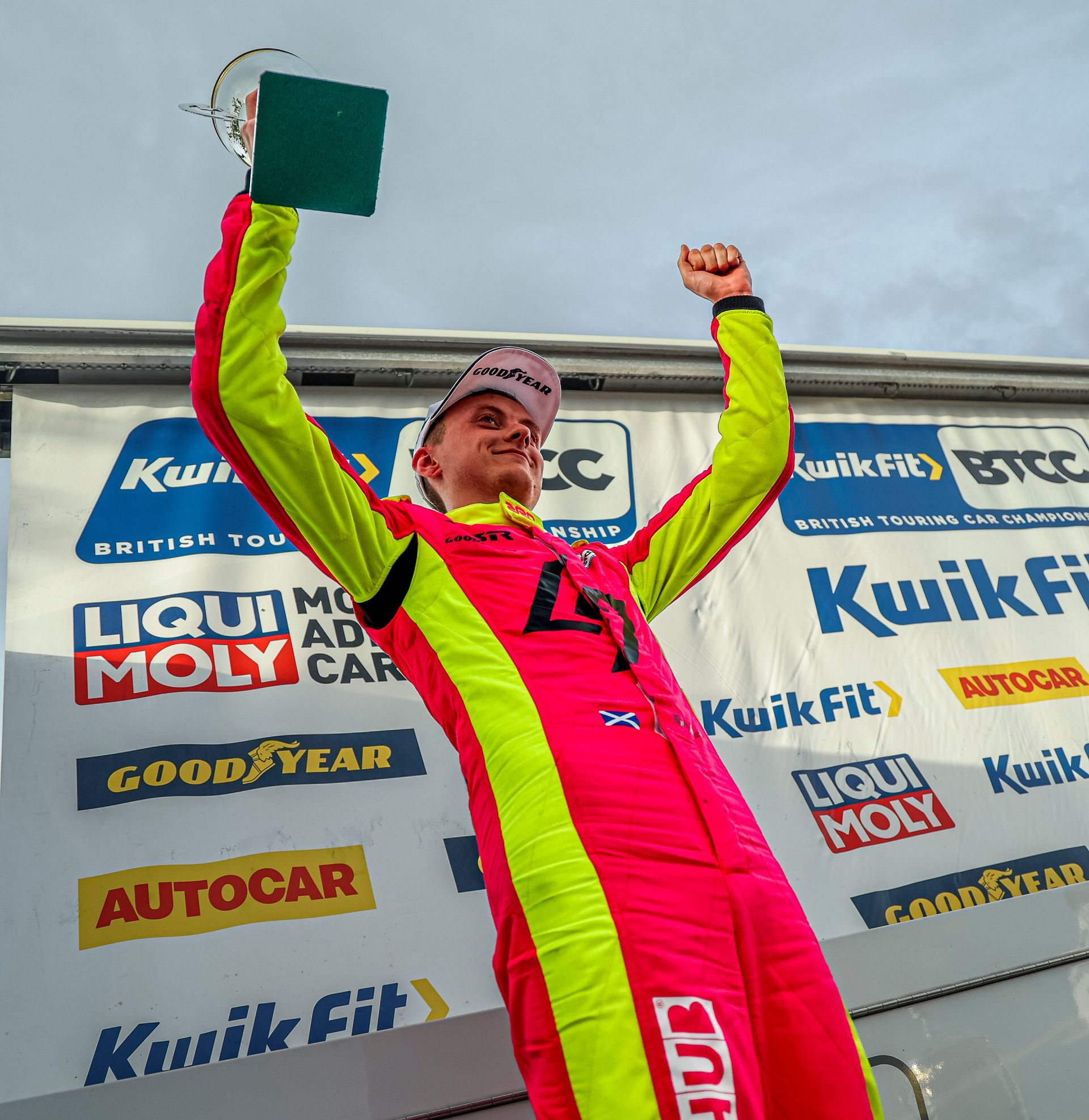
To really grasp the power of activation, look at a practical example. The recent partnership announcement between Superhub and BTCC driver Mikey Doble for the 2025 season shows how activation is baked in from day one. Instead of just a logo deal, the partnership includes dedicated content creation and digital marketing support.
This means the sponsorship will be brought to life through a steady stream of engaging content, using the driver's platform to tell a compelling story. You can see more about how this motorsport partnership is structured for activation.
Ultimately, a well-executed activation plan is what separates the memorable sponsorships from the forgotten ones. It is the crucial step that ensures your brand does not just get seen but gets remembered, talked about and actively supported by one of the most passionate audiences in sport.
How to Measure Your Sponsorship ROI
So, how do you actually prove a sponsorship is working? Once the ink is dry on the deal and the activation campaigns are live, the real work begins: measurement. Proving a solid return on investment (ROI) is the single most important part of building a long-term, successful partnership in motorsport.
Sponsors need to see hard evidence that their investment is delivering genuine business results. This means getting past simple vanity metrics like impressions and digging into the data that really matters. Without a clear measurement strategy, you are flying blind—unable to justify the spend or fine-tune your approach for next season.
Demonstrating the commercial success of the partnership is a shared responsibility. Both the brand and the team must be committed to tracking performance, as this data will become the foundation for renewing and growing the sponsorship in the years to come.
Beyond Impressions: The Shift to Meaningful Metrics
For years, sponsorship value was often measured using a blunt instrument called Media Value Equivalency (MVE). In simple terms, it estimates what the same exposure would have cost in traditional advertising. While it can still be a useful benchmark, MVE only tells a tiny part of the story. It measures visibility, not impact.
Modern sponsorship in motorsport demands a much sharper approach. Brands want to understand how the partnership influences customer behaviour, shifts brand perception and ultimately, affects the bottom line. This requires a move towards tracking a wider range of metrics that connect sponsorship activity to tangible business outcomes. You can learn more about this shift in our complete UK marketer's guide on how to measure ROI.
This is where the real value of the partnership is proven. It is about tracking everything from social media engagement and website traffic right through to the number of qualified leads generated from a weekend in the hospitality suite.
Key Areas for ROI Measurement
To get a complete picture of your sponsorship's performance, your measurement framework needs to cover several key areas. Think of each one as a different lens through which to view the partnership's success, giving you a balanced and comprehensive understanding of its impact.
These core areas include:
- Media and Brand Exposure: Tracking how often and where your brand is seen and mentioned. This covers everything from TV broadcast analysis and online press clippings to social media chatter.
- Audience Engagement: Measuring how your target audience is interacting with the brand through the sponsorship. We are talking likes, comments, shares and website clicks from sponsorship-related content.
- Lead Generation and Sales: Directly linking the sponsorship to new business. This can be tracked with unique discount codes, dedicated landing pages or leads collected at events.
- Brand Sentiment and Perception: Analysing how the partnership is making people feel about your brand. Is the association with motorsport making you seem more innovative, exciting or trustworthy?
This multi-faceted approach ensures you capture the full value of your investment, from top-of-funnel awareness right down to direct sales. The motor racing scene in the UK is a huge part of the wider automotive marketing world. Motor racing makes up around 20% of all automotive sports sponsorship deals in key markets and the UK is no different. Car brands pour hundreds of millions into this space each year, using the track as the perfect stage to showcase performance and innovation. You can discover more insights about these automotive sponsorship trends and their impact on the market.
The ultimate goal of measurement is to tell a clear and compelling story about your sponsorship’s success. It is about providing the data that empowers you to say, "We invested X and in return, we achieved Y."
This ability to prove ROI with confidence is what transforms a one-off deal into a lasting and mutually profitable partnership. To help, we have put together a practical framework outlining some of the key metrics and the tools used to measure them.
Key Metrics for Measuring Sponsorship ROI
The table below gives an overview of the essential metrics used to evaluate the effectiveness and return on investment of a motorsport sponsorship campaign. These are the numbers that help you move from "we think it is working" to "we know it is working."
| Metric Category | Specific Metric Example | Measurement Tool / Method |
|---|---|---|
| Media & Brand Exposure | On-screen logo visibility time (TV broadcasts) | Media monitoring services (e.g., Nielsen, Meltwater) |
| Audience Engagement | Social media engagement rate (likes, comments, shares) | Social media analytics tools (e.g., Sprout Social) |
| Lead Generation | Leads from a trackside event QR code campaign | CRM software and unique URL tracking (e.g., HubSpot) |
| Sales Attribution | Sales using a sponsorship-specific discount code | E-commerce platform analytics (e.g., Shopify) |
| Brand Sentiment | Percentage of positive brand mentions online | Sentiment analysis tools (e.g., Brandwatch) |
| Website & Digital Traffic | Referral traffic from team's website to sponsor's site | Google Analytics |
By combining these different data points, you can build a powerful narrative that not only justifies your initial investment but also provides a clear roadmap for optimising your strategy for even greater success in the future.
Future Trends in Motorsport Sponsorship
The world of motorsport sponsorship is always in motion, shaped by new tech, shifting fan expectations and changing global priorities. To build partnerships that actually last, brands and teams have to look past today and get a feel for what is coming next. Staying ahead of the curve is the only way to create a strategy that works now and still delivers value years down the line.
The game is moving on from simple brand exposure towards partnerships built on something deeper. It is a huge opportunity for forward-thinking teams and sponsors, especially in the UK’s motorsport scene, which has always been a hotbed for engineering and marketing talent. Those who adapt will be the ones who win.
Sustainability and Purpose-Driven Partnerships
One of the biggest shifts we are seeing is the demand for sustainability. Brands are under real pressure to show they are serious about their Environmental, Social and Governance (ESG) responsibilities and they expect their sponsorships to reflect that. A partnership with a team that is pioneering sustainable fuels, running community programmes or championing diversity becomes a powerful story to tell.
This means a team’s commitment to cutting its carbon footprint or promoting inclusivity is not just a ‘nice-to-have’ anymore—it is a core part of their commercial appeal. The deals of the future will be built on shared values, where the partnership itself is the proof of a genuine commitment to making a positive impact.
The Rise of Digital Integration and Data
Technology is constantly unlocking new ways to bring sponsorships to life and measure what is working. The fusion of digital assets with sharp data analytics is set to completely redefine how partnerships are put together and valued.
We are seeing a big push towards:
- Digital Collectibles: Things like Non-Fungible Tokens (NFTs) are opening up new revenue streams and giving fans a new way to own a unique piece of their favourite team.
- Data-Driven Decisions: Teams and sponsors are using sophisticated analytics to get under the skin of fan behaviour. This allows them to create more personal content and measure their ROI with pinpoint accuracy.
This data-first approach makes for smarter, more targeted activations, ensuring every penny of the marketing budget is spent where it will have the biggest impact. The growth here is undeniable. Global Formula One sponsorship spending, for instance, is set to top $2.9 billion —a 10% jump year-on-year. UK-based teams are right at the heart of this, with McLaren leading the F1 grid with 51 unique partners. You can get a deeper look at the data on the increasing value of F1 partnerships and what it means for the industry.
The future of motorsport sponsorship is not just about getting an audience; it is about building a community. It lies in creating authentic, purpose-led partnerships, amplified by technology and backed by hard data.
By tuning into these trends, teams and brands can forge powerful alliances that do not just succeed commercially but also contribute positively to the sport and society. That is a winning strategy, both on and off the track.
Ready to build a sponsorship strategy that is fit for the future? The team at Superhub specialises in connecting brands with the motorsport world, creating partnerships that deliver real results. Visit us at https://www.superhub.biz to get started.
Want This Done For You?
SuperHub helps UK brands with video, content, SEO and marketing that actually drives revenue. No vanity metrics. No bullsh*t.