

UK's Top 7 Performance Marketing Companies 2026
In a competitive market where every pound must be accountable choosing the right partner is critical for business growth. The term 'performance marketing' itself promises results: it's marketing with a direct measurable return on investment (ROI). Unlike traditional brand advertising its success isn't measured in vague impressions but in tangible actions such as leads sales sign-ups and conversions.
However not all performance marketing companies are created equal. The UK market is crowded with agencies each offering a slightly different blend of services sector expertise and strategic approaches. This guide is designed to cut through the noise. We will explore what defines a top-tier performance partner from core competencies like PPC and paid social to the engagement models that suit different business needs. When evaluating a partner for instance it's crucial they demonstrate mastery of key social media performance metrics to truly deliver on their promises.
We have curated a definitive roundup of seven standout companies and platforms including full-service agencies and specialised directories to help you make an informed decision. Each profile includes a direct link and a clear overview of their capabilities. Whether you're in motorsport tourism finance or e-commerce this list will provide the clarity you need to select a company that can genuinely accelerate your growth and maximise your marketing spend. We will also provide a practical checklist to help you evaluate potential partners and ensure you find the perfect fit for your organisation's unique goals.
1. Superhub
Best For: Ambitious brands seeking a full-service growth partner that blends technical expertise with creative storytelling.
Superhub stands out as a formidable player among UK performance marketing companies positioning itself not merely as a service provider but as an integrated growth partner. Based in Devon this 5-star rated agency combines a rare trio of capabilities: advanced technical development AI-driven lead generation and cinematic content production. This holistic approach allows them to manage the entire marketing funnel from building a high-performance website or app to creating the compelling content that drives conversions and automating the systems that nurture leads.
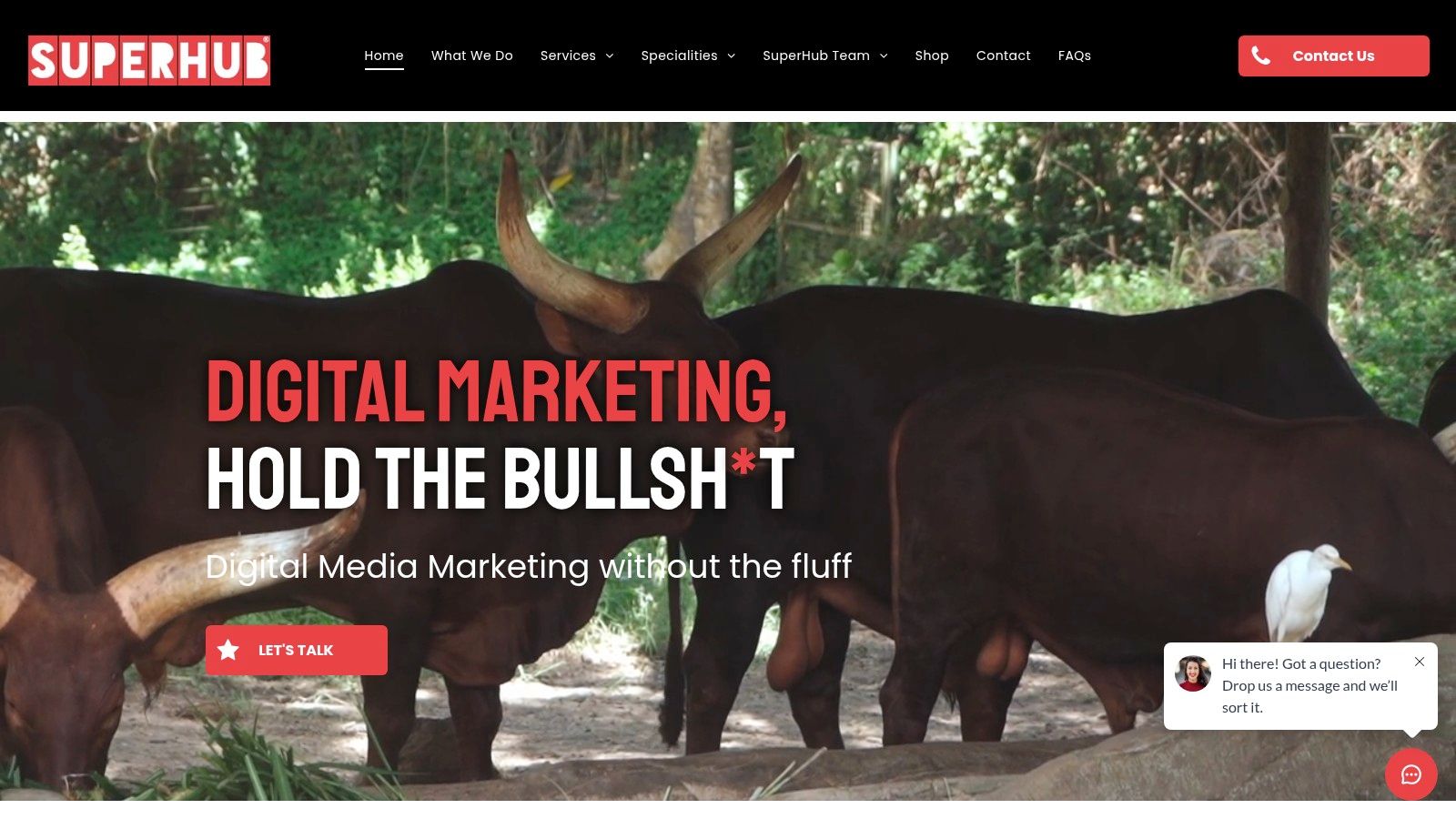
What truly distinguishes Superhub is its deep specialism in high-octane sectors like motorsport automotive energy and tourism. This is not just a label; it is a core part of their identity evidenced by a hands-on content engine that includes multiple active YouTube channels and vlogs. They don't just talk about creating audiences; they actively build them demonstrating a practical understanding of what it takes to convert engagement into measurable commercial success. Their proven results such as helping a client relaunch and achieve £60k turnover in just six weeks or supporting the acquisition of a £300m contract underscore their impact-focused methodology.
Core Service Analysis
Superhub's service offering is exceptionally comprehensive covering every touchpoint of a modern digital strategy. This integration is a key advantage for businesses looking to avoid the friction of managing multiple specialist agencies.
- Technical Build & Automation: Beyond standard web design Superhub develops bespoke iOS/Android apps and modern web platforms. They also specialise in business automation creating systems that streamline operations and enhance lead management.
- AI-Driven Lead Generation: This is a cornerstone of their performance marketing. They build proprietary automated systems designed to identify engage and qualify leads at scale accelerating the sales pipeline for clients.
- Content & Film Production: Their in-house production capabilities are extensive ranging from cinematic drone footage to full-scale TV advertising via SKY Adsmart. This allows them to create high-impact visual assets that fuel their social media and PPC campaigns.
- Digital Strategy & Execution: The agency provides end-to-end management covering SEO paid social (PPC) social media channel management and even offers an outsourced marketing department model for businesses needing a complete team.
Key Insight: Superhub's model is built on execution speed. They claim the ability to launch entire new businesses in a matter of hours making them an ideal partner for dynamic start-ups and established brands that need to move quickly and decisively in the market.
Strengths and Considerations
| Pros | Cons |
|---|---|
| Full-Service Capability: Strategy build content and advertising are all handled under one roof ensuring a cohesive and efficient campaign. | No Public Pricing: Engagement requires direct contact for a bespoke quote which may slow down the initial comparison process for some businesses. |
| Proven Sector Expertise: Deep knowledge and case studies in motorsport automotive and energy provide a significant advantage for clients in these niches. | Niche Focus: Businesses outside their core sectors should verify the team's relevant experience and fit before committing. |
| Advanced Technical & AI Focus: The use of bespoke AI systems for lead generation provides a tangible competitive edge. | |
| In-House High-End Production: Access to film drone and TV ad production ensures content quality matches strategic ambition. |
In conclusion Superhub is an excellent choice for businesses seeking one of the UK's most dynamic and results-oriented performance marketing companies. Their ability to fuse creative content with robust technical infrastructure and AI-powered lead generation makes them a powerful ally for brands ready for rapid and sustainable growth.
Website: https://www.superhub.biz
2. Sortlist
Sortlist operates less as a traditional agency and more as a strategic matchmaking platform designed to connect businesses with the right performance marketing companies in the UK. Instead of scrolling through endless search results Sortlist provides a curated database of over 150 UK-based performance marketing agencies streamlining the discovery and shortlisting process significantly. This approach is ideal for businesses that need to move quickly but want to ensure they are making a well-informed choice.
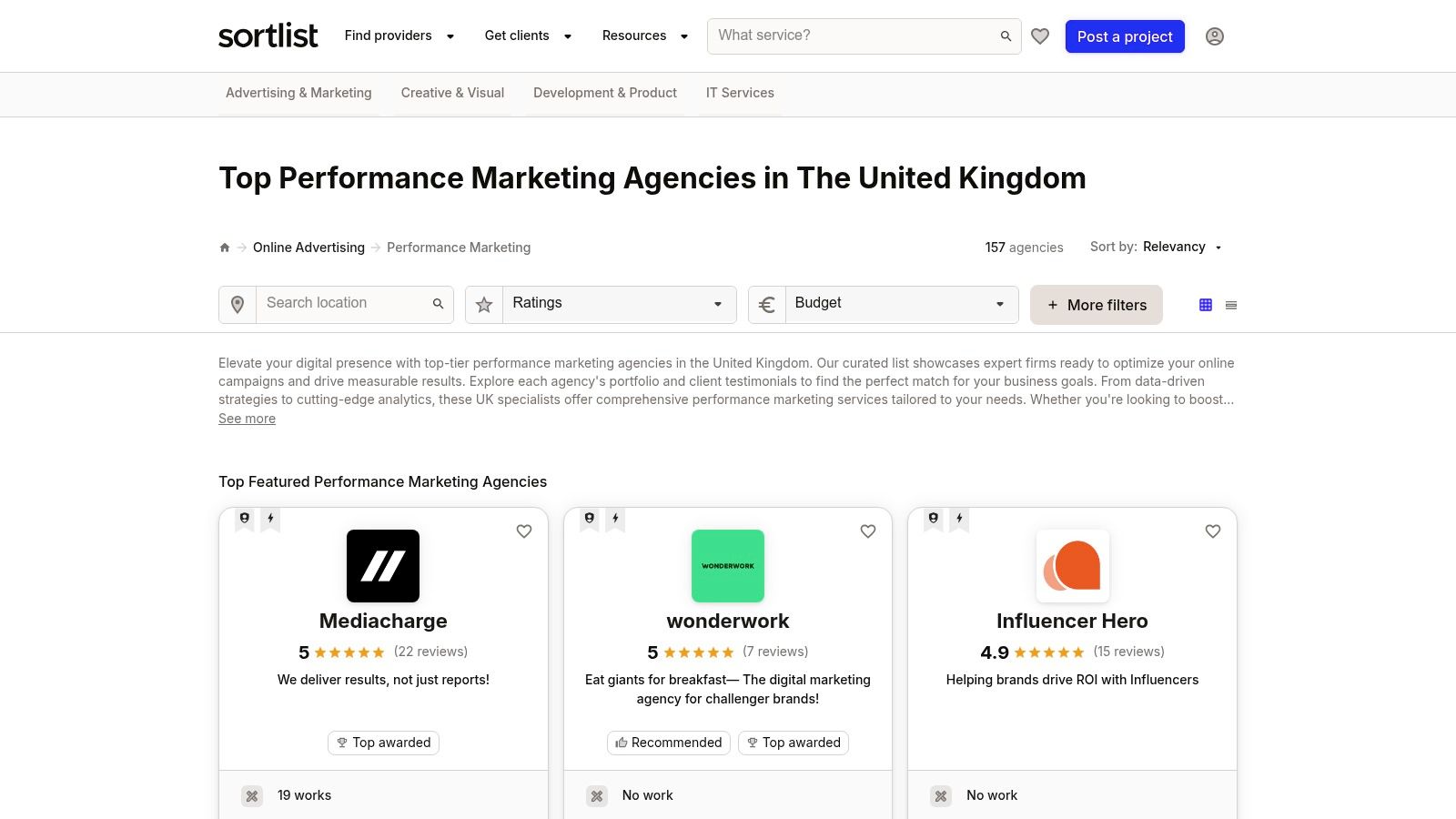
The platform's core strength lies in its guided brief submission process. You outline your project requirements budget and desired outcomes once and Sortlist’s algorithm matches you with a pre-vetted list of suitable agencies. This eliminates the repetitive and time-consuming task of contacting multiple companies individually allowing you to compare tailored proposals from interested and relevant partners.
Core Features and User Experience
The user experience is built for efficiency. Agency profiles are transparent featuring verified client reviews portfolios of past work key clients and sector specialisms. This level of detail aids due diligence and helps you gauge an agency's suitability before initiating contact.
- Advanced Filtering: You can narrow down the extensive list using filters for location (e.g. London Manchester) budget range team size and specific services like PPC or affiliate marketing.
- Guided Matching: The platform's intake form acts as a discovery tool asking pertinent questions to understand your needs and then connecting you directly with agencies that fit your criteria.
- Transparent Profiles: Each agency profile clearly states its minimum project budget providing an immediate filter for businesses of all sizes from start-ups to large enterprises.
How to Get the Most Out of Sortlist
To maximise your success on the platform invest time in creating a detailed and specific brief. Clearly articulate your key performance indicators (KPIs) target audience and expected return on investment. The more specific your input the more accurate the agency matches will be. While the platform centralises communication it's wise to schedule introductory calls outside of it once you have a shortlist to build rapport and discuss nuances.
Key Insight: Sortlist is particularly valuable for businesses that lack an in-house procurement team or the time to conduct extensive market research. It transforms the often-overwhelming task of finding the right performance marketing partner into a structured data-driven process.
3. Clutch
Clutch is one of the most comprehensive B2B review and ratings platforms globally serving as a vast marketplace where businesses can find compare and connect with performance marketing companies. Its key differentiator is the depth of its verified client reviews. Unlike brief testimonials Clutch interviews past clients to produce detailed case-study-like summaries of projects offering unparalleled insight into an agency's processes communication and results.
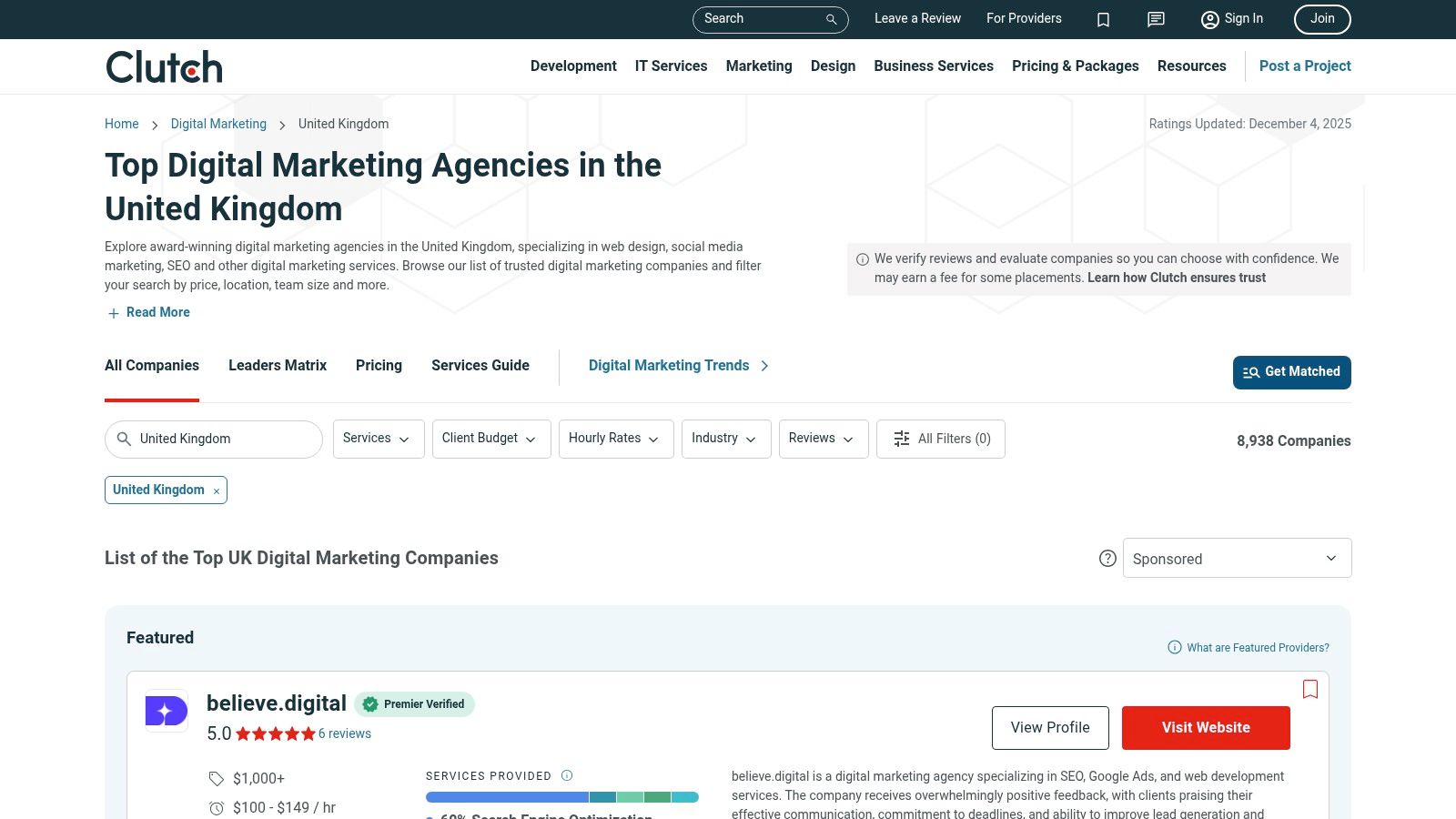
The platform curates regularly updated rankings for UK-based agencies driven by its proprietary "Leaders Matrix" which plots companies based on their market presence and ability to deliver. This data-led approach helps businesses cut through the noise although the sheer volume of listings can sometimes feel overwhelming. Many agency profiles also provide transparent pricing information such as minimum project sizes and hourly rates which is invaluable for budget-conscious decision-making.
Core Features and User Experience
The platform is engineered for deep-dive research. While the interface is dense with information its powerful filtering tools are essential for navigating the extensive database and finding a partner that aligns with your specific performance marketing needs.
- Verified In-Depth Reviews: Each review includes project details challenges solutions and measurable outcomes providing a level of due diligence that is hard to find elsewhere.
- Advanced Filtering: Users can filter agencies by location within the UK service focus (e.g. PPC affiliate marketing CRO) budget size industry specialism and client rating.
- Transparent Pricing Data: A significant number of profiles openly display minimum project fees (e.g. £5,000+) and typical hourly rate bands helping to qualify potential partners quickly.
- Leaders Matrix: This visual tool ranks agencies based on verified client feedback and market reputation offering a data-backed starting point for your search.
How to Get the Most Out of Clutch
To effectively use Clutch start by leveraging its filters to create a manageable shortlist. Focus on agencies that specialise in your industry and have a minimum project size that matches your budget. Read the full text of at least three to five reviews for each shortlisted agency paying close attention to how they handled challenges and communicated with the client. While the platform is excellent for research it's wise to reach out directly to your top candidates to start a conversation. For start-ups especially understanding how to navigate these directories is a crucial first step as finding a suitable digital marketing agency can be transformative.
Key Insight: Clutch is best suited for businesses that prioritise rigorous due diligence and want to read detailed verified case studies before engaging. It excels at providing the deep qualitative evidence needed to make a high-confidence hiring decision for a performance marketing partner.
4. DesignRush
DesignRush is a global B2B marketplace and agency directory that helps businesses find and compare top-tier partners including a comprehensive list of performance marketing companies. For UK-based firms it provides an editorially curated list of agencies offering a quick and efficient way to create a shortlist. The platform combines verified reviews detailed service breakdowns and clear cost indicators to simplify the initial discovery phase of finding a new marketing partner.
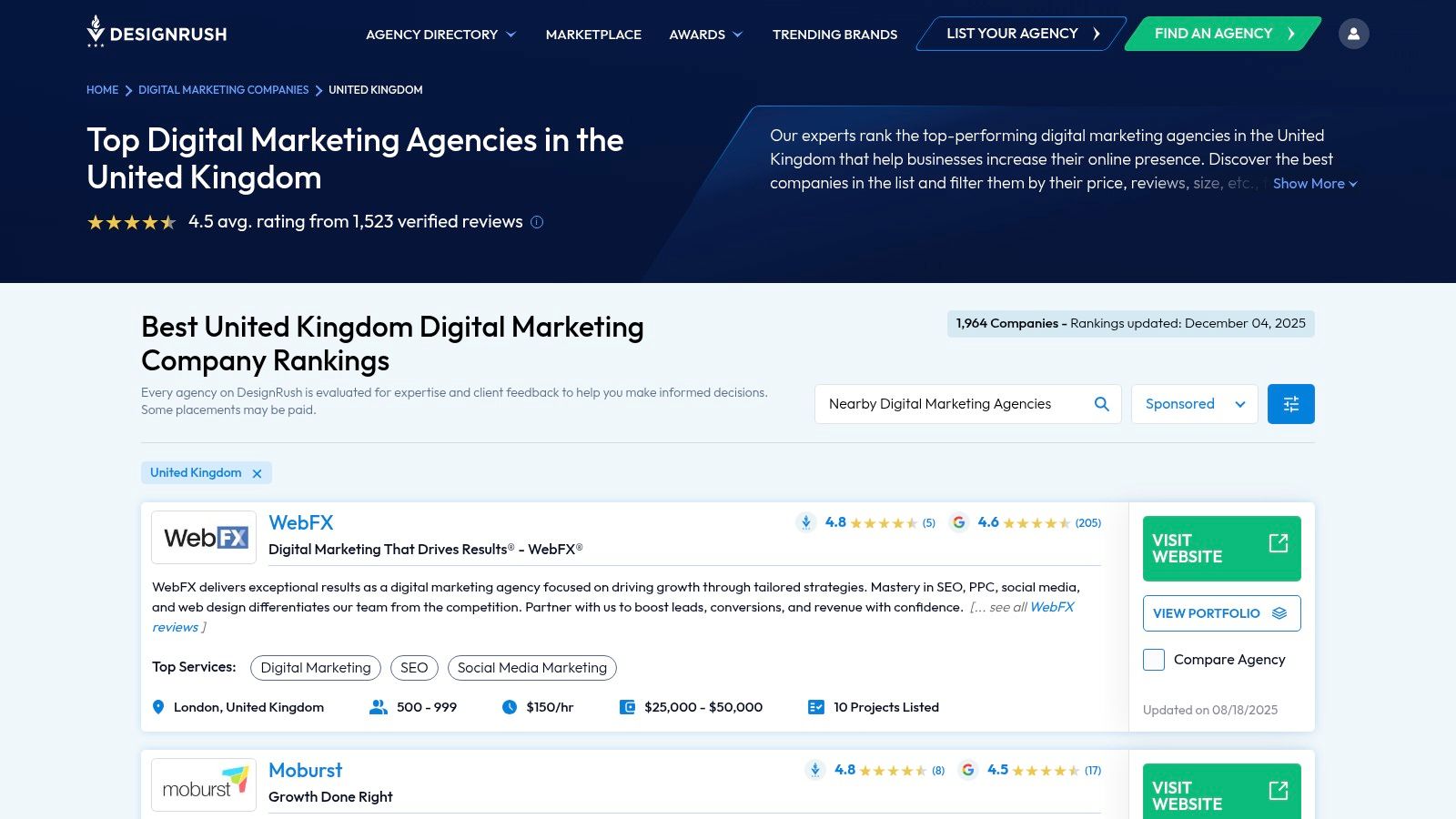
Unlike a purely algorithmic matchmaker DesignRush uses a blend of editorial rankings and robust filtering to guide users. This makes it particularly useful for businesses wanting to scan the landscape quickly understand typical pricing and discover both well-established agencies and promising newcomers. The platform’s strength lies in its ability to present key decision-making information such as average hourly rates and team size at a glance.
Core Features and User Experience
The user experience is designed for rapid comparison. Agency profiles are standardised presenting core information like services offered client portfolios and verified reviews in a consistent format. This structure allows businesses to easily compare potential partners based on objective data points before diving deeper into their specific case studies or creative work.
- Detailed Filtering: Users can filter agencies by location within the UK budget (hourly rate or project cost) team size and specific services like paid search social media marketing or conversion rate optimisation.
- Verified Reviews: The platform includes summaries of client reviews and verification notes adding a layer of trust and transparency to the selection process.
- Clear Cost Indicators: Each agency profile prominently displays its minimum project size and average hourly rate helping businesses immediately identify partners that align with their budget.
How to Get the Most Out of DesignRush
To leverage DesignRush effectively start with a broad search using its UK filters and then methodically narrow the results based on your most critical criteria such as budget or industry focus. Pay close attention to the client reviews and logos on each profile as they provide a strong indication of an agency's experience and sector specialism. While the platform is excellent for discovery be aware that some listings may be sponsored. It's always a good practice to cross-reference your shortlist with independent reviews or case studies.
Key Insight: DesignRush is an excellent starting point for businesses wanting to get a quick data-rich overview of the UK performance marketing landscape. It excels at helping you create a preliminary shortlist by providing immediate context on agency size cost and reputation.
5. Bark.com
Bark.com functions as a vast lead generation marketplace rather than a specialised agency directory. It’s designed for businesses that need to source quotes for services like performance marketing quickly and efficiently. You submit a single request outlining your needs and the platform distributes it to a network of relevant professionals and companies who can then respond with their quotes and proposals. This model is particularly effective for SMEs or start-ups seeking rapid price discovery and access to local providers across the UK.
The platform’s key advantage is its speed and breadth. Instead of you researching and contacting multiple performance marketing companies one by one Bark.com reverses the process bringing interested suppliers directly to you. Within hours of posting a request you can have several competitive quotes to compare making it a powerful tool for initial market research and budget benchmarking.
Core Features and User Experience
The user experience is straightforward and built around a simple "get quotes" model. The initial form guides you through specifying your project asking for details on your goals budget and required services like PPC or social media advertising. This structured brief ensures potential suppliers have enough information to provide a relevant initial quote.
- Nationwide Coverage: The platform boasts a large network of service providers offering excellent coverage not just in major cities but also in smaller towns and regional areas.
- Rapid Quote Generation: Its primary function is to generate multiple quotes from one request saving significant time during the initial procurement phase.
- Provider Profiles with Reviews: Each professional or agency on Bark.com has a profile featuring customer reviews ratings and a description of their services which aids the vetting process.
How to Get the Most Out of Bark.com
To use Bark.com effectively be prepared to do your own due diligence. The platform connects you with providers but verifying their credentials case studies and specific expertise is your responsibility. Create a clear detailed request to filter out irrelevant responses. Be specific about your industry target audience and what success looks like (e.g. target CPA or ROAS). Once you receive quotes use the in-platform messaging to ask clarifying questions before scheduling calls with your top two or three candidates.
Key Insight: Bark.com is ideal for businesses that need to understand market rates or find local performance marketing support without a lengthy search process. However its strength in speed and volume means you must be diligent in vetting the quality and suitability of the respondents.
6. Brainlabs
Brainlabs has established itself as a global powerhouse among performance marketing companies growing from a London-based start-up into an award-winning agency with a formidable UK presence. It offers a comprehensive full-funnel media service that integrates PPC paid social programmatic advertising retail media and CRO/SEO under one roof. This integrated model is particularly suited to ambitious brands wanting a single scalable partner to manage their entire performance media strategy.
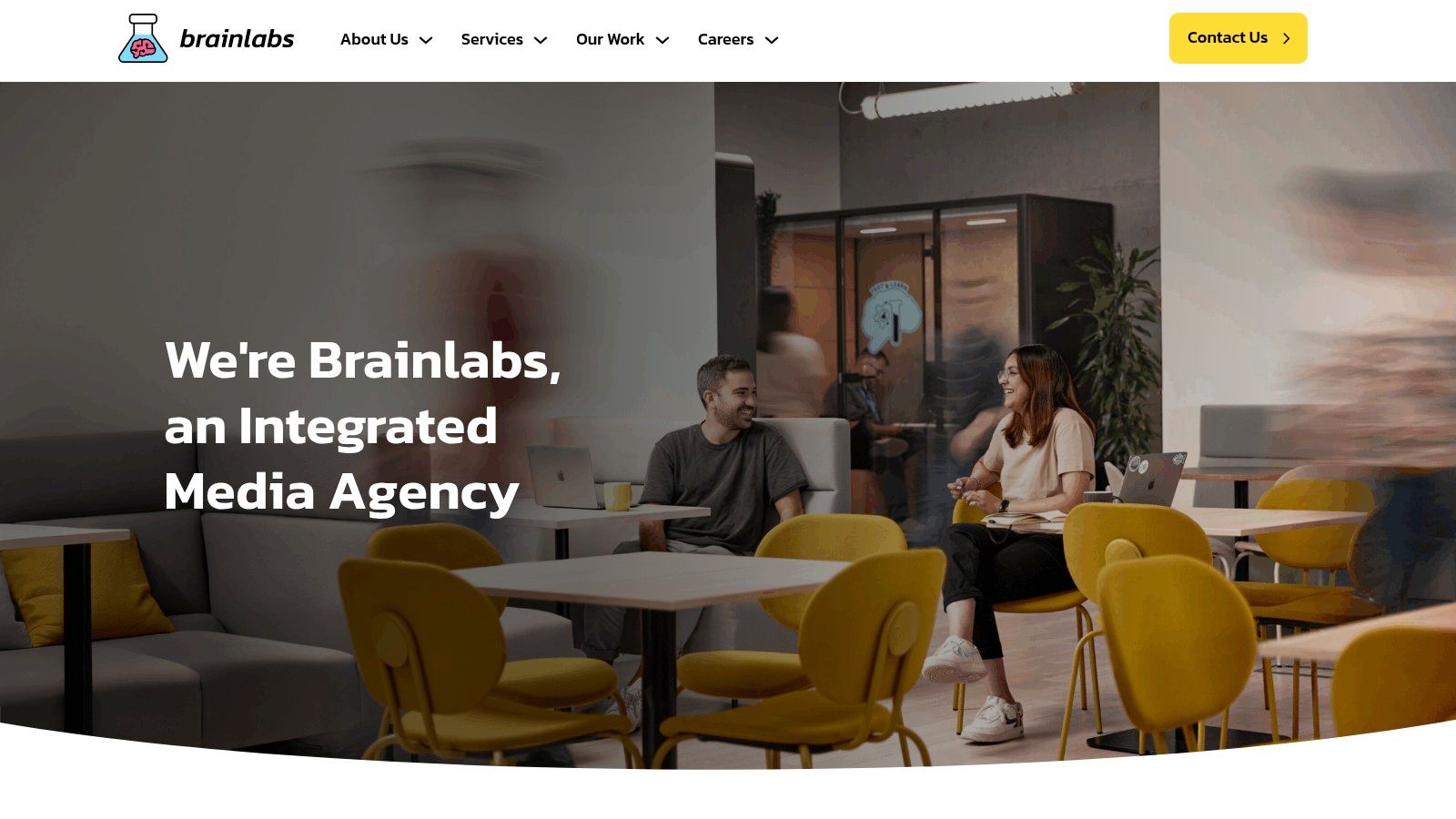
The agency’s core differentiator is its engineering-led approach which emphasises data-driven experimentation and the development of in-house technology to solve complex marketing challenges. Brainlabs combines human expertise with proprietary tools and advanced analytics enabling it to deliver highly optimised campaigns for clients ranging from fast-growth scale-ups to established enterprise organisations. Their ability to manage multi-market campaigns makes them a strong contender for businesses with international growth aspirations.
Core Features and User Experience
Brainlabs positions itself as a strategic partner focusing on driving measurable business outcomes rather than just media metrics. The client experience is built around collaboration transparency and a relentless testing culture to unlock incremental gains.
- Integrated Full-Funnel Service: The agency provides a unified strategy across all key performance channels ensuring consistent messaging and efficient budget allocation from awareness to conversion.
- Engineering-Led Media: A strong focus on data science and experimentation means campaigns are continually tested and optimised using a scientific methodology. This makes them a great choice if you're looking for a PPC marketing company in the UK that prioritises data.
- Enterprise Delivery Capability: With multiple UK offices and a global footprint Brainlabs has the infrastructure and talent to service large complex accounts with significant media spend.
How to Get the Most Out of Brainlabs
To engage Brainlabs effectively be prepared to share deep insights into your business objectives and commercial goals. Their model works best when they function as an extension of your in-house team so providing access to your data and collaborating on a clear testing roadmap is crucial. While their pricing is bespoke it is typically best suited to mid-market and enterprise-level budgets where their advanced capabilities can deliver the strongest return on investment.
Key Insight: Brainlabs is the ideal partner for data-mature organisations that need a sophisticated technology-driven approach to performance media at scale. Their strength lies in unifying complex multi-channel strategies and driving growth through rigorous scientific testing.
Website: https://www.brainlabsdigital.com/
7. Journey Further
Journey Further is a UK-based performance marketing agency that champions a 'clarity at speed' approach. It integrates a full suite of services including paid search paid social programmatic advertising and digital PR under a single strategic umbrella. The agency positions itself as a partner for brands that are tired of opaque reporting and want direct access to senior-level specialists who can drive measurable growth and provide clear actionable insights.

What sets Journey Further apart is its operating model which promises clients direct day-to-day contact with the senior experts executing their campaigns. This contrasts with traditional agency structures where junior team members often handle client communication. Their emphasis on a transparent test-and-learn methodology resonates with businesses that want a nimble partner focused squarely on commercial outcomes from revenue uplifts to improved return on investment.
Core Features and User Experience
The agency's website clearly showcases its expertise through detailed case studies featuring well-known UK brands. These case studies don't just list services; they provide specific data on revenue growth ROAS (Return on Ad Spend) and other key metrics offering tangible proof of their impact. The user experience is geared towards demonstrating credibility and making it easy for prospective clients to understand their value.
- Direct-to-Expert Model: Clients work directly with the senior performance marketing specialists managing their accounts ensuring strategies are well-informed and communication is efficient.
- Integrated Service Offering: Journey Further combines technical SEO paid media and creative services allowing for cohesive multi-channel campaigns that drive unified results.
- Data-Driven Case Studies: Their portfolio includes quantifiable results for brands like M&S Liberty London and Majestic Wine building confidence in their ability to deliver.
How to Get the Most Out of Journey Further
To effectively engage with Journey Further be prepared to share your core business objectives and historical performance data openly. Their model thrives on collaboration and a deep understanding of your commercial goals. Come to the initial conversation with clear KPIs in mind whether it's increasing online sales improving lead quality or driving footfall. Their team is built to translate these goals into a robust integrated strategy and understanding how to partner with an agency for digital marketing is the first step. Pricing is determined on a proposal basis so a detailed brief will ensure you receive an accurate and relevant quote.
Key Insight: Journey Further is an excellent choice for established brands that value transparency and want a senior hands-on team. Their integrated approach makes them one of the top performance marketing companies for businesses looking to consolidate their digital efforts and eliminate the inefficiencies of working with multiple specialist agencies.
Website: https://www.journeyfurther.com/
Top 7 Performance Marketing Companies Comparison
| Provider | Implementation complexity 🔄 | Resource requirements ⚡ | Expected outcomes 📊⭐ | Ideal use cases 💡 | Key advantages ⭐ |
|---|---|---|---|---|---|
| Superhub | Medium–High 🔄 Integrated creative tech & bespoke AI systems | Medium–High ⚡ Agency budget content production and collaboration | High 📊 Rapid measurable revenue & audience growth (case-backed) | Sector-focused brands (motorsport automotive energy start-ups) needing end-to-end growth | Full-service + AI-driven lead-gen multimedia production fast launch capability ⭐ |
| Sortlist | Low 🔄 Guided intake and curated matching flow | Low ⚡ Submit brief; minimal time to engage | Moderate 📊 Faster shortlisting with targeted proposals | Buyers wanting quick UK shortlists and matched proposals | Curated UK category filters and third‑party reviews for fast vetting ⭐ |
| Clutch | Low–Medium 🔄 Browse filter and review analysis | Low ⚡ Time to read reviews and pricing bands | Variable 📊 Deep due diligence; many profiles show rates and minimums | Detailed vendor research and pricing/ability-to-deliver checks | Extensive verified reviews pricing visibility and UK rankings ⭐ |
| DesignRush | Low 🔄 Directory + editorial rankings and filters | Low ⚡ Quick scanning by cost size and services | Moderate 📊 Fast pre-filtered shortlists for discovery | Discovery beyond well-known agencies; initial shortlist building | Editorial rankings verified review summaries and easy comparison ⭐ |
| Bark.com | Low 🔄 Post brief and receive multiple vendor quotes | Low–Medium ⚡ Quick responses but requires vetting of respondents | Variable 📊 Rapid budget benchmarking; quality varies | SMEs seeking fast local quotes across UK cities and towns | Fast quote turnaround and broad local coverage ⭐ |
| Brainlabs | High 🔄 Enterprise-grade setups with in-house tech & analytics | High ⚡ Mid-market/enterprise budgets and integration effort | High 📊 Scalable performance rigorous testing and measurable ROI | Brands needing engineering-led media and large-scale performance | Strong data/tech full-funnel channels and analytics-led optimisation ⭐ |
| Journey Further | Medium 🔄 Integrated performance services with test-and-learn model | Medium ⚡ Proposal-based engagement; access to senior specialists | High 📊 Transparent measurable revenue and ROI uplifts | Brands wanting clarity direct senior access and measurable outcomes | Transparent test-and-learn approach with published case outcomes ⭐ |
Your Next Step Towards Measurable Growth
Selecting the right performance marketing company is one of the most impactful decisions a business can make. The ideal partner does more than just manage campaigns; they become an extension of your team driving strategic growth and delivering a clear quantifiable return on your investment. This guide has navigated the diverse landscape of the UK's top performance marketing agencies showcasing a spectrum of capabilities and specialisms.
We have explored how directory platforms like Clutch and Sortlist can streamline your initial search providing a broad overview of the market. We have also seen how specialised agencies such as Brainlabs and Journey Further bring deep expertise in specific channels like PPC and paid social. Each of these companies offers a distinct pathway to achieving your marketing objectives but the ultimate choice hinges on aligning their strengths with your unique business needs and long-term vision.
Key Takeaways and Final Considerations
Your journey to finding the perfect partner starts with internal clarity. Before you approach any of the performance marketing companies listed it is crucial to have a firm grasp of your goals your budget and your ideal working relationship.
Reflect on these critical questions:
- What are your primary objectives? Are you focused on lead generation direct sales brand awareness or a combination of goals? A clear answer here will narrow your search significantly.
- What is your sector? Do you operate in a highly specialised niche like motorsport or financial services? If so partnering with an agency like Superhub which has proven demonstrable experience in that area can provide an invaluable competitive edge.
- What is your required service mix? Do you need a pure-play PPC provider or a more integrated partner that can handle everything from programmatic advertising and CRO to high-end film production and content creation?
- How do you measure success? Define your key performance indicators (KPIs) from the outset. Whether it is Cost Per Acquisition (CPA) Return On Ad Spend (ROAS) or a more complex attribution model ensure your chosen agency is aligned with and capable of reporting on the metrics that matter most to your business.
Making Your Decision: A Practical Checklist
Use the insights from this guide and the checklist we provided earlier to conduct thorough due diligence. Remember that a proposal is just the beginning. The best partnerships are built on transparency communication and a shared commitment to achieving results.
Do not be afraid to ask detailed questions during the discovery process. Enquire about their team structure their reporting cadence and their approach to campaign optimisation. Request relevant case studies and speak to their current clients if possible. The most effective performance marketing companies will be proud to showcase their track record and will be transparent about their processes.
Ultimately the goal is to find a partner who not only has the technical skills to deliver but also understands your business on a strategic level. They should feel like a genuine extension of your in-house team proactively bringing new ideas to the table and constantly seeking opportunities for growth. By focusing on proven results sector-specific expertise and a strong cultural fit you can confidently select a performance marketing company that will not only meet your targets but help you surpass them laying a robust foundation for sustainable long-term success.
Ready to partner with a performance marketing company that combines data-driven strategy with creative excellence? Superhub offers a unique blend of AI-powered lead generation specialist motorsport marketing and in-house content production to drive measurable growth for your brand. Visit Superhub to discover how our integrated approach can help you achieve your ambitious goals.
Want This Done For You?
SuperHub helps UK brands with video, content, SEO and marketing that actually drives revenue. No vanity metrics. No bullsh*t.