
How to Increase Website Traffic: A Modern Playbook
Trying to ramp up website traffic without a solid foundation is like building a house on sand. You can pour all the money and effort you want into flashy content, ads and outreach but if the core structure is weak it is all going to collapse.
Before you even think about complex campaigns, you have to get the basics right. We are talking about creating a website that is not just technically sound for search engines but genuinely welcoming and easy for real people to use. Get this part wrong and you are just paying to send potential customers to a frustrating experience.
A strong foundation ensures that when people do find you, they stick around, explore what you have to offer and are more likely to become customers. It all starts with three non-negotiable pillars: a mobile-first approach, lightning-fast speed and clean on-page SEO.
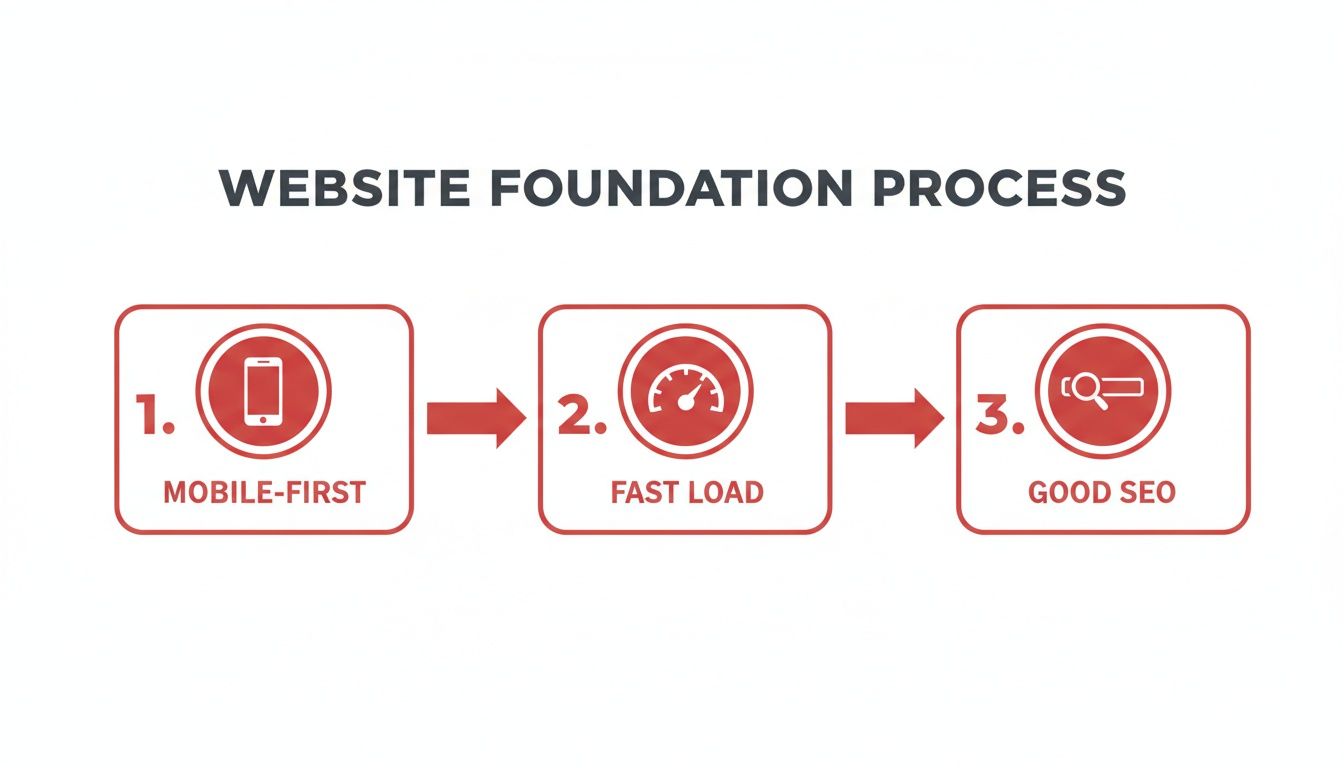
Think of it this way: each element builds on the last, creating a robust base that makes every other traffic-building effort more effective.
Prioritise a Mobile-First Experience
In the UK, mobile is not just a channel; it is the channel. As of late 2023, a massive 66.02% of all web traffic came from mobile devices. If your site does not work flawlessly on a small screen, you are alienating the majority of your potential audience right out of the gate.
This means designing for mobile first and then adapting the layout for larger screens like tablets and desktops. It is not just a nice-to-have; it is how Google sees your site. With mobile-first indexing, Google predominantly uses your site's mobile version for ranking. If content or functionality is missing from your mobile site, it might as well not exist in Google's eyes.
Make Your Website Blazingly Fast
Nobody waits for a slow website. In fact, a tiny one-second delay in page load time can slash your conversions by 7% . Your goal should be a load time of under two seconds—anything more and you are actively losing business.
You do not need to be a developer to get started. Free tools like Google's PageSpeed Insights or GTmetrix will analyse your site and give you a clear, actionable to-do list.
Common culprits are usually easy to fix:
- Compressing Images: Big image files are a major speed killer. Use tools to shrink them without losing visual quality.
- Minifying Code: This just means removing unnecessary characters and spaces from your site's code to make it leaner.
- Leveraging Browser Caching: This allows a visitor's browser to 'remember' parts of your site, so it loads almost instantly on their next visit.
Nail Your On-Page SEO Fundamentals
On-page SEO is all about making it crystal clear to search engines what each page on your site is about. It is more than just stuffing in a few keywords; it is about creating a logical structure that helps Google understand your content's context and relevance.
Start with a clear site structure that is easy for both users and search engines to navigate. Use descriptive URLs, write compelling title tags and meta descriptions and organise your content with header tags (H1, H2, H3). A well-managed website is simply easier to crawl and index, which is why mastering the art of managing a website is so critical for long-term SEO success.
Getting these three pillars right—mobile experience, site speed and on-page SEO—creates a platform that is primed for growth. This technical groundwork makes every subsequent traffic-building effort more effective and sustainable.
Before we dive deeper, it is helpful to understand how different traffic strategies play out over time. Some tactics deliver a quick hit, while others are a slow burn that builds a lasting asset.
Quick Wins vs Long-Term Traffic Strategies
| Strategy Type | Examples | Time to Impact | Sustainability |
|---|---|---|---|
| Quick Wins | Paid ads (PPC, Social), Influencer shoutouts, Social media contests | Hours to Days | Low - traffic stops when you stop paying or promoting. |
| Long-Term | SEO-driven content, Building an email list, Organic social media community, Link building | Months to Year+ | High - creates a durable asset that generates traffic over time. |
A smart strategy uses a mix of both. Quick wins can validate ideas and drive immediate revenue, while long-term strategies build the predictable, organic growth that every business craves.
Crafting a High-Impact Content and SEO Strategy
Think of your website like a high-performance race car. A technically sound site is the chassis but content is the fuel that actually drives it forward in the search rankings. Without a smart content strategy, even the slickest, most mobile-friendly website will just sit on the starting grid, struggling to pull in an audience.
The game is no longer about just publishing random articles. It is about becoming the definitive resource in your niche.
This means ditching the scattered, one-off blog posts and adopting a much more structured approach. To really boost your website traffic, you need to prove to search engines (and your audience) that you have genuine, deep expertise on a subject. The best way I have found to do this is by building topical authority .
Build Authority with Pillar Pages and Topic Clusters
Imagine trying to establish yourself as an expert by only sharing disconnected, random tips. It just would not work. The same is true for your website's content. A seriously powerful way to organise and showcase your expertise is the pillar page and topic cluster model .
It is best to think of it like a book. The pillar page is the main chapter, covering a broad, important topic in exhaustive detail. The topic clusters are like the sub-sections, each one diving deep into a specific, related concept and linking back to that main pillar page.
- Pillar Page: This is your big, comprehensive guide on a core topic. For a motorsport marketing agency, a pillar page might be "The Ultimate Guide to Motorsport Sponsorship". It needs to cover every major facet of that subject.
- Topic Clusters: These are shorter, more focused articles that explore specific sub-topics you touched on in the pillar. Think "How to Write a Killer Sponsorship Proposal" or "Measuring the ROI of a Motorsport Partnership". Crucially, each one links back to the main guide.
This structure is clever for two reasons. First, it creates a seamless journey for your readers, letting them explore a subject as thoroughly as they want. Second, and perhaps more importantly, that internal linking structure sends a massive signal to Google that you have a wealth of organised knowledge, cementing your site as an authority.
Unearthing Content Ideas That Actually Attract Visitors
The best content ideas do not come from guesswork; they come from understanding what your ideal customers are actively searching for. Guessing leads to writing articles that no one ever reads. The key is to get inside their heads and focus on user intent by doing proper keyword research.
Start by brainstorming the broad 'seed' topics related to your business. If you are an automotive dealership, these might be "used car finance" or "electric vehicle servicing". Then, use keyword research tools to dig up the specific questions and long-tail phrases people are actually typing into search engines.
The real secret to effective keyword research is to look past raw search volume. Focus on the questions people are asking. Phrases that start with "how", "what" and "why" are often goldmines, revealing high-intent queries from users who need the detailed answers you can provide.
Tools like AnswerThePublic or even just the 'People Also Ask' section on a Google search results page are brilliant for this. They offer direct insight into your audience’s pain points and curiosities, helping you create content that genuinely serves a need. This kind of foundational knowledge is central to any successful campaign, as we cover in our simple guide explaining what SEO is and how it works.
The Power of a Consistent Publishing Schedule
Creating brilliant content is one thing but publishing it consistently is what builds real momentum. Posting sporadically sends mixed signals to search engines and does nothing to build a loyal following. A regular publishing rhythm, on the other hand, can seriously increase your website traffic and lead generation over time.
For UK websites, the data speaks for itself. Companies that publish 16 or more blog posts per month generate around 3.5 times more traffic than those publishing just a few. It is not just vanity metrics, either; these high-frequency publishers also secure 67% more leads every month.
A consistent schedule does not mean you have to burn yourself out publishing daily. The key is to pick a realistic frequency—be it weekly or bi-weekly—and stick to it, no matter what. This discipline builds anticipation with your audience and proves to search engines that your site is a fresh, active source of information, which is a huge signal for boosting your visibility.
Getting Your Content Seen: A Smarter Distribution Plan
Let's be honest. Creating brilliant content is a huge win but it is only half the battle. If you just hit 'publish' and hope for the best, even the most groundbreaking article will gather dust. Without a smart distribution plan, your traffic goals will remain frustratingly out of reach.
Distribution is the difference between creating content and getting it noticed. It is the work you do after you publish to get your masterpiece in front of the right people, in the right places and at the right time. This means ditching the 'publish and pray' mindset for good and proactively pushing your content where your ideal customers are already hanging out.
The two most effective ways to do this? Authentic social media engagement and strategic digital PR.
Connect on Social Media (The Right Way)
Social media is not just for chasing vanity metrics like likes and followers. It is a powerhouse for driving referral traffic and building a real community around your brand. With 54.8 million active social media users in the UK—that is 79.0% of the population as of January 2025—these platforms are a direct line to your audience. This is more important than ever as AI continues to reshape traditional organic search.
You can dive deeper into the UK's digital landscape with this comprehensive data report on datareportal.com.
The secret is to treat each platform like a unique community, not just a billboard for your links.
- Tailor Your Content: Stop auto-posting the same message everywhere. A data-heavy insight that kills it on LinkedIn will need a completely different angle to work as a visual story on Instagram.
- Start a Conversation: Do not just broadcast. Ask questions, run polls and actually reply to the comments you get. The aim is to build relationships.
- Join Real Communities: Get involved in Facebook Groups, LinkedIn Groups or Reddit communities where your industry hangs out. Offer genuine value and solve problems before you even think about dropping a link.
When you get this right, social media transforms from a simple sharing tool into a consistent source of qualified traffic and genuine brand loyalty.
Master Digital PR and Outreach
Think of digital PR as the modern evolution of traditional public relations. Instead of getting a mention in a newspaper, the prize is earning high-quality backlinks from reputable websites. A single link from an authoritative site can send more relevant traffic and SEO value your way than hundreds of low-quality ones combined.
But this is not a numbers game. Spamming hundreds of editors with a generic template is a fast track to the delete folder. Success comes from a personal, strategic approach.
A winning outreach pitch is never about what you want; it is about what you can offer their audience. Your content has to be a genuinely useful resource that improves their existing article or brings a fresh perspective they had not considered.
Start by identifying the right people to talk to. Look for non-competing blogs, industry news sites and publications your target customers actually read. A great starting point is to use SEO tools to find websites that link to your competitors but not to you.
The screenshot below from Semrush shows just how many link-building tactics rely on effective, well-planned outreach.
As you can see, everything from guest blogging to fixing broken links requires solid communication and a clear plan.
Write a Pitch That Actually Gets a Reply
Your outreach email is your one shot. Make it count. Keep it short, personal and focused entirely on the value you are providing.
- Personalise the Opening: Show you have done your homework. Reference a specific article they have written or mention something you genuinely admire about their work.
- Get to the Point, Fast: Clearly explain why you are getting in touch and how your resource benefits their readers. No fluff.
- Make Their Life Easy: Tell them the exact URL where you suggest adding the link and briefly explain the context. The less work they have to do, the better your chances.
Building these relationships takes time but the payoff in authority and referral traffic is enormous. It also has a ripple effect, strengthening other parts of your strategy, like when you build an email list and grow subscribers quickly.
Accelerating Growth with Paid Acquisition
While organic strategies like SEO and content marketing build a powerful long-term asset, they take time. A lot of time. Sometimes, you just need to get traffic through the door now.
This is where paid acquisition comes in. Think of it as a tap you can turn on for immediate, controlled visibility, placing you directly in front of your ideal audience. It is a game-changer for testing new markets, amplifying your best content or driving a quick burst of conversions when you need them most.
Capturing High-Intent Traffic with Pay-Per-Click
Pay-Per-Click (PPC), especially on Google Ads , is the most direct route to people with high purchase intent. You are literally targeting users who are typing their exact problems into a search bar. When you get it right, it delivers incredibly qualified visitors to your site at the precise moment they are looking for a solution.
But a successful campaign is much more than just throwing money at a few keywords. It demands a tightly structured approach.
- Go Deep on Keywords: This is your foundation. Use proper keyword research to find the phrases your customers actually use. My advice? Focus on long-tail keywords . Instead of a broad term like "sponsorship", target something specific like "motorsport sponsorship proposal template". The intent is clearer, competition is often lower and the traffic is far more valuable.
- Write Adverts That Resonate: Your advert is your 30-second pitch. It has to cut through the noise, hit a pain point and have a crystal-clear call-to-action (CTA). Highlight what makes you the obvious choice—think "Same-Day MOT Testing" or "Download Free Sponsorship Guide".
- Nail the Landing Page: One of the most common mistakes I see is sending paid traffic to a generic homepage. Do not do it. Every ad campaign needs a dedicated landing page that mirrors the ad's promise. If your ad offers a free guide, the landing page should deliver only that guide.
This alignment—from keyword to ad to landing page—is critical. It boosts your Quality Score in Google Ads, which means lower costs per click and better ad positions. Simple.
Creating Demand with Paid Social
If Google Ads is about capturing existing demand, paid social is where you create it. Platforms like Instagram, LinkedIn and Facebook let you target users with frightening precision—from job titles and company size to personal interests and online behaviour. It is perfect for reaching people who do not even know they need you yet.
For example, a B2B business in the automotive space can use LinkedIn to target engineers at specific car manufacturers. A tourism brand? Instagram is a visual playground for showcasing incredible destinations to users whose profiles scream "I love to travel".
The real magic of paid social is how it fuels your organic efforts. Use it to promote your best pillar pages and guides. This drives traffic to your blog, builds genuine brand awareness and captures leads for your long-term marketing funnels.
Start small. Set a defined budget to test different platforms, audiences and creative. See what sticks, then double down on the channels that deliver. Trust me, a small, laser-focused campaign that resonates is worth far more than a huge, scattergun approach that gets scrolled past.
Choosing the Right Paid Channel for Your Business
Selecting the right platform is half the battle. This table breaks down the main players to help you decide where to invest your budget first.
| Channel | Best For | Audience Targeting | Primary Metric |
|---|---|---|---|
| Google Search Ads | Capturing high-intent users actively searching for solutions. Ideal for lead generation and direct sales. | Keyword-based; targets what people are searching for right now. | Cost Per Acquisition (CPA), Return on Ad Spend (ROAS) |
| Facebook/Instagram Ads | Building brand awareness and creating demand. Great for visual products, e-commerce and local businesses. | Demographics, interests, behaviours, lookalike audiences. | Click-Through Rate (CTR), Cost Per Mille (CPM), Conversions |
| LinkedIn Ads | B2B lead generation and professional services. Perfect for reaching specific job titles, industries and company sizes. | Professional data: job title, company, seniority, industry. | Cost Per Lead (CPL), Lead Quality |
| YouTube Ads | Visual storytelling and brand building at scale. Excellent for tutorials, product demos and top-of-funnel awareness. | Demographics, interests, viewing habits and keyword targeting. | View Rate, Cost Per View (CPV), Brand Lift |
Ultimately, a powerful strategy integrates both paid search and social. You can use a LinkedIn video ad to build initial awareness with automotive CEOs, then use Google retargeting ads to bring them back to your site when they later search for a solution.
This one-two punch of creating demand and then capturing it is a proven formula for rapid, scalable traffic growth.
Winning Traffic in Niche Industries
Generic traffic advice does not cut it in specialist industries. What works for a mainstream e-commerce brand will fall completely flat with the passionate, clued-up audiences in motorsport, automotive and tourism. To win here, you have to speak their language and show up where they spend their time.
Success is not about reinventing the wheel; it is about adapting solid marketing principles to fit the unique culture of a very specific audience. It means going way beyond broad keywords and creating content that proves you actually get what makes these communities tick.
Capturing the Motorsport Fanbase
The motorsport world is all about the roar of the engine and the roar of the crowd. It is an event-driven calendar, meaning traffic spikes around race weekends. If you are not planning your content around these moments, you are leaving a massive opportunity on the table. Your strategy has to be fast, agile and plugged directly into the fan culture.
This is where event-based SEO becomes your best friend. Build content hubs around major events like the British Grand Prix or the Goodwood Festival of Speed. Think pre-race analysis, live commentary and post-race breakdowns. By optimising for long-tail keywords like “Silverstone F1 tyre strategy analysis”, you will attract a super-engaged audience looking for genuine insight, not just headlines.
But the real magic happens inside the communities.
- Get on the Forums: Become a valued member of places like PistonHeads or specialist subreddits. Do not just drop links. Answer questions, offer expertise and build a reputation first.
- Create Content That Fuels Debate: Tackle the topics fans are already arguing about. An article on "Is the new aero package working for McLaren?" shows you are part of the conversation, not just a brand shouting from the sidelines.
This is not just about traffic; it is about building the kind of credibility that makes enthusiasts trust what you have to say.
Driving Leads in the Automotive Sector
When it comes to cars, trust and detail are everything. Your customers are deep in research mode long before they ever think about visiting a dealership. Your website is not just a shop window; it is the main battleground. Your content needs to be both exhaustive and reassuring.
Video is an absolute powerhouse here. High-quality video reviews and walkarounds of your stock can completely change the game. We are not just talking a few extra clicks—one study found that putting a video on a landing page can boost conversions by a staggering 86% . It lets a potential buyer kick the virtual tyres from their sofa, building the confidence they need to take the next step.
Local search is also non-negotiable. You have to get your Google Business Profile dialled in and create landing pages for specific locations. You need to be the first result for high-intent searches like "used Audi A3 dealer in Devon" or "EV service centre near me".
The cornerstone of automotive marketing is trust. Give them everything: exhaustive vehicle specs, transparent pricing and dozens of high-res photos for every car. The more detail you provide, the more uncertainty you remove for the buyer. That is what gets them to pick up the phone.
Inspiring Travellers in the Tourism Industry
In tourism, you are not selling specs; you are selling an experience. The goal is to spark that feeling of wanderlust and make your destination impossible to resist. This demands a complete shift towards visual, emotional content that tells a story.
Your website needs to be a wellspring of inspiration, not just a booking engine. Think compelling travel guides, weekend itineraries and stories that paint a vivid picture of what you offer. Blog posts like "A Weekend Guide to the Cornish Coast" or "Top 5 Hiking Trails in the Lake District" are perfect for catching people in the dreamy, early stages of planning a trip.
And in tourism, collaboration is the name of the game.
- Team Up with Travel Influencers: Find UK-based travel bloggers and Instagrammers whose audience is a perfect match for yours. An authentic endorsement from them can drive a flood of high-quality referral traffic.
- Embrace User-Generated Content (UGC): Encourage your visitors to share their own photos using a unique hashtag. Featuring real customer experiences on your website and social media provides powerful social proof that is far more persuasive than any glossy marketing shot you could ever take.
Common Questions About Driving More Traffic
If you are digging into the world of SEO and content, you have probably got questions. It is a common scenario. We get asked these all the time by clients, so let's clear up a few of the big ones.
How Long Until I See Real Results From SEO?
This is the classic "how long is a piece of string?" question but it deserves a proper answer. Generally, if you are consistent, you can expect to see meaningful results from a solid SEO strategy within four to six months . But that timeline can shift dramatically.
If you are launching a brand-new website with zero authority, you could be looking at closer to a year before significant organic traffic starts flowing. On the flip side, an established site that already has some credibility might see positive movement in just a few months.
It all boils down to a few key things:
- How tough is your market? Trying to rank for something super competitive like "financial services" is a much longer game than ranking for a local niche business.
- What shape is your website in? If your site is riddled with technical gremlins or has a sketchy backlink history, you will need to sort out those foundations first.
- Are you creating great content regularly? Pumping out high-quality, optimised content tells search engines your site is a valuable resource worth showing to people. This really speeds things up.
The main thing to remember is that SEO is a long-term investment, not a quick win. The results stack up over time, building a sustainable asset that pays you back for years. Patience is everything.
Should I Focus on Organic or Paid Traffic?
Honestly, it is not an either/or situation. The smartest approach is a blend of both. They serve different purposes but work brilliantly together.
Organic traffic (SEO) is all about building a long-term, sustainable asset. It takes time and a lot of graft to earn those top rankings but once you are there, you get a steady stream of highly relevant visitors without paying for every single click. This is your foundation for predictable, scalable growth.
Paid traffic (PPC) gives you instant results and pinpoint control. It is perfect for testing a new offer, pushing a time-sensitive campaign or getting in front of high-intent users the moment they search for what you sell. The catch? The traffic vanishes the second you stop paying.
A good strategy uses paid ads to get early data and drive immediate traffic while your long-term organic efforts are still warming up.
What Are the Biggest Mistakes I Should Avoid?
So many well-meaning businesses stumble into the same traps. Just steering clear of these will put you miles ahead of the competition.
- Keyword Stuffing: Cramming your target keyword into a page over and over again is an ancient tactic. It reads horribly, annoys users and can get you penalised. Just don't.
- Forgetting Mobile Users: Most of your traffic will come from mobile. If your site is a clunky nightmare on a phone, you are just throwing visitors away.
- Buying Backlinks: It might seem like a shortcut but buying a bunch of low-quality links is a risky game that can get your site slapped by Google. Focus on earning quality links with great content and real outreach.
- Publishing "Thin" Content: Short, low-value articles that barely scratch the surface of a topic will not rank. They do not help your audience and they will not build your authority. Go deep or go home.
How Do I Know If Any of This Is Actually Working?
Just glancing at your overall visitor count is not enough. To really get a feel for whether your strategy is delivering, you need to keep an eye on a handful of key metrics.
- Organic Traffic: How many people are finding you through search engines? This is your primary SEO health check.
- Keyword Rankings: Are you moving up the rankings for the keywords that actually matter to your business?
- Conversion Rate: What percentage of your visitors are taking the action you want them to take, like filling out a form or buying something? Traffic is great but conversions pay the bills.
- Bounce Rate: What percentage of people leave after looking at just one page? A high bounce rate can be a red flag for poor content or a bad user experience.
At Superhub , we build data-driven strategies that deliver real, measurable growth. If you are ready to stop guessing and start building a powerful traffic-generating machine, we are here to help. See how our expert team can elevate your brand at https://www.superhub.biz.
Want This Done For You?
SuperHub helps UK brands with video, content, SEO and marketing that actually drives revenue. No vanity metrics. No bullsh*t.