

A No-Nonsense Guide To Racing Driver Marketing In The UK
Before you even think about chasing a single sponsor, you need to get one thing straight: your personal brand is your single most valuable asset. This isn't some fluffy corporate buzzword; it’s the absolute foundation of your commercial strategy in motorsport.
Solid racing driver marketing begins with a strong, authentic brand—the kind of brand sponsors actually want to be associated with.
Your Brand Is More Than Just A Logo
Let’s cut the bullsh*t. A brand isn’t just a slick logo or a cool helmet design. For a racing driver, your brand is the story you tell, the values you live by, and the promise you make to fans and partners.
It’s what makes a business owner in Devon choose you over the ten other drivers knocking on their door asking for money.
Too many drivers fall into the trap of thinking success is all about lap times. While on-track performance is obviously crucial, it’s only half the equation. Your brand is what happens off the track: your personality, your backstory, and the way you communicate. This is what turns you from just another competitor into a genuinely marketable asset.
Defining Your Unique Angle
Every driver has a story. What’s yours? Don't just say you're "passionate" or "hard-working"—so is every other driver in the paddock. You have to dig deeper to find what makes you different.
Ask yourself these questions to nail down your unique angle:
- Your Backstory: Did you come from a non-motorsport background? Are you a family-run team from the South West taking on the big-budget players? Use that.
- Your Personality: Are you the analytical, engineering-obsessed driver or the aggressive, seat-of-your-pants charger? Be authentic. Don’t fake it.
- Your Values: Do you champion sustainability in motorsport? Are you passionate about grassroots racing or getting kids into STEM? These values attract sponsors who think the same way.
A strong brand narrative gives a sponsor a reason to invest emotionally, not just financially. They aren't just buying space on a car; they are buying into your journey and sharing it with their customers.
This stuff really matters in the UK motorsport scene. Sponsorships drive nearly 40% of total revenues for racing teams, making it the absolute cornerstone of financial stability for outfits in series like the British Touring Car Championship (BTCC).
Industry analysis shows that drivers become walking billboards, with liveries and race suits generating huge exposure. It’s no surprise that UK teams with strong driver marketing see 25% higher sponsor retention rates , because fans connect emotionally with personalities like Ash Sutton or Jake Hill.
From Identity To Commercial Proposition
Once you’ve defined who you are, the next step is to package it commercially. This means creating a consistent identity across every single touchpoint, from your race suit and helmet to your social media profiles.
To properly improve brand awareness , everything has to look and feel professional and consistent. This isn’t just about looking good; it's about building trust. A sponsor needs to see you as a reliable business partner who will represent their brand with professionalism.
If your online presence is a mess, they’ll assume your approach to a partnership will be the same. To keep everything aligned, a set of brand guidelines is non-negotiable. You can learn more about how to do that here: https://www.superhub.biz/how-to-create-brand-guidelines-that-actually-work.
Your brand is a story, and a strong identity is how you tell it. Let's break down the core pillars of what this looks like in practice.
Core Brand Pillars For A Racing Driver
This table breaks down the key elements you need to build a brand that sponsors will take seriously. It's about moving from "I'm a fast driver" to "I am a valuable marketing partner."
| Pillar | What It Means In Practice | Why Sponsors Care |
|---|---|---|
| Visual Identity | A professional logo, consistent colour scheme (on your car, suit, and online), and clear typography. Think of a recognisable helmet. | It looks professional and trustworthy. A cohesive look makes their brand look good by association and is easy for fans to spot. |
| Brand Narrative | Your unique story. The underdog journey, the technical wizard, the family team. This is your 'why'. | Stories create emotional connections. Sponsors want to be part of a compelling narrative their customers can get behind. |
| Tone of Voice | How you communicate. Are you witty and informal, or serious and technical? This must be consistent in posts, interviews, and emails. | It defines your personality and attracts a specific audience. Sponsors want to align with a voice that reflects their own. |
| Core Values | What you stand for beyond racing. E.g., sustainability, youth development, mental health awareness, engineering excellence. | Shared values create powerful partnerships. It gives them a reason to choose you over a driver with similar on-track results. |
| Digital Presence | A clean website, active and engaging social media, and professional-looking content that tells your story. | This is your modern-day portfolio. It’s the first place a potential sponsor will look to see if you're a serious proposition. |
Nailing these pillars turns your personal story into a tangible marketing platform. It allows you to approach the right sponsors with a compelling offer that resonates with them and delivers a clear, measurable return on their investment.
Building Your Digital Race Headquarters
Your online presence is your professional shop window. Simple as that.
Think about it: a clunky, outdated website or a dead social media profile screams to potential sponsors that you aren't serious about the business side of motorsport. Your digital headquarters should be working for you 24/7, turning fan engagement into genuine commercial opportunities.
This isn’t just about having a presence; it’s about having a professional, cohesive digital footprint that actively brings in leads and proves your value. If a business owner searches for you, they need to find a polished, credible operation staring back at them.
The Non-Negotiable Driver Website
Social media is crucial, but it’s borrowed land. You don’t own the algorithm, and your access to your own audience can be switched off overnight. Your website is the one piece of digital real estate you truly own. It’s the central hub for everything.
A sponsor needs to see you as a serious business, not just a weekend hobbyist. Your website is where you control the narrative completely, away from the endless noise of a social feed.
Your site absolutely must include these core elements:
- A Professional 'About' Page: This is where you tell your story. Don't just list your results; talk about the journey, your values, and what makes you different from everyone else in the paddock.
- A Clear Sponsorship Section: This is the most important page for a business visitor. Outline the opportunities, showcase the value you deliver, and make it ridiculously easy for them to download your media kit.
- High-Quality Gallery: Invest in proper photography and videography. Grainy phone pictures just won’t cut it. Show your car, your team, and you in action, looking the part.
- Easy-to-Find Contact Details: Seriously, don't make potential partners hunt for a way to get in touch. A clear contact form and a visible email address are non-negotiable.
Your website has one job: to convince a potential sponsor in under 30 seconds that you are a professional, credible marketing partner worth their investment. It's your digital handshake.
A Social Media Strategy That Actually Sells
Posting a podium picture with a hundred hashtags is not a strategy. Your social media needs to do more than just update fans; it must consistently demonstrate commercial value to your partners. Every single post should have a purpose.
Modern Formula 1 cars generate terabytes of data every race weekend, and teams analyse every bit to find an edge. You need to apply that same data-driven mindset to your content. Track what works, see what your audience engages with, and understand what delivers exposure for your sponsors.
This is about building a narrative that people actually want to follow. Your platforms—whether that’s Instagram, YouTube, or LinkedIn—are your channels to tell that story, build your community, and show sponsors in action. For a deeper dive, our guide on racing team social media management for UK motorsport has more specific tactics.
Content That Builds Your Brand
To build a real following and provide sponsor value, your content has to go beyond basic race reports. Fans and sponsors want to see the person behind the helmet.
Here are a few content ideas that deliver genuine value:
- Behind-the-Scenes Vlogs: Document a race weekend from start to finish. Show the team briefings, the data analysis, the post-race debriefs. This stuff is gold for demonstrating the professionalism of your operation.
- Sponsor Activation Posts: Go beyond a lazy "thanks to my sponsor" tag. Create a short video using their product at the track or write a post explaining how their service helps your team perform. Make it authentic.
- Technical Deep Dives: Use Instagram Stories or short videos to explain a piece of your car's setup or a specific bit of race craft. This positions you as an expert and gives motorsport nerds something to sink their teeth into.
- LinkedIn for B2B: Don't neglect LinkedIn. It's the perfect platform to connect directly with business owners and marketing managers. Share your insights on the business of motorsport, teamwork, and performance—topics that resonate with a corporate audience.
By creating a digital headquarters that is both professional and strategic, you transform your online presence from a simple fan club into a powerful machine for generating commercial interest and proving your worth as a marketing partner.
How To Find And Pitch Sponsors Who Actually Say Yes
Stop firing off generic emails into the void. Seriously. Most drivers do this, get ignored, and then complain that sponsorship is impossible. It’s not impossible; you’re just doing it wrong. Securing a real partnership means having a proper system for finding, researching, and pitching the right sponsors.
Forget the scattergun approach. The real secret is to look beyond the usual automotive suspects and find businesses whose marketing problems you can genuinely solve. This could be anyone from a local Devon construction firm wanting brand presence in the South West to a national tech company targeting a motorsport-savvy audience.
Thinking Beyond The Paddock For Partners
The best sponsorship deals happen when you solve a business problem. That means you need to start thinking like a marketing director, not just a driver. Who is their ideal customer? What are their business goals for the next year? How can you, a racing driver, help them hit those goals?
Start by building a target list based on genuine alignment, not just a vague interest in cars.
- Local Heroes: If you’re at the club racing level or just starting out, local businesses are your best bet. Think about the successful estate agents, solicitors, or tradespeople in your area who want to raise their local profile.
- Growing National Brands: Hunt for companies on an upward curve. These businesses are often hungry for brand awareness and are much more open to creative marketing ideas that get them noticed.
- B2B Service Providers: Businesses in sectors like IT support, accountancy, or logistics often target the same high-net-worth individuals who hang around motorsport paddocks and hospitality suites. You offer direct, authentic access to their ideal clients.
Your pitch is not a request for cash; it's a compelling marketing proposition. You're not asking for a donation. You're offering a business a unique way to reach new customers, reward their staff, and grow their brand.
The process of connecting your digital world to real-world engagement is a simple, clear workflow. It shows sponsors you have a structured plan to deliver value, not just a sticker on a car.
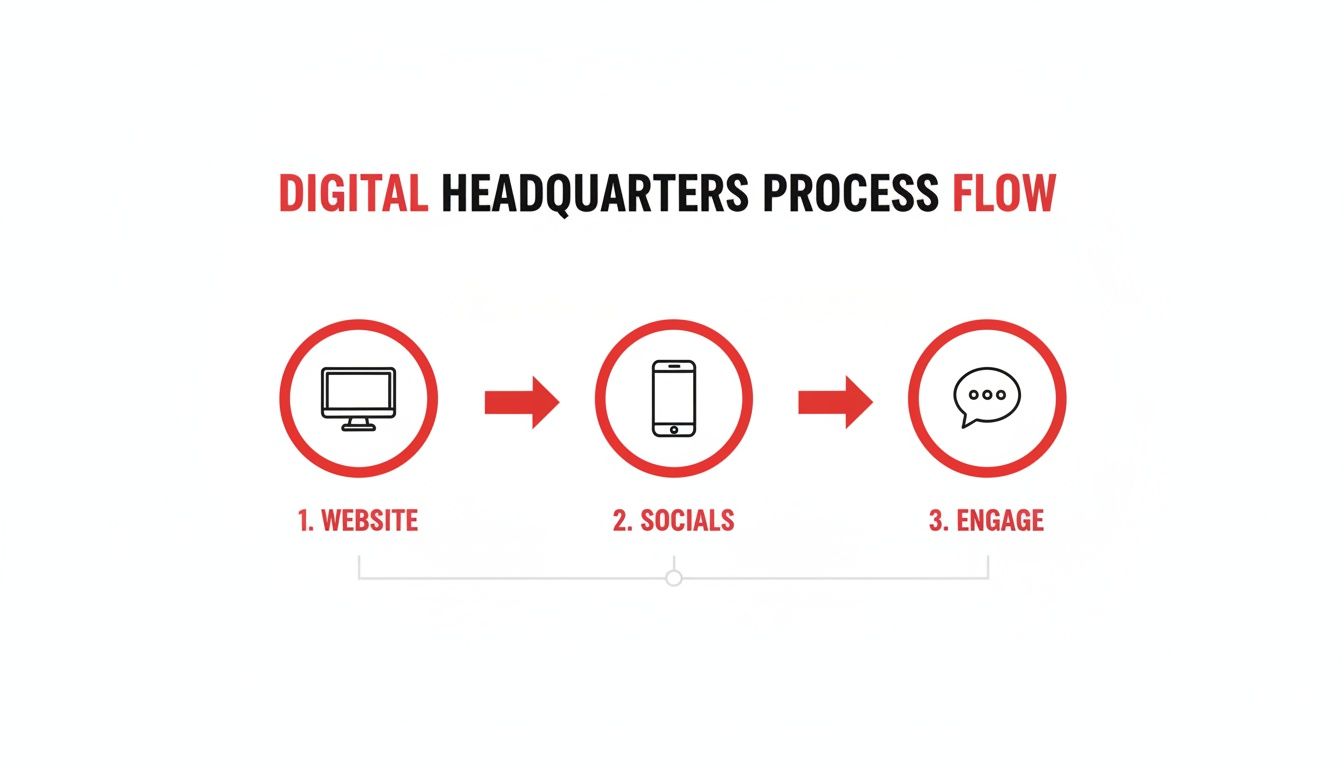
This flow shows exactly how your professional website and social media presence become the foundation for actively engaging commercial partners.
Crafting The No-Bullsh*t Sponsorship Proposal
Once you have a solid target list, you need a proposal that a busy business owner will actually read. Bin the 20-page document full of your racing history. They don’t care. They care about Return on Investment (ROI).
Your proposal needs to be sharp, visual, and laser-focused on the commercial benefits. Write it in a language they understand. The driver-led sponsorship model is a cornerstone of the UK motorsport economy for a reason. In fact, analysis shows 70% of UK team revenues come from partnerships where drivers are the key asset. This trend is visible everywhere from club racing right up to the BTCC, where sponsor logos can deliver 50 million impressions across ITV and social media. You can find more detail in the full industry report about UK motorsport team revenues from ibisworld.com.
For a complete breakdown, check out our guide on creating a winning motorsport sponsorship proposal.
Building Tiered Packages With Tangible Value
Never, ever go to a potential sponsor with a single price. Offer tiered packages that let them get involved at different levels. This shows you’re flexible and makes it much easier for them to say yes to something. Each tier must offer clear, tangible value.
Here’s a sample structure you can adapt:
Bronze Package (£2,500 - Ideal for local businesses)
- Small logo placement on the car and race suit.
- Monthly social media mentions across your platforms.
- Two weekend passes to a race of their choice.
- Company logo and link on your website’s partner page.
Silver Package (£10,000 - For companies wanting more engagement)
- All Bronze benefits.
- Medium logo placement in a prime location.
- Dedicated social media post per race weekend (e.g., product placement).
- Two VIP hospitality passes for one race weekend.
- Driver appearance at one company event.
Gold Package (£25,000+ - A full marketing partnership)
- All Silver benefits.
- Large, primary logo placement on the car.
- Full track day experience for their top clients or staff.
- A dedicated professional video produced during the season, showcasing the partnership.
- Proactive B2B introductions to other partners in your network.
By articulating the benefits this clearly, you completely change the conversation. You’re no longer a driver asking for a handout; you’re a strategic marketing partner offering a measurable return.
Creating Content That Delivers Real Sponsor Value
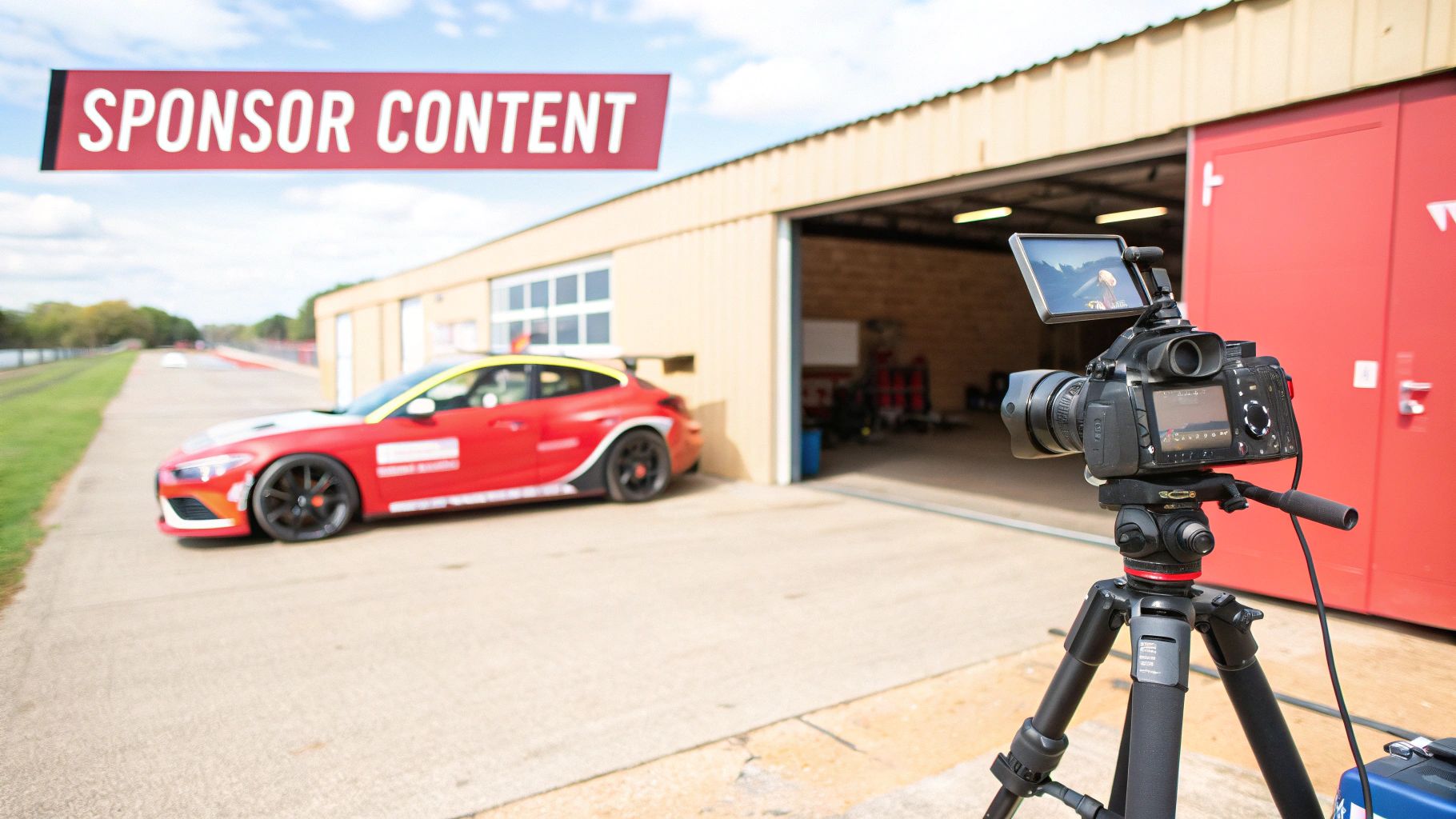
Your content is the engine of your sponsorship activation. It’s the tangible proof that a partner's investment is actually working, turning a simple logo on your car into measurable exposure and genuine brand engagement. Forget basic race reports; this is about creating content that delivers real, undeniable value.
The goal here is to turn your digital channels into powerful marketing platforms for your partners. We're moving beyond a quick "thanks to my sponsors" post and into creating videos, photos, and stories that showcase their products and services authentically, to an audience that’s paying attention. This is how you prove ROI and keep them coming back for more.
Moving Beyond The Race Report
Any driver can post a qualifying result. To stand out, you need to think like a media production house, not just a competitor. Your content has to tell a story and weave your partners seamlessly into that narrative.
This simple shift completely transforms your value proposition. You're no longer just selling space on a car; you're offering targeted access to a dedicated audience through compelling storytelling.
Think about these high-value content pillars:
- Documentary-Style YouTube Videos: A "race weekend vlog" is a brilliant starting point. Show the highs, the lows, the team briefings, and the technical debriefs. Feature a sponsor's product in action—a specific tool in the garage, software being used for data analysis. It’s authentic product placement that just works.
- Engaging Social Media Reels: Create short, sharp videos that grab attention. Think a 30-second reel of your pre-race fitness routine using a sponsor's gym equipment, or a quick-cut video of the team using a partner's cleaning products to get the car looking mint.
- Insightful Blog Posts: Write a post on your website titled "The five pieces of kit I can't live without on a race weekend," and make sure one or two are from sponsors. Explain why you use it and the difference it makes. It’s all about credibility.
A sponsor's logo on your car is seen. A sponsor's product integrated into your story is understood and remembered. That's the difference between passive exposure and active marketing.
Planning Your Content Calendar
Consistency is everything. A scattered, random approach looks unprofessional and makes it impossible for sponsors to see a plan. You need a content calendar planned around your race season, ensuring you’re delivering a steady stream of high-quality assets for your partners.
Map out the entire season, from pre-season testing to the final race. For each event, plan the specific content pieces you will create. This ensures you never miss an opportunity and can promise sponsors a clear schedule of deliverables upfront.
The power of racing driver marketing is obvious at the highest levels. The British Grand Prix at Silverstone, for instance, drew 356,000 spectators in 2022, with its commercial success built on driver visibility. UK data shows 43% of the motorsport market share comes from sponsorships tied directly to drivers. For businesses in our local Devon area, this translates to real leads; one South West automotive dealership saw a 40% enquiry uplift after a driver they sponsored ran a targeted video campaign.
Sponsor Activation Content Ideas
To make this practical, here are some content formats that provide tangible value and a clear return on investment. You should mix and match these ideas to keep your feed interesting and your sponsors happy.
Here's a quick table of ideas to get you started.
| Content Format | Key Objective | Platform |
|---|---|---|
| "How We Use..." Video Series | Demonstrates a product's practical application and benefits in a high-performance environment. | YouTube, Instagram Reels, LinkedIn |
| Sponsor 'Takeover' Story | Gives a sponsor direct access to your audience for a day, showing their business from the inside. | Instagram Stories, Facebook Stories |
| Interactive Fan Q&A (with Sponsor) | Involves the sponsor in fan engagement, creating a positive brand association. | Instagram Live, YouTube Live |
| Track Day Content with Clients | Showcases the B2B hospitality value by capturing a sponsor's clients having an amazing experience. | Website Blog, LinkedIn, Private Video for the Sponsor |
| Exclusive 'Partner' Discount Code | Drives direct sales and provides a measurable ROI metric for an e-commerce or service sponsor. | All social platforms, Email Newsletter |
These are just the basics. To truly stand out, think about creating unique, interactive experiences at events. Consider something like a Pit Stop Challenge Hire for sponsor events, which generates memorable, shareable content and showcases your partnership in a properly hands-on way.
By consistently delivering creative and valuable content, you cement your role not just as a driver they support, but as a critical marketing partner they can't afford to lose.
Measuring ROI and Keeping Sponsors for the Long Haul
Getting a sponsor to sign on the dotted line is a massive win. But it’s only the beginning. The real work, the part that builds a sustainable racing career, is in keeping them.
This is where most drivers fall down. They’re brilliant at the chase but terrible at the follow-up.
Keeping a sponsor isn't about sending a Christmas card. It’s about proving, with hard numbers, that their investment in you was a smart business decision. If you can’t demonstrate a return on investment (ROI), don’t expect them to be around next season. It really is as simple as that.
Forget Vanity Metrics and Focus on What Matters
Your sponsors are busy business owners. They don’t have time to decipher fluffy reports about your "brand engagement". They care about metrics that connect directly to their own bottom line. Likes and followers are nice, but they don't pay the bills.
You need to track and report on the numbers that actually matter to a business. It’s a mindset shift. You’re not just a driver; you’re a marketing partner, and your job is to deliver tangible results that prove your worth beyond what happens on the track.
Here’s what you should be measuring:
- Website Referral Traffic: Using Google Analytics, you can show exactly how many people clicked from your website's partner page to theirs. This is a direct, measurable lead source you are providing.
- Social Media Click-Throughs: When you promote a sponsor, use unique, trackable links from a service like Bitly. This lets you report precisely how many clicks your content sent to their site.
- Lead Generation Evidence: Did a new customer tell your sponsor they found them through you? Document it. Get a testimonial. This is gold-plated proof of your value.
- Media Value Equivalency (MVE): This is a bit more advanced, but it puts a pound value on your exposure. It calculates what it would have cost your sponsor to get the same amount of screen time or column inches through traditional advertising.
Your end-of-season report shouldn't be a scrapbook of your best race photos. It should be a business document that answers one simple question for your sponsor: "Was this investment worth it?"
Building the End-of-Season Report
Your report needs to be simple, visual, and focused on results. No waffle. A busy business owner should be able to grasp the value you delivered in under five minutes. This isn't just a courtesy; it's the start of your pitch for next season.
You need to structure it logically, telling a clear story of the value you provided throughout the year.
A No-Nonsense Reporting Template
- Executive Summary: A single paragraph right at the top. "Our partnership generated over £X in media value , drove Y unique visitors to your website, and created Z direct leads ." Get straight to the point.
- Performance Overview: Briefly recap the on-track season. Keep it short. A couple of sentences for context is all you need.
- Digital Media Performance:
This is the core of the report. Use charts and bullet points to show your key metrics.
- Total Social Media Impressions (across all platforms).
- Total Link Clicks to their website.
- Top-performing posts featuring their brand (include screenshots).
- Referral traffic from your website to theirs.
- Media & PR Exposure: Include screenshots or links to any articles, interviews, or press coverage where their brand was visible or mentioned.
- Hospitality & B2B Value: Detail the guest experiences you provided. If you made any business introductions for them, document that here. This is often overlooked but can be hugely valuable.
- Looking Ahead: End with a forward-thinking statement about your plans for the next season and how you can build on this year's success together.
Relationship Management Is Everything
Finally, remember that sponsorship is a partnership between people. Don't just slide a report under their door once a year.
Maintain regular, informal communication. A quick text after a race weekend, a tag in a relevant social media post, or a call to see how their business is doing goes a very long way.
Make them feel like part of the team, not just a cash machine. Invite them to test days, ask for their opinion, and take a genuine interest in their business. This personal connection, backed up by a professional report that proves your commercial value, is the unbeatable combination that turns a one-season deal into a long-term, winning partnership.
Common Racing Driver Marketing Questions
We've covered the core strategies for building a brand, finding sponsors, creating content, and proving your value. But there are always a few tricky questions that pop up time and again from drivers trying to make their way in UK motorsport.
Here are some straight answers to the things we get asked most often. This is the no-nonsense advice on the difficult parts of racing driver marketing, from pricing your packages correctly to avoiding the classic rookie errors that can stall a career before it even gets started.
How Much Should I Charge For Sponsorship?
There’s no magic number. Anyone who gives you a single figure without knowing your exact situation is just guessing. Your pricing has to be built on the tangible, provable value you can actually deliver.
Don’t just pluck a number out of the air that covers your costs. That's the wrong way to think about it. Build your price from the ground up, based on what a sponsor gets in return.
Start by calculating your total running costs for a season – that’s your baseline. Next, work out the media value you can offer. Look at your social media reach, website traffic, and any potential TV or streaming exposure (like the ITV coverage BTCC drivers get). This data is the foundation of your pricing.
A club racer in a regional series might offer a package to a local Devon business for a few thousand pounds, focusing on tangible local benefits like trackside hospitality and a story in the local paper. In contrast, a front-running BTCC driver's package could command anywhere from £50,000 to over £250,000 , offering national brand exposure and high-level B2B networking.
The key is to never present a single price. Build tiered packages with crystal-clear deliverables at each level, from a simple logo on the car to a full-blown digital marketing partnership. This makes it much easier for a potential sponsor to find a level that works for their budget.
What Is The Biggest Mistake Drivers Make When Looking For Sponsors?
The single biggest mistake is making it all about themselves. Far too many drivers approach businesses with a "cup in hand" mentality, talking endlessly about their dreams, their talent, and how much they need funding.
Let's be blunt: sponsors are not charities. They are making a marketing investment, and they absolutely have to see a return on that investment.
Your entire pitch must pivot to focus on what the business gets out of the deal. What are their commercial goals for the next 12 months? Are they trying to build brand awareness in a new region? Do they need to generate more qualified leads? Are they looking for a unique way to entertain their top clients?
Frame your proposal as the solution to their business problem.
- Instead of saying: "I need £20,000 to go racing."
- You should be saying: "For an investment of £20,000, I can deliver your brand message to an audience of 500,000 motorsport fans across the UK and provide a unique, money-can't-buy hospitality experience for your ten most important clients."
That simple change in framing transforms you from someone asking for a handout into a valuable marketing partner offering a genuine business solution.
Do I Really Need A Website If I Have Social Media?
Yes. Absolutely. This isn’t even a debate.
Relying on social media as your main online presence is a massive strategic mistake. Social media platforms are borrowed land. You don’t control the algorithm, you don’t own your follower data, and your access to your own audience can be restricted or even removed overnight without any warning.
Your website is your owned digital asset. It’s the central headquarters for your brand, where you control the narrative completely, free from the noise and distractions of a social media feed.
It serves several critical functions that social media just can't:
- Professional Credibility: A proper website instantly signals to potential sponsors that you are a serious business, not just a hobbyist with an Instagram account.
- Central Information Hub: It's the one place to host your detailed sponsorship proposal, your downloadable media kit, and high-quality photo and video galleries. No more hunting through old posts.
- SEO and Discovery: A well-optimised website is a powerful tool for getting found by businesses actively searching for "motorsport sponsorship opportunities UK" or similar terms. You will never achieve that with a social profile alone.
Think of it this way: your website is your digital storefront, your professional CV, and your most important sales tool all rolled into one. Neglecting it tells potential partners you're not serious about the business of motorsport.
Ready to stop guessing and start building a commercial strategy that delivers? SuperHub is a Devon-based agency with real-world motorsport experience. We cut through the fluff to deliver marketing that works. Get in touch to find out how we can help you secure the sponsors you need.
Want This Done For You?
SuperHub helps UK brands with video, content, SEO and marketing that actually drives revenue. No vanity metrics. No bullsh*t.